
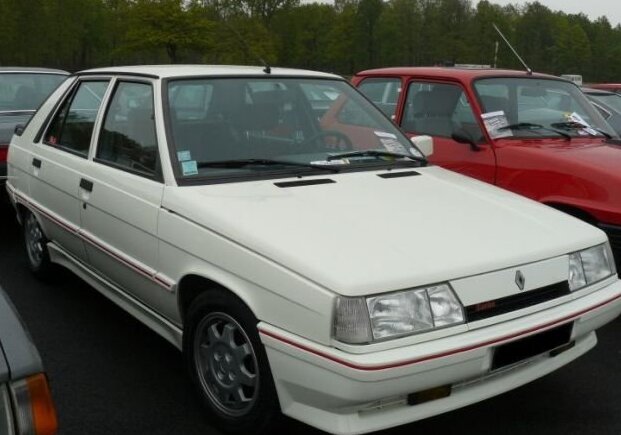
The Renault 11, produced between 1981 and 1988, represented a significant step forward for Renault in the small family car segment. The 1.6 D (B/C/S374) variant, powered by the F8M engine producing 55 horsepower, was a key part of the B/C37 series, aimed at buyers prioritizing fuel economy and practicality over outright performance. This model occupied the lower end of the 11’s lineup, serving as an affordable entry point into Renault ownership, particularly in European markets where diesel engines were gaining popularity due to favorable taxation and fuel costs. It was positioned as a workhorse, appealing to those needing a reliable and economical vehicle for daily commuting and light commercial use.
Technical Specifications
| Brand | Renault |
| Model | 11 |
| Generation | 11 (B/C37) |
| Type (Engine) | 1.6 D (B/C/S374) (55 Hp) |
| Start of Production | 1981 |
| End of Production | 1988 |
| Powertrain Architecture | Internal Combustion Engine |
| Body Type | Hatchback |
| Fuel Type | Diesel |
| Power | 55 Hp |
| Engine Model/Code | F8M |
| Engine Aspiration | Naturally Aspirated |
| Engine Oil Capacity | 5.5 l (5.81 US qt | 4.84 UK qt) |
| Coolant Capacity | 6.7 l (7.08 US qt | 5.9 UK qt) |
| Fuel Tank Capacity | 47 l (12.42 US gal | 10.34 UK gal) |
Powertrain & Engine Architecture
The heart of the Renault 11 1.6 D was the F8M engine, a 1.6-liter inline-four diesel. This engine was a relatively simple, naturally aspirated design, utilizing indirect injection. Indirect injection, common for diesels of this era, involved injecting fuel into a pre-chamber before it entered the main combustion chamber, promoting smoother combustion and reduced noise compared to direct injection systems. The F8M featured a cast iron block and cylinder head, contributing to its durability, but also adding to its overall weight. The engine employed a single overhead camshaft (SOHC) operating the valves. While not a high-revving engine, the F8M was known for its robust construction and ability to withstand high mileage. The transmission paired with the 1.6 D was typically a four-speed manual gearbox, although a three-speed automatic transmission was also offered, albeit less commonly. The automatic, while providing convenience, further reduced the car’s already modest acceleration.
Driving Characteristics
The Renault 11 1.6 D, particularly in automatic guise, was not designed for spirited driving. With only 55 horsepower on tap, acceleration was leisurely, and overtaking required careful planning. The four-speed automatic transmission, while offering ease of use, had relatively widely spaced gear ratios, which further impacted performance. The engine produced a usable amount of torque at low RPMs, making it adequate for city driving and maintaining highway speeds on relatively flat terrain. However, climbing hills or carrying a full load noticeably strained the engine, often requiring downshifts. Compared to the gasoline-powered Renault 11 variants, the 1.6 D offered significantly less power but substantially better fuel economy. The manual transmission version provided a slightly more engaging driving experience, allowing the driver to better control the engine’s power band, but still didn’t transform the car into a performance machine.
Equipment & Trim Levels
The 1.6 D variant of the Renault 11 typically represented the base trim level. Standard equipment was fairly basic, reflecting its affordability. Interior upholstery was usually a durable, patterned cloth. The dashboard featured a simple layout with essential gauges – speedometer, fuel gauge, and temperature gauge. Power steering was not standard, requiring more effort at low speeds. Options available included a sunroof, upgraded audio systems, and more comfortable seating. Higher trim levels of the Renault 11, such as the TS or GTX, offered more luxurious interiors, alloy wheels, and additional features like electric windows and central locking, but these were not typically paired with the 1.6 D engine.
Chassis & Braking
The Renault 11 utilized a relatively simple chassis design. It featured independent front suspension with MacPherson struts and a torsion beam rear suspension. This setup provided a reasonable ride quality, although it wasn’t particularly sporty. Braking on the 1.6 D models typically consisted of disc brakes on the front wheels and drum brakes on the rear. The drum brakes on the rear were a cost-saving measure, and their effectiveness was limited compared to disc brakes. Stabilizer bars were often omitted on the base 1.6 D trim, further contributing to a less precise handling feel. The car’s relatively light weight helped to offset the limitations of the braking system.
Market Reception & Comparison
The Renault 11 1.6 D was generally well-received in markets where diesel cars were popular, such as France, Spain, and parts of Southern Europe. Critics praised its fuel economy and reliability, but acknowledged its lack of performance. Compared to other diesel-powered small family cars of the era, such as the Peugeot 205 D or the Citroën BX 1.8 D, the Renault 11 1.6 D offered a competitive fuel economy figure and a similar level of practicality. However, it often lagged behind in terms of refinement and driving enjoyment. The gasoline-powered Renault 11 variants, particularly the 1.4 and 1.6-liter models, offered more power and a more engaging driving experience, but at the cost of increased fuel consumption.
Legacy
The Renault 11 1.6 D, while not a particularly exciting car, proved to be a durable and reliable workhorse for many owners. The F8M engine, despite its age, is known for its longevity and relatively simple maintenance requirements. Today, the Renault 11 1.6 D is a relatively rare sight on the roads, but those that remain are often well-maintained by enthusiasts who appreciate their simplicity and affordability. The car has gained a cult following among classic car collectors and those seeking a nostalgic driving experience. Parts availability can be a challenge, but many components are still available through specialist suppliers. The 1.6 D variant, in particular, is valued for its fuel efficiency and its representation of a bygone era of automotive engineering.
