
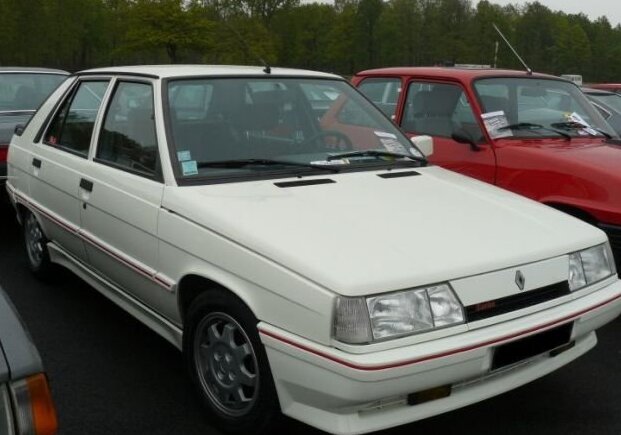
The Renault 11, produced between 1981 and 1987, represented a significant step forward for Renault in the small family car segment. The B/C37 series, as it was internally designated, aimed to offer a more modern and practical alternative to the aging Renault 9 and 11 models it replaced. Within the 11 lineup, the 1.7-liter (B/C376) variant, producing 73 horsepower, occupied a middle ground, offering a balance between affordability and acceptable performance. It was available in both 3-door and 5-door body styles, catering to a wider range of customer needs. This model played a crucial role in Renault’s European sales during the early to mid-1980s, competing with vehicles like the Peugeot 205 and Volkswagen Golf.
Technical Specifications
| Brand | Renault |
| Model | 11 |
| Generation | 11 (B/C37) |
| Type (Engine) | 1.7 (B/C376) (73 Hp) |
| Start of Production | 1981 |
| End of Production | 1987 |
| Powertrain Architecture | Internal Combustion Engine |
| Body Type | Hatchback |
| Seats | 5 |
| Doors | 3/5 |
| Fuel Type | Petrol (Gasoline) |
| Power | 73 Hp |
| Power per Liter | 42.9 Hp/l |
| Engine Displacement | 1700 cm3 |
| Engine Displacement (cu. in.) | 103.74 cu. in. |
| Number of Cylinders | 4 |
| Engine Configuration | Inline |
| Fuel Injection System | Carburettor |
| Engine Aspiration | Naturally Aspirated |
| Drivetrain Architecture | Front Wheel Drive |
| Number of Gears | 5 |
| Gearbox Type | Manual Transmission |
Powertrain & Engine Architecture
The heart of the Renault 11 1.7 was the Renault C1J engine, a 1647cc inline-four cylinder unit. This engine, designated B/C376, was a relatively simple design, utilizing a single overhead camshaft (SOHC) valvetrain and a two-barrel carburetor for fuel delivery. While not particularly advanced, the C1J was known for its robustness and relative ease of maintenance. The carburetor, a Solex or Weber depending on the specific market, was tuned to provide adequate performance for everyday driving, prioritizing fuel economy over outright power. The engine featured a cast iron block and an aluminum cylinder head, a common configuration for the era. The 5-speed manual transmission was a direct-shift type, offering a reasonably precise gear change. It was a fairly conventional setup for a European hatchback of the early 1980s, focusing on practicality and affordability rather than cutting-edge technology.
Driving Characteristics
The 1.7-liter Renault 11 offered a comfortable, if not particularly exciting, driving experience. With 73 horsepower on tap, acceleration was adequate for merging onto highways and navigating city streets, but it wasn’t a car designed for spirited driving. The 5-speed manual transmission helped to keep the engine in its optimal power band, but the relatively long gearing meant that frequent downshifts were necessary when tackling hills or overtaking. Compared to the base 1.4-liter models, the 1.7 provided a noticeable improvement in performance, particularly at higher speeds. However, it lacked the punch of the later 1.6-liter engines found in the Renault 11 TX models. The steering was light and precise, making it easy to maneuver in tight spaces. The suspension, while comfortable, was prone to some body roll in corners. Overall, the driving experience was geared towards practicality and ease of use, making it a suitable choice for everyday commuting and family transportation.
Equipment & Trim Levels
The Renault 11 1.7 typically came equipped with a fairly basic level of standard features. Interior upholstery was typically cloth, available in a range of colors and patterns. The dashboard was functional and straightforward, with a simple instrument cluster displaying speed, fuel level, coolant temperature, and a basic odometer. Power steering was not standard on all models, often being an optional extra. Other optional extras included a sunroof, upgraded audio system, and central locking. The trim level varied slightly depending on the market, but generally, the 1.7-liter model represented a step up from the base models in terms of interior comfort and features. The 5-door version offered increased practicality, making it a popular choice for families.
Chassis & Braking
The Renault 11 utilized a MacPherson strut front suspension and a torsion beam rear suspension. This setup provided a good balance between ride comfort and handling. The front brakes were disc brakes, while the rear brakes were typically drum brakes, although some higher-spec models featured rear disc brakes. The braking system was adequate for the car’s weight and performance, but it lacked the sophistication of more modern braking systems. Stabilizer bars were fitted to both the front and rear axles, helping to reduce body roll during cornering. The chassis was relatively lightweight, contributing to the car’s fuel efficiency and maneuverability.
Market Reception & Comparison
The Renault 11 1.7 was generally well-received by automotive critics as a practical and affordable family car. It was praised for its comfortable ride, spacious interior, and fuel efficiency. However, it was also criticized for its relatively uninspiring performance and somewhat dated styling. Compared to the base 1.4-liter models, the 1.7 offered a significant improvement in performance, making it a more appealing option for drivers who frequently traveled on highways or carried passengers. Fuel economy was comparable to other cars in its class, averaging around 35-40 miles per gallon. Reliability was generally good, although the carburetor required periodic adjustment and maintenance. The Renault 11 1.7 competed directly with vehicles like the Peugeot 205, Volkswagen Golf, and Ford Escort.
Legacy
The Renault 11, and specifically the 1.7-liter variant, remains a relatively common sight on European roads today, particularly among classic car enthusiasts. The C1J engine is known for its durability and relatively simple mechanics, making it a popular choice for restoration projects. Parts availability is generally good, although some specific components can be difficult to find. The 1.7-liter engine, while not particularly powerful, is considered to be a reliable and long-lasting unit. In the used car market, the Renault 11 1.7 is typically valued for its affordability and practicality. It represents a nostalgic reminder of a bygone era of automotive design and engineering, and continues to be appreciated by those who value simplicity, reliability, and a comfortable driving experience.
