
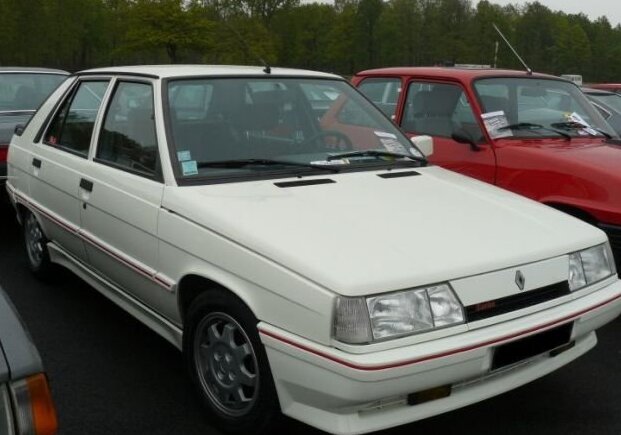
The Renault 11, produced between 1981 and 1987, represented a significant step forward for Renault in the small family car segment. The B/C37 series, as it was internally designated, aimed to offer a more modern and practical alternative to the aging Renault 9 and 11 models it replaced. Within the 11 range, the 1.7 (B/C376) variant, producing 80 horsepower, occupied a middle ground, offering a balance between affordability and acceptable performance. It was available in both three and five-door body styles, catering to a wider range of customer needs. This model played a crucial role in Renault’s European sales during the early to mid-1980s, competing with vehicles like the Peugeot 205 and Volkswagen Golf.
Technical Specifications
| Brand | Renault |
| Model | 11 |
| Generation | 11 (B/C37) |
| Type (Engine) | 1.7 (B/C376) (80 Hp) |
| Start of production | 1981 |
| End of production | 1987 |
| Powertrain Architecture | Internal Combustion engine |
| Body type | Hatchback |
| Seats | 5 |
| Doors | 3/5 |
| Fuel Type | Petrol (Gasoline) |
| Maximum speed | 180 km/h (111.85 mph) |
| Power | 80 Hp |
| Power per litre | 47.1 Hp/l |
| Engine layout | Front, Transverse |
| Engine Model/Code | F2N |
| Engine displacement | 1700 cm3 (103.74 cu. in.) |
| Number of cylinders | 4 |
| Engine configuration | Inline |
| Cylinder Bore | 81 mm (3.19 in.) |
| Number of valves per cylinder | 2 |
| Fuel injection system | Carburettor |
| Engine aspiration | Naturally aspirated engine |
| Engine oil capacity | 5.5 l (5.81 US qt | 4.84 UK qt) |
| Coolant | 6.7 l (7.08 US qt | 5.9 UK qt) |
| Fuel tank capacity | 47 l (12.42 US gal | 10.34 UK gal) |
| Drivetrain Architecture | The Internal combustion engine (ICE) drives the front wheels of the vehicle. |
| Drive wheel | Front wheel drive |
| Number of gears and type of gearbox | 5 gears, manual transmission |
| Rear suspension | Torsion |
| Front brakes | Disc |
| Rear brakes | Drum |
| Steering type | Worm-reduction unit |
Powertrain & Engine Architecture
The Renault 11 1.7 (B/C376) was powered by the F2N engine, a 1647cc inline-four cylinder unit. This engine utilized a relatively simple, yet robust, design featuring a cast iron block and an aluminum cylinder head. Crucially, this variant employed a single Solex carburetor for fuel delivery, a common practice for European cars of this era aiming for cost-effectiveness. The engine featured a two-valve per cylinder configuration, operated by a single overhead camshaft. While not particularly advanced, this valvetrain design proved reliable and relatively easy to maintain. The 80 horsepower output was achieved at 5,500 rpm, with peak torque of approximately 132 Nm (97 lb-ft) delivered at 3,500 rpm. The engine’s transverse mounting and front-wheel drive configuration were typical for cars of this class, maximizing interior space and improving traction in adverse conditions. The five-speed manual transmission, while not known for its sporty feel, provided adequate gear ratios for everyday driving and highway cruising.
Driving Characteristics
The Renault 11 1.7 offered a comfortable, if not particularly exhilarating, driving experience. The 80 horsepower engine provided sufficient power for typical urban and rural driving, but acceleration was modest. The 0-60 mph time was estimated to be around 12-13 seconds. The five-speed gearbox allowed for reasonable fuel economy when cruising on the highway, but required frequent downshifts when tackling hills or overtaking. Compared to the more powerful Renault 11 TX models (with fuel injection and higher compression ratios), the 1.7 felt noticeably slower. However, it offered a smoother and more predictable power delivery than the smaller 1.1 and 1.4 liter engines in the range. The steering, utilizing a worm-reduction unit, was relatively heavy but provided decent feedback. The torsion beam rear suspension offered a comfortable ride, but didn’t provide the same level of handling precision as more sophisticated independent suspension systems.
Equipment & Trim Levels
The 1.7 variant of the Renault 11 typically came equipped with a reasonable level of standard features for its time. These included cloth upholstery, a basic instrument cluster, and manually operated windows and door locks. The interior was functional and durable, though not particularly luxurious. Optional extras included a sunroof, upgraded stereo system, and metallic paint finishes. Trim levels varied slightly depending on the market, but generally, the 1.7 sat in the mid-range of the Renault 11 lineup. It offered more comfort and features than the base models, but lacked the sporty styling and additional equipment found in the higher-spec TX and Gordini versions. The three-door version was often marketed towards younger buyers, while the five-door model appealed to families.
Chassis & Braking
The Renault 11 utilized a relatively simple chassis design. The front suspension consisted of MacPherson struts, while the rear suspension employed a torsion beam. This setup provided a good balance between ride comfort and handling. The braking system featured disc brakes on the front wheels and drum brakes on the rear. While adequate for normal driving conditions, the braking performance was not particularly strong by modern standards. The steering system, as mentioned previously, used a worm-reduction unit, which provided a relatively direct feel but required more effort than more modern rack-and-pinion systems. Stabilizer bars were typically fitted to the front suspension to reduce body roll during cornering.
Market Reception & Comparison
The Renault 11 1.7 was generally well-received by automotive critics as a practical and affordable family car. It was praised for its comfortable ride, spacious interior, and reasonable fuel economy. However, it was also criticized for its relatively modest performance and somewhat dated styling. Compared to the more expensive Renault 11 TX, the 1.7 offered a more economical option for buyers who didn’t prioritize outright speed. Against competitors like the Peugeot 205 and Volkswagen Golf, the Renault 11 1.7 offered a competitive price point and a comfortable driving experience, but lacked the same level of refinement and handling prowess. Fuel economy was a strong point, averaging around 35-40 mpg in mixed driving conditions.
Legacy
The Renault 11, and specifically the 1.7 variant, has developed a modest following among classic car enthusiasts. The F2N engine is known for its durability and relative simplicity, making it relatively easy to maintain and repair. However, parts availability can be a challenge in some regions. Today, well-maintained examples of the Renault 11 1.7 can be found for relatively low prices, making them an affordable entry point into classic car ownership. While not a particularly rare or collectible model, the Renault 11 1.7 represents a significant piece of automotive history, embodying the design and engineering philosophies of the early 1980s. Its enduring appeal lies in its practicality, affordability, and the nostalgic charm of a bygone era.
