
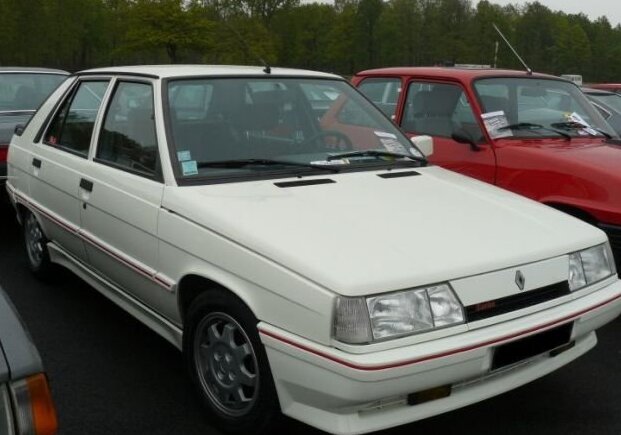
The Renault 11, produced between 1981 and 1993, represented a significant step forward for Renault in the small family car segment. The B/C37 series, launched in 1987, brought a refreshed design and mechanical updates to the range. The 1.7 (B/C37E) variant, producing 94 horsepower, was a mid-range offering within the lineup, positioned above the base 1.4 models and below the more performance-oriented 1.6 versions. Production of this specific engine and body configuration ran from 1987 to 1988, catering to buyers seeking a balance of practicality, comfort, and reasonable performance.
Technical Specifications
| Brand | Renault |
| Model | 11 |
| Generation | 11 (B/C37) |
| Type (Engine) | 1.7 (B/C37E) (94 Hp) |
| Start of production | 1987 |
| End of production | 1988 |
| Powertrain Architecture | Internal Combustion engine |
| Body type | Hatchback |
| Fuel Type | Petrol (Gasoline) |
| Power | 94 Hp |
| Engine Model/Code | F2N |
| Engine aspiration | Naturally aspirated engine |
| Engine oil capacity | 5.5 l (5.81 US qt | 4.84 UK qt) |
| Coolant capacity | 6.5 l (6.87 US qt | 5.72 UK qt) |
| Fuel tank capacity | 47 l (12.42 US gal | 10.34 UK gal) |
Powertrain & Engine Architecture
The Renault 11 1.7 (B/C37E) was powered by the F2N engine, a 1.7-liter inline-four cylinder gasoline engine. This engine was a naturally aspirated unit, meaning it did not employ forced induction like a turbocharger or supercharger. The F2N featured a cast iron block and an aluminum cylinder head, a common construction for engines of this era. Fuel delivery was managed by a Bosch mechanical fuel injection system, a step up from the carburetors used in earlier Renault 11 models. This injection system improved fuel efficiency and reduced emissions compared to carbureted engines. The engine utilized a single overhead camshaft (SOHC) valvetrain, operating two valves per cylinder. While not a particularly high-revving engine, the F2N produced a respectable 94 horsepower at approximately 5,500 rpm and 138 Nm (102 lb-ft) of torque at 3,500 rpm. The engine was typically paired with a four-speed automatic transmission, although a five-speed manual gearbox was also available on other 1.7 variants. The automatic transmission, while offering convenience, was known for its relatively slow shift times and tendency to hunt for gears, especially under heavy load.
Driving Characteristics
The 1.7L automatic Renault 11 offered a comfortable, if not particularly sporty, driving experience. The automatic transmission dulled the engine’s performance somewhat, resulting in a 0-60 mph time of around 12-13 seconds. Compared to the five-speed manual version of the 1.7, the automatic suffered a noticeable performance deficit. The gear ratios in the automatic were geared more towards fuel economy than outright acceleration. In typical city driving, the 1.7 automatic was perfectly adequate, providing sufficient power for merging onto highways and overtaking slower traffic. However, when fully loaded with passengers and luggage, the engine could feel strained, particularly on inclines. The suspension, while comfortable, was not particularly sophisticated, resulting in a noticeable amount of body roll during cornering. Steering was light and easy, making the car maneuverable in urban environments.
Equipment & Trim Levels
The 1.7 automatic Renault 11 typically came equipped with a reasonable level of standard features for its time. These included cloth upholstery, a basic stereo system, and central locking. Power steering was often included, though not always standard. Optional extras included a sunroof, upgraded stereo systems, and metallic paint. Interior trim was generally functional and durable, though not particularly luxurious. The dashboard layout was straightforward and easy to use, with clearly labeled controls. The 1.7 automatic trim level generally sat in the middle of the Renault 11 range, offering more comfort and convenience features than the base models but lacking the sporty touches found on the higher-spec 1.6 versions.
Chassis & Braking
The Renault 11 B/C37 utilized a relatively simple chassis design. The front suspension consisted of MacPherson struts, while the rear suspension employed a torsion beam axle. This setup provided a comfortable ride but did not offer the same level of handling precision as more sophisticated suspension systems. Braking on the 1.7 automatic models typically consisted of disc brakes on the front wheels and drum brakes on the rear wheels. The braking system was adequate for normal driving conditions, but lacked the stopping power of more modern vehicles. Anti-lock braking system (ABS) was not typically offered on this trim level. Stabilizer bars were fitted to both the front and rear axles, helping to reduce body roll during cornering.
Market Reception & Comparison
The Renault 11 1.7 automatic was generally well-received by automotive critics as a practical and affordable family car. However, the automatic transmission was often criticized for its sluggish performance and tendency to hunt for gears. Compared to the 1.4-liter models, the 1.7 offered a noticeable improvement in performance, making it a more suitable choice for drivers who frequently traveled on highways or carried passengers. Compared to the 1.6-liter versions, the 1.7 automatic was less sporty but offered better fuel economy. Fuel economy was rated at around 30-35 mpg in mixed driving conditions. Reliability was generally good, although the automatic transmission could be prone to issues if not properly maintained.
Legacy
The Renault 11, and specifically the 1.7 automatic variant, remains a relatively common sight on European roads today, particularly as a classic car. The F2N engine is known for its durability and relatively simple construction, making it relatively easy to maintain and repair. However, finding parts for the automatic transmission can be challenging. The 1.7 automatic Renault 11 is often sought after by enthusiasts looking for a classic French hatchback that offers a comfortable and practical driving experience. While not a performance icon, it represents a significant chapter in Renault’s history and remains a popular choice for classic car collectors and enthusiasts.
