
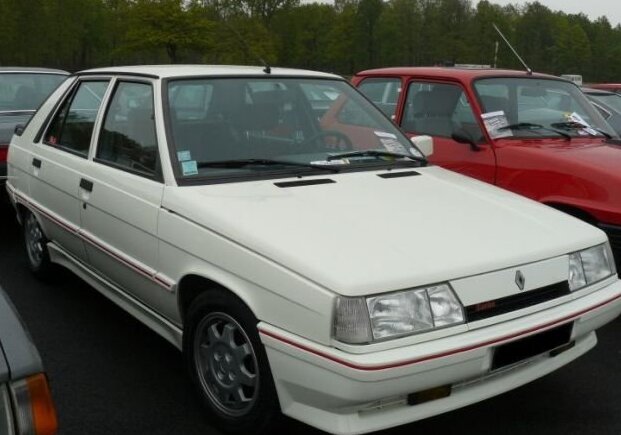
The Renault 11, specifically the 1.7 (B/C37L) variant producing 73 horsepower, was a mainstay of the French automaker’s lineup from 1986 to 1988. Falling within the B/C37 generation, this model represented a significant update to the original Renault 9, offering a more spacious and practical hatchback option for European families. Positioned as a mid-range offering, the 1.7L engine provided a balance between affordability and acceptable performance, making it a popular choice in a competitive segment. It was built upon the shared platform with the Renault 9, aiming for a broader appeal with a slightly more mature design and interior.
Technical Specifications
| Brand | Renault |
| Model | 11 |
| Generation | 11 (B/C37) |
| Type (Engine) | 1.7 (B/C37L) (73 Hp) |
| Start of production | 1986 |
| End of production | 1988 |
| Powertrain Architecture | Internal Combustion engine |
| Body type | Hatchback |
| Fuel Type | Petrol (Gasoline) |
| Power | 73 Hp |
| Engine Model/Code | F2N |
| Engine aspiration | Naturally aspirated engine |
| Engine oil capacity | 5.5 l (5.81 US qt | 4.84 UK qt) |
| Coolant capacity | 6.5 l (6.87 US qt | 5.72 UK qt) |
| Fuel tank capacity | 47 l (12.42 US gal | 10.34 UK gal) |
Powertrain & Engine Architecture
The heart of the Renault 11 1.7L was the F2N engine, a naturally aspirated, inline-four cylinder powerplant. Displacing 1647cc, this engine utilized a cast iron block and an aluminum cylinder head. Fuel delivery was managed by a Bosch mechanical fuel injection system, a relatively common setup for the era, providing a balance between cost and efficiency. The engine featured a single overhead camshaft (SOHC) operating two valves per cylinder. While not a particularly high-revving engine, it delivered a respectable amount of torque for its displacement, prioritizing usability over outright performance. The engine was mated to a four-speed automatic transmission, a relatively simple unit designed for smooth, if not particularly sporty, operation. This transmission was chosen to appeal to drivers prioritizing comfort and ease of use over driver engagement.
Driving Characteristics
The 1.7L automatic Renault 11 offered a comfortable, albeit unhurried, driving experience. With 73 horsepower on tap, acceleration was adequate for everyday driving, but overtaking maneuvers required careful planning. The four-speed automatic transmission, while smooth, had relatively widely spaced gear ratios, which could result in the engine feeling strained during quick acceleration or when climbing hills. Compared to the five-speed manual versions of the Renault 11, the automatic suffered a noticeable performance deficit. The manual transmission allowed the engine to stay within its optimal power band more effectively. The suspension, tuned for comfort, absorbed bumps and imperfections in the road well, but also resulted in a degree of body roll during cornering. Steering was light and easy, making it well-suited for urban driving.
Equipment & Trim Levels
The 1.7L Renault 11 typically came equipped with a reasonable level of standard features for its time. These included cloth upholstery, a basic AM/FM radio, and manual windows and door locks. The dashboard layout was functional and straightforward, prioritizing usability over aesthetics. Optional extras included a sunroof, upgraded stereo systems, and central locking. The trim level sat comfortably in the middle of the Renault 11 range. Below it were the base models with smaller engines (1.1L and 1.4L), while above it were the more luxurious versions with larger engines and additional features. The interior materials were durable, though not particularly luxurious, reflecting the car’s price point.
Chassis & Braking
The Renault 11 1.7L utilized a relatively simple chassis design. It featured independent front suspension with MacPherson struts and a torsion beam rear suspension. This setup provided a good balance between ride comfort and handling. Braking was accomplished via disc brakes on the front wheels and drum brakes on the rear. While adequate for normal driving conditions, the rear drum brakes lacked the stopping power and fade resistance of disc brakes. The car did not typically feature anti-lock braking system (ABS), which was still a relatively rare feature in the late 1980s. Stabilizer bars were fitted to both the front and rear axles to help reduce body roll during cornering.
Market Reception & Comparison
The Renault 11 1.7L automatic received generally positive reviews from automotive critics. It was praised for its comfortable ride, spacious interior, and reasonable fuel economy. However, the automatic transmission was often criticized for its sluggish performance and lack of responsiveness. Compared to other hatchbacks in its class, such as the Peugeot 205 and the Citroën AX, the Renault 11 offered a more practical and comfortable driving experience, but lacked the sporty handling characteristics of some of its rivals. Fuel economy was competitive for the era, averaging around 30-35 miles per gallon in mixed driving conditions. Reliability was generally good, although the Bosch fuel injection system could occasionally require maintenance.
Legacy
The Renault 11 1.7L automatic, while not a particularly groundbreaking vehicle, remains a fondly remembered car for many European drivers. The F2N engine proved to be a durable and reliable unit, and many examples are still on the road today. In the used car market, these models are relatively affordable and offer a simple, practical, and comfortable driving experience. The automatic transmission, while not the most desirable configuration, appeals to drivers who prioritize ease of use over performance. The Renault 11, in all its variants, played a significant role in establishing Renault as a major player in the European hatchback market, and the 1.7L version represents a well-rounded and practical option within the range.
