
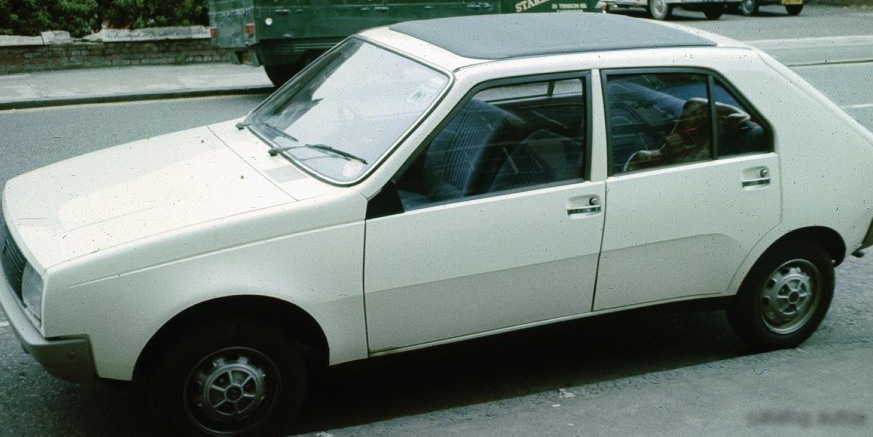
The Renault 14 (121) 1.2 (1210), producing 58 horsepower, was a mainstay of the Renault lineup from 1980 to 1983. Positioned as the entry-level variant of the R14 range, it offered affordable transportation within the compact hatchback segment. This model represented Renault’s attempt to provide a practical and economical vehicle for a broad customer base, particularly in Europe where fuel efficiency and compact size were highly valued. It was built on the Renault 14 platform, known for its relatively modern front-wheel-drive layout for its time.
Technical Specifications
| Brand | Renault |
| Model | 14 |
| Generation | 14 (121) |
| Type (Engine) | 1.2 (1210) (58 Hp) |
| Start of production | 1980 |
| End of production | 1983 |
| Powertrain Architecture | Internal Combustion engine |
| Body type | Hatchback |
| Seats | 5 |
| Doors | 5 |
| Fuel Type | Petrol (Gasoline) |
| Acceleration 0 – 100 km/h | 15.7 sec |
| Acceleration 0 – 62 mph | 15.7 sec |
| Acceleration 0 – 60 mph | 14.9 sec |
| Maximum speed | 143 km/h (88.86 mph) |
| Power | 58 Hp |
| Engine Model/Code | XZ5 |
| Engine aspiration | Naturally aspirated engine |
| Engine oil capacity | 4 l (4.23 US qt | 3.52 UK qt) |
| Coolant capacity | 6 l (6.34 US qt | 5.28 UK qt) |
| Fuel tank capacity | 48 l (12.68 US gal | 10.56 UK gal) |
Powertrain & Engine Architecture
The Renault 14 1.2 (1210) was powered by the XZ5 engine, a 1197cc inline-four cylinder petrol engine. This engine featured a relatively simple, naturally aspirated design. It utilized a single overhead camshaft (SOHC) valvetrain operating two valves per cylinder. Fuel delivery was managed by a single downdraft carburetor, a common setup for vehicles of this era and price point. The carburetor provided adequate, though not particularly refined, fuel atomization. The engine’s modest output of 58 horsepower at around 6000 rpm and approximately 67 lb-ft of torque was sufficient for everyday driving, but didn’t offer significant performance reserves. The engine block was cast iron, contributing to its durability, while the cylinder head was aluminum. The transmission paired with this engine was a four-speed manual, although a three-speed automatic transmission was also available, albeit less common. The automatic transmission was a conventional hydraulic unit, offering smooth but somewhat slow shifts.
Driving Characteristics
The 1.2-liter Renault 14 offered a predictable, if uninspiring, driving experience. Acceleration was leisurely, with 0-60 mph taking nearly 15 seconds. The engine felt strained when pushed hard, particularly when fully loaded or climbing hills. The four-speed manual transmission allowed drivers to make the most of the available power, but required frequent shifting to maintain momentum. The automatic transmission, while convenient, further diminished acceleration and responsiveness. The car’s front-wheel-drive layout provided decent handling, but understeer was noticeable when cornering at higher speeds. The suspension, consisting of independent front suspension with torsion bars and a twist-beam rear axle, offered a reasonable compromise between ride comfort and handling. The steering was light and easy, making it well-suited for urban driving.
Equipment & Trim Levels
The 1.2-liter Renault 14 was typically offered in a basic trim level, reflecting its position as the entry point to the range. Standard equipment included cloth upholstery, vinyl floor covering, and basic instrumentation consisting of a speedometer, fuel gauge, and temperature gauge. The dashboard was constructed from durable plastic and featured a functional, if somewhat spartan, design. Optional extras included a radio, heated rear window, and upgraded upholstery. Higher trim levels, available with larger engines, offered features such as power windows, central locking, and more luxurious interior appointments. The base model prioritized affordability and practicality over luxury.
Chassis & Braking
The Renault 14 featured a monocoque chassis construction, providing a good level of structural rigidity for its time. The front suspension utilized independent torsion bar springs, offering a comfortable ride and predictable handling. The rear suspension employed a simple twist-beam axle, which was cost-effective and space-efficient. Braking was initially provided by drum brakes on all four wheels, although later models often featured front disc brakes for improved stopping power. The braking system was hydraulic, with a dual-circuit master cylinder for added safety. The car’s relatively light weight helped to compensate for the modest braking performance. Stabilizer bars were not typically fitted to the base 1.2-liter model, further contributing to its neutral handling characteristics.
Market Reception & Comparison
The Renault 14 1.2 received mixed reviews from automotive critics. While praised for its fuel efficiency and practicality, it was often criticized for its lack of performance and basic interior. Compared to its siblings, such as the 1.4-liter and 1.6-liter versions, the 1.2-liter model offered significantly less power and refinement. The 1.4 and 1.6 models were better suited for highway driving and offered a more engaging driving experience. However, the 1.2-liter version was more affordable to purchase and operate, making it a popular choice for budget-conscious buyers. Compared to competitors like the Peugeot 205 and Citroën Visa, the Renault 14 offered a similar level of practicality and affordability, but lacked the sporting pretensions of the Peugeot.
Legacy
The Renault 14 1.2, while not a performance icon, proved to be a reliable and durable vehicle. The XZ5 engine, though simple in design, was generally robust and capable of withstanding years of use. The car’s relatively simple mechanicals made it relatively easy and inexpensive to maintain. Today, the Renault 14 1.2 is a relatively rare sight on the roads, but it remains a popular choice among classic car enthusiasts who appreciate its affordability and simplicity. Parts availability can be a challenge, but many components are still available through specialist suppliers. The car’s enduring appeal lies in its ability to provide a nostalgic glimpse into a bygone era of automotive design and engineering. Well-maintained examples are increasingly sought after by collectors and enthusiasts.
