
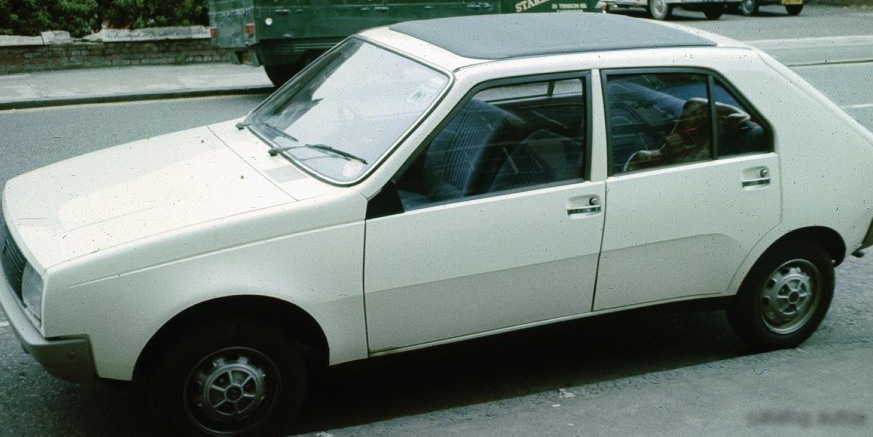
The Renault 14, specifically the 1.4-liter (1212) variant producing 71 horsepower, was a popular compact hatchback manufactured between 1979 and 1983. Positioned as the entry-level model within the Renault 14 range, it aimed to provide affordable and practical transportation for families and individuals. This generation, denoted as the 121 series, represented Renault’s attempt to modernize its small car offerings and compete with increasingly sophisticated rivals in the European market. The 14 was a significant departure from the older Renault 12, offering a more spacious interior and improved driving dynamics.
Technical Specifications
| Brand | Renault |
| Model | 14 |
| Generation | 14 (121) |
| Type (Engine) | 1.4 (1212) (71 Hp) |
| Start of production | 1979 |
| End of production | 1983 |
| Powertrain Architecture | Internal Combustion engine |
| Body type | Hatchback |
| Seats | 5 |
| Doors | 5 |
| Fuel Type | Petrol (Gasoline) |
| Acceleration 0 – 100 km/h | 13.4 sec |
| Acceleration 0 – 62 mph | 13.4 sec |
| Acceleration 0 – 60 mph | 12.7 sec |
| Maximum speed | 156 km/h (96.93 mph) |
| Power | 71 Hp |
| Engine Model/Code | X5J |
| Engine aspiration | Naturally aspirated engine |
| Engine oil capacity | 4 l (4.23 US qt | 3.52 UK qt) |
| Coolant capacity | 6 l (6.34 US qt | 5.28 UK qt) |
| Fuel tank capacity | 48 l (12.68 US gal | 10.56 UK gal) |
Powertrain & Engine Architecture
The heart of the Renault 14 1.4 was the X5J engine, a 1397cc inline-four cylinder petrol engine. This engine featured a relatively simple, yet robust design. It employed a single overhead camshaft (SOHC) operating two valves per cylinder. Fuel delivery was managed by a single, down-draft carburetor – a common setup for vehicles of this era. The carburetor, while less precise than fuel injection, contributed to the engine’s simplicity and ease of maintenance. The engine’s bore and stroke measured 76mm x 80mm, respectively. The compression ratio was typically around 8.5:1. The 71 horsepower output was achieved at 6000 rpm, with peak torque of approximately 88 lb-ft at 3500 rpm. This engine was mated to a three-speed automatic transmission, a relatively uncommon feature in this class of vehicle at the time. The automatic transmission was designed for smooth, comfortable operation rather than outright performance.
Driving Characteristics
The Renault 14 1.4 Automatic offered a comfortable, if not particularly exhilarating, driving experience. The three-speed automatic transmission, while providing convenience, did detract from the car’s overall performance. Acceleration was leisurely, with 0-60 mph taking around 12.7 seconds. The gear ratios were optimized for fuel economy and ease of driving in urban environments. The automatic transmission tended to hunt for gears on inclines, and downshifts were not particularly quick. Compared to the five-speed manual version of the 1.4, the automatic suffered a noticeable performance penalty. The manual version offered quicker acceleration and better fuel economy. The suspension, while basic, provided a reasonably comfortable ride, absorbing bumps and imperfections in the road surface adequately. Steering was light and easy, making the car maneuverable in tight spaces.
Equipment & Trim Levels
The 1.4 Automatic trim level of the Renault 14 was generally considered the base model. Standard equipment included cloth upholstery, basic instrumentation (speedometer, fuel gauge, temperature gauge), and a two-spoke steering wheel. The interior was functional and durable, prioritizing practicality over luxury. Optional extras included a radio, heated rear window, and upgraded upholstery. The exterior featured steel wheels with hubcaps, black plastic bumpers, and relatively simple trim. The dashboard layout was straightforward, with all controls within easy reach of the driver. Air conditioning was not typically offered on this base trim level.
Chassis & Braking
The Renault 14 featured a front-engine, front-wheel-drive layout. The suspension consisted of independent front suspension with MacPherson struts and a torsion beam rear axle. This setup provided a good balance between ride comfort and handling. The braking system was comprised of disc brakes on the front wheels and drum brakes on the rear wheels. The brakes were adequate for normal driving conditions, but lacked the stopping power of more modern systems. The car’s relatively light weight (around 1,800 lbs) helped to compensate for the less powerful braking system. Stabilizer bars were not typically fitted to the base 1.4 model, further contributing to a softer, more comfort-oriented ride.
Market Reception & Comparison
The Renault 14 1.4 Automatic was generally well-received as an affordable and practical family car. Critics praised its spacious interior, comfortable ride, and fuel efficiency. However, the automatic transmission was often criticized for its sluggish performance. Compared to other vehicles in its class, such as the Ford Fiesta and the Volkswagen Polo, the Renault 14 offered a good value proposition. The 1.4 engine provided adequate power for everyday driving, and the automatic transmission appealed to drivers who preferred convenience over performance. Fuel economy was respectable for the time, averaging around 30-35 mpg. Reliability was generally good, although the carburetor required periodic adjustment and maintenance.
Legacy
The Renault 14, including the 1.4 Automatic variant, remains a popular classic car among enthusiasts. The X5J engine is known for its durability and relative simplicity, making it relatively easy to maintain and repair. Parts availability is generally good, although some components may be becoming increasingly scarce. Today, the Renault 14 1.4 Automatic is often sought after by collectors and those looking for a nostalgic driving experience. While not a performance car, it represents a significant piece of automotive history and a testament to Renault’s commitment to providing affordable and practical transportation. The automatic transmission, while not the most desirable configuration for performance enthusiasts, adds to the car’s unique character and appeal to a wider range of drivers. Well-maintained examples command reasonable prices in the used car market, reflecting the car’s enduring popularity and historical significance.
