
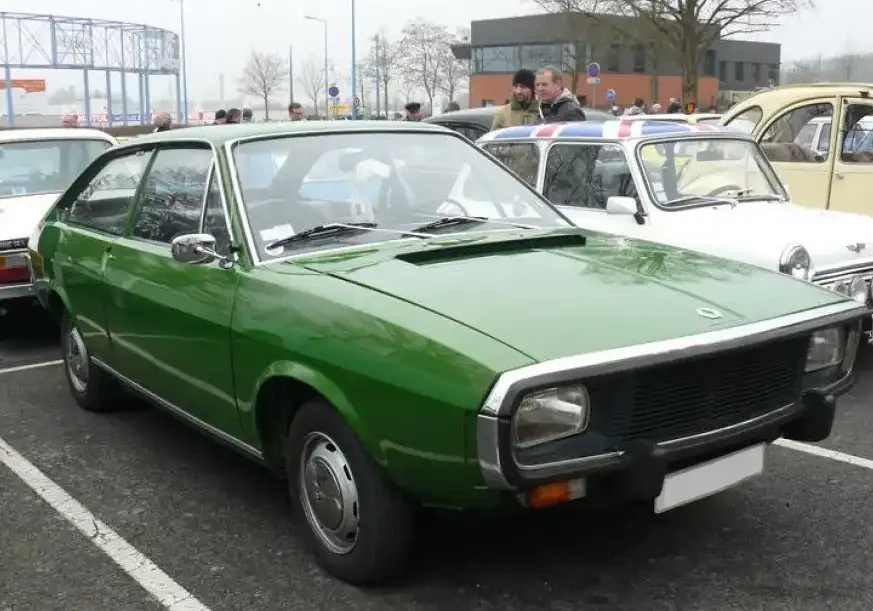
The Renault 15, specifically the 1.6-liter (90 hp) variant, was a coupe produced between July 1971 and August 1979. Positioned as a stylish and relatively affordable offering within the Renault lineup, it represented a move towards more modern, performance-oriented designs for the French automaker. The 15 was based on the Renault 12 platform, but featured a distinctive fastback coupe body style penned by Robert Opron, who also contributed to the design of the Citroën DS and SM. This variant, with its 1.6-liter engine and automatic transmission (where available, as manual was more common), occupied a middle ground in the 15’s range, offering a balance between performance and economy.
Technical Specifications
| Brand | Renault |
| Model | 15 |
| Generation | 15 |
| Type (Engine) | 1.6 (90 Hp) |
| Start of Production | July, 1971 |
| End of Production | August, 1979 |
| Powertrain Architecture | Internal Combustion Engine |
| Body Type | Coupe |
| Seats | 5 |
| Doors | 3 |
| Fuel Type | Petrol (Gasoline) |
| Maximum Speed | 169 km/h (105.01 mph) |
| Power | 90 Hp |
| Engine Model/Code | 807-10 |
| Engine Aspiration | Naturally Aspirated |
| Engine Oil Capacity | 4.3 l (4.54 US qt | 3.78 UK qt) |
| Coolant Capacity | 5.5 l (5.81 US qt | 4.84 UK qt) |
| Fuel Tank Capacity | 55.0 l (14.53 US gal | 12.1 UK gal) |
Powertrain & Engine Architecture
The heart of the Renault 15 1.6 was the 807-10 engine, a 1,647 cc inline-four cylinder gasoline engine. This engine featured a cast iron block and an aluminum cylinder head. It utilized a single overhead camshaft (SOHC) valvetrain, operating two valves per cylinder. Fuel delivery was managed by a Solex carburetor, a common setup for European cars of the era. While not particularly advanced, the carburetor provided adequate fuel atomization for the engine’s output. The 90 hp figure was achieved at 6,000 rpm, with peak torque of approximately 103 lb-ft (140 Nm) at 4,000 rpm. The engine was known for its relatively smooth operation and decent low-end torque, making it suitable for everyday driving. The automatic transmission, a three-speed unit, was less common than the four-speed manual gearbox. The automatic was sourced from Renault’s own production, and while it provided convenience, it did impact acceleration and fuel economy compared to the manual version.
Driving Characteristics
The Renault 15 1.6 with the automatic transmission offered a comfortable, if not particularly sporty, driving experience. Acceleration from 0 to 60 mph (0-97 km/h) was estimated to be around 12-13 seconds, which was respectable for the time but noticeably slower than the manual transmission variants. The automatic transmission’s gear ratios were geared towards fuel efficiency and smooth cruising rather than outright performance. The car felt relatively relaxed on the highway, capable of maintaining a steady speed without excessive engine strain. However, overtaking maneuvers required careful planning. The suspension, consisting of independent front suspension with coil springs and a torsion beam rear axle, provided a reasonably comfortable ride, absorbing bumps and imperfections in the road surface effectively. Steering was light and easy, making the car maneuverable in urban environments.
Equipment & Trim Levels
The Renault 15 1.6 typically came equipped with basic amenities as standard. This included cloth upholstery, a basic instrument cluster with speedometer, fuel gauge, and temperature gauge, and manually operated windows. The interior design was functional and relatively uncluttered. Optional extras included a vinyl roof, upgraded upholstery, a radio, and, in some markets, air conditioning. The trim level for the 1.6 variant generally fell in the mid-range of the 15 lineup. It offered more features than the base models but lacked the luxury appointments found in the higher-specification versions. The dashboard layout was simple, with most controls within easy reach of the driver.
Chassis & Braking
The Renault 15 utilized a monocoque chassis construction, providing a good balance of strength and weight. The front suspension featured independent coil springs and wishbones, while the rear suspension employed a torsion beam axle. This setup provided a comfortable ride and predictable handling. Braking was initially accomplished with drum brakes on all four wheels. Later models, particularly those destined for export markets, were often equipped with front disc brakes, offering improved stopping power. The braking system was hydraulically operated, providing a reasonable level of control. Stabilizer bars were not standard equipment on all models, but were often included as an option to reduce body roll during cornering.
Market Reception & Comparison
The Renault 15 1.6 was generally well-received by automotive critics as a stylish and practical coupe. The 1.6-liter engine was considered adequate for most driving situations, although some reviewers noted that the automatic transmission dulled the car’s performance. Compared to other coupes of the era, such as the Ford Capri or Opel Manta, the Renault 15 offered a more refined and sophisticated driving experience. Fuel economy was reasonable for the time, averaging around 28-32 mpg (US) in mixed driving conditions. Reliability was generally good, although the carburetor required periodic adjustment and maintenance. The manual transmission versions were often preferred by enthusiasts due to their superior performance and fuel efficiency.
Legacy
The Renault 15, and particularly the 1.6-liter variant, has gained a following among classic car enthusiasts. The car’s distinctive styling and relatively simple mechanicals make it an appealing restoration project. The 807-10 engine is known for its durability, and parts availability is generally good, although some components can be difficult to find. In the used car market, well-maintained examples of the Renault 15 1.6 command a modest premium. The car represents a significant chapter in Renault’s history, showcasing the automaker’s commitment to stylish and affordable transportation. While not a high-performance machine, the Renault 15 1.6 offered a comfortable and enjoyable driving experience, and its enduring appeal continues to resonate with car enthusiasts today.
