
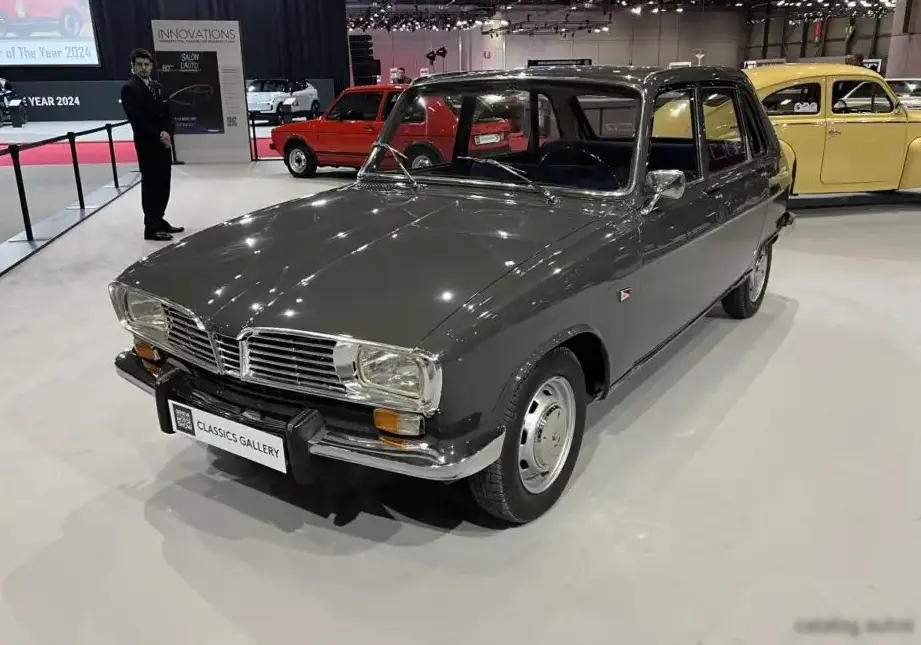
The Renault 16, specifically the 115 variant powered by the 1.5-liter engine producing 55 horsepower, represents a pivotal moment in automotive history. Produced from 1965 to 1975, this model wasn’t simply a car; it was a statement. It was Renault’s first front-wheel-drive family car, and a radical departure from the rear-wheel-drive layouts prevalent at the time. The 115 designation refers to the internal Renault project code, and the 1.5 (55 Hp) identifies the engine displacement and power output. This variant occupied the entry-level position within the Renault 16 lineup, offering affordable family transportation during a period of significant social and economic change in Europe.
Technical Specifications
| Brand | Renault |
| Model | 16 |
| Generation | 16 (115) |
| Type (Engine) | 1.5 (55 Hp) |
| Start of Production | 1965 |
| End of Production | 1975 |
| Powertrain Architecture | Internal Combustion Engine |
| Body Type | Hatchback |
| Seats | 5 |
| Doors | 5 |
| Fuel Type | Petrol (Gasoline) |
| Power | 55 Hp |
| Engine Model/Code | A1K 697 |
| Engine Aspiration | Naturally Aspirated |
| Engine Oil Capacity | 4 l (4.23 US qt | 3.52 UK qt) |
| Coolant Capacity | 5.8 l (6.13 US qt | 5.1 UK qt) |
| Fuel Tank Capacity | 50 l (13.21 US gal | 11 UK gal) |
Powertrain & Engine Architecture
The heart of the Renault 16 1.5 was the A1K 697 engine, a 1,471 cc inline-four cylinder petrol engine. This engine featured a cast iron block and cylinder head, a relatively common construction for the era. It employed a single overhead camshaft (SOHC) valvetrain, operating two valves per cylinder. Fuel delivery was managed by a Solex carburetor, a standard feature for European cars of this period. The engine’s 55 horsepower output at 4,800 rpm, and 88 lb-ft of torque at 3,000 rpm, were modest by modern standards, but adequate for the car’s intended purpose. The engine was paired with a three-speed manual transmission, or optionally a three-speed automatic transmission. The automatic transmission, while offering convenience, was known to slightly reduce acceleration and fuel economy compared to the manual version. The front-wheel-drive layout, a key innovation for Renault, contributed to the car’s relatively spacious interior and improved traction in adverse weather conditions.
Driving Characteristics
The Renault 16 1.5, particularly in automatic guise, was not a performance car. Acceleration was leisurely, taking approximately 18 seconds to reach 60 mph. However, the car’s strengths lay in its comfortable ride and practical design. The front-wheel-drive configuration provided predictable handling, and the relatively soft suspension absorbed bumps effectively. The three-speed automatic transmission offered smooth, if somewhat slow, gear changes. The gear ratios were optimized for fuel economy and ease of driving rather than outright speed. Compared to the later, more powerful 1.6-liter versions of the Renault 16, the 1.5 felt noticeably underpowered, especially when fully loaded with passengers and luggage. The manual transmission version offered a slightly more engaging driving experience, allowing the driver to better utilize the engine’s limited power.
Equipment & Trim Levels
The Renault 16 1.5, as the entry-level model, was equipped with a fairly basic level of standard features. It typically included cloth upholstery, a simple dashboard with basic instrumentation (speedometer, fuel gauge, and temperature gauge), and manually operated windows and door locks. The steering was unassisted, requiring a bit more effort at low speeds. Optional extras included a radio, a heater, and upgraded upholstery. The interior was surprisingly spacious for a car of its size, thanks to the front-wheel-drive layout and clever packaging. The rear seats could be folded down to increase cargo capacity, adding to the car’s practicality. The exterior styling was characterized by clean lines and a distinctive hatchback design, which was relatively uncommon in the 1960s.
Chassis & Braking
The Renault 16 1.5 featured an independent front suspension with coil springs and a torsion beam rear suspension. This suspension setup provided a comfortable ride and decent handling characteristics. The braking system consisted of drum brakes on all four wheels, which were adequate for the car’s weight and performance. Power steering was not available on this variant. The chassis was a monocoque construction, providing good structural rigidity. The car’s relatively light weight (around 2,100 lbs) helped to offset the engine’s modest power output. Stabilizer bars were not standard equipment on the base 1.5 model, further contributing to the car’s softer ride.
Market Reception & Comparison
The Renault 16 1.5 was generally well-received by critics and the public. It was praised for its innovative design, spacious interior, and comfortable ride. However, some critics noted the engine’s lack of power, particularly when compared to competitors like the Peugeot 404 or the Citroën DS. The automatic transmission version was often criticized for its sluggish performance. In terms of fuel economy, the Renault 16 1.5 offered reasonable figures for the time, averaging around 28-32 mpg. Compared to the more powerful 1.6-liter versions, the 1.5 was significantly more affordable, making it an attractive option for budget-conscious buyers. The 1.6L offered a noticeable performance boost, but at a higher price point. The 1.5 was often chosen by families and individuals who prioritized practicality and comfort over outright speed.
Legacy
The Renault 16, and particularly the 1.5 variant, holds a significant place in automotive history. It was a groundbreaking car that popularized the front-wheel-drive layout and the hatchback body style. The A1K 697 engine, while not particularly powerful, proved to be relatively reliable and durable. Today, the Renault 16 1.5 is a sought-after classic car, particularly among enthusiasts who appreciate its innovative design and historical significance. Parts availability can be challenging, but a dedicated community of owners and restorers exists to support the preservation of these vehicles. Well-maintained examples command respectable prices in the used car market, reflecting the car’s enduring appeal and its importance as a milestone in automotive engineering. The 1.5 automatic, while not the most desirable version, remains a charming and affordable entry point into the world of classic Renault ownership.
