
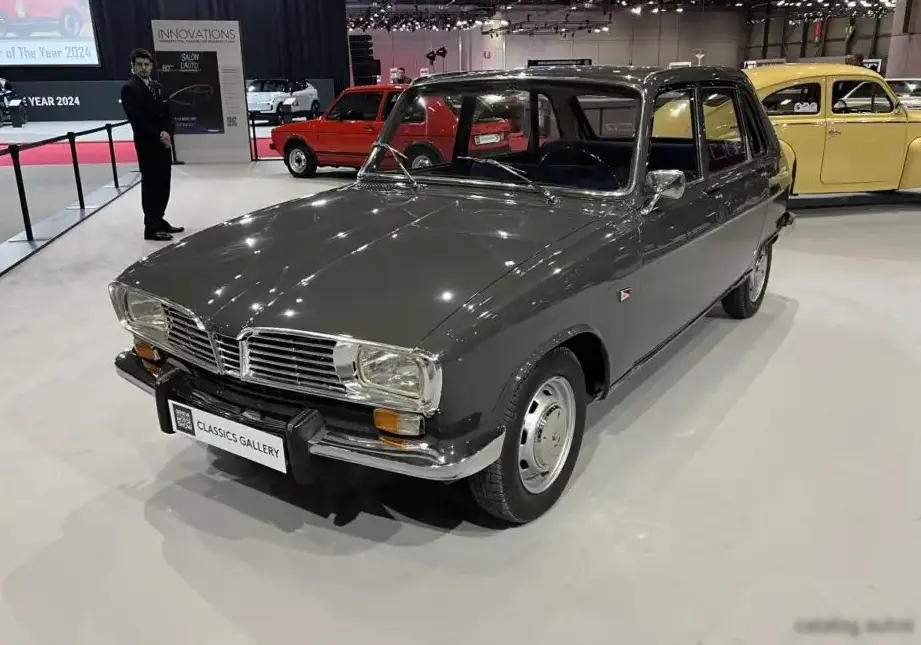
The Renault 16 1.6 TA, produced between 1969 and 1980, represents a significant iteration of the innovative Renault 16 model. Falling within the 115 series, this variant was positioned as a mainstream offering within the Renault 16 lineup, providing a balance of practicality, comfort, and affordability. The Renault 16, launched in 1965, was a groundbreaking vehicle, being one of the first front-wheel-drive family cars with a hatchback configuration. The 1.6 TA specifically catered to buyers seeking a reliable and economical family vehicle, particularly in European markets where fuel efficiency and space utilization were highly valued. It served as a workhorse for families and a popular choice for those needing a versatile vehicle for both urban and rural driving.
Technical Specifications
| Brand | Renault |
| Model | 16 |
| Generation | 16 (115) |
| Type (Engine) | 1.6 TA (71 Hp) |
| Start of Production | 1969 |
| End of Production | 1980 |
| Powertrain Architecture | Internal Combustion Engine |
| Body Type | Hatchback |
| Seats | 5 |
| Doors | 5 |
| Fuel Type | Petrol (Gasoline) |
| Power | 71 Hp |
| Engine Model/Code | A2L 821 |
| Engine Aspiration | Naturally Aspirated |
| Engine Oil Capacity | 4.3 l (4.54 US qt | 3.78 UK qt) |
| Coolant Capacity | 6.6 l (6.97 US qt | 5.81 UK qt) |
| Fuel Tank Capacity | 50 l (13.21 US gal | 11 UK gal) |
Powertrain & Engine Architecture
The Renault 16 1.6 TA was powered by the A2L 821 engine, a 1.6-liter (1596 cc) inline-four cylinder, naturally aspirated gasoline engine. This engine featured a cast iron block and an aluminum cylinder head. It utilized a single overhead camshaft (SOHC) valvetrain, operating two valves per cylinder. Fuel delivery was managed by a Solex carburetor, a common setup for the era, providing adequate but not particularly sophisticated fuel atomization. The engine produced 71 horsepower (53 kW) at 5500 rpm and approximately 98 lb-ft (133 Nm) of torque at 3500 rpm. The ‘TA’ designation indicated the transmission type – in this case, a three-speed automatic transmission. This automatic was a traditional hydraulic torque converter type, offering smooth but relatively slow gear changes compared to modern automatics. The engine’s design prioritized reliability and low-end torque, making it suitable for everyday driving conditions.
Driving Characteristics
The 1.6 TA’s driving experience was characterized by its comfortable ride and ease of use. The automatic transmission, while not sporty, made it particularly appealing to drivers unfamiliar or uninterested in manual gearboxes. Acceleration was modest, with a 0-60 mph time estimated around 16-18 seconds. The engine’s torque delivery was relatively flat, providing sufficient power for cruising and overtaking on moderate inclines. Compared to the manual transmission versions of the 1.6, the automatic suffered a slight performance penalty due to the transmission’s inherent inefficiencies. However, the convenience factor often outweighed this drawback for many buyers. The front-wheel-drive layout contributed to good traction in most conditions, and the relatively light weight of the vehicle (around 2,200 lbs) helped to mitigate the engine’s modest power output. The steering was light and precise, making it easy to maneuver in urban environments.
Equipment & Trim Levels
The Renault 16 1.6 TA typically came equipped with a reasonable level of standard features for its time. Interior upholstery was generally cloth, available in a variety of colors and patterns. The dashboard featured a straightforward layout with analog gauges for speed, fuel level, coolant temperature, and oil pressure. A basic AM radio was often included. Optional extras included a sunroof, upgraded upholstery, and a more sophisticated radio with additional features. The 1.6 TA occupied a mid-range position in the Renault 16 lineup. Higher trim levels, such as the 1.6 TS, offered more powerful engines, upgraded interiors, and additional features like disc brakes on all four wheels. Base models, typically with smaller engines, were more spartanly equipped and targeted budget-conscious buyers.
Chassis & Braking
The Renault 16 featured an independent front suspension with MacPherson struts and a torsion beam rear suspension. This setup provided a comfortable ride and decent handling characteristics. Steering was rack and pinion, offering precise control. The 1.6 TA typically came equipped with drum brakes on all four wheels, which were adequate for the vehicle’s weight and performance. However, higher trim levels often featured front disc brakes, providing improved stopping power. The chassis was a monocoque construction, providing good structural rigidity. Stabilizer bars were generally not standard on the 1.6 TA, but could be added as an option to reduce body roll during cornering.
Market Reception & Comparison
The Renault 16 1.6 TA was generally well-received by automotive critics and buyers alike. It was praised for its spacious interior, comfortable ride, and innovative hatchback design. The automatic transmission was seen as a significant selling point for those seeking convenience. However, some critics noted the engine’s modest power output and the automatic transmission’s relatively slow shift times. Compared to other vehicles in its class, such as the Peugeot 504 and the Citroën DS, the Renault 16 offered a more practical and affordable alternative. Fuel economy was reasonable for the era, averaging around 25-30 mpg. Reliability was generally good, although the carburetor required periodic adjustment and maintenance. The 1.6 TA offered a compelling package for families seeking a versatile and reliable vehicle.
Legacy
The Renault 16, and the 1.6 TA variant specifically, holds a significant place in automotive history as a pioneer of the modern hatchback design. The A2L 821 engine, while not particularly powerful, proved to be remarkably durable and reliable. Today, well-maintained Renault 16s are sought after by classic car enthusiasts. The 1.6 TA, with its automatic transmission, is often preferred by those seeking a more comfortable and user-friendly classic car experience. Parts availability can be a challenge, but a dedicated community of owners and suppliers exists to support the preservation of these iconic vehicles. The Renault 16’s influence can still be seen in modern hatchback designs, and it remains a testament to Renault’s innovative spirit.
