
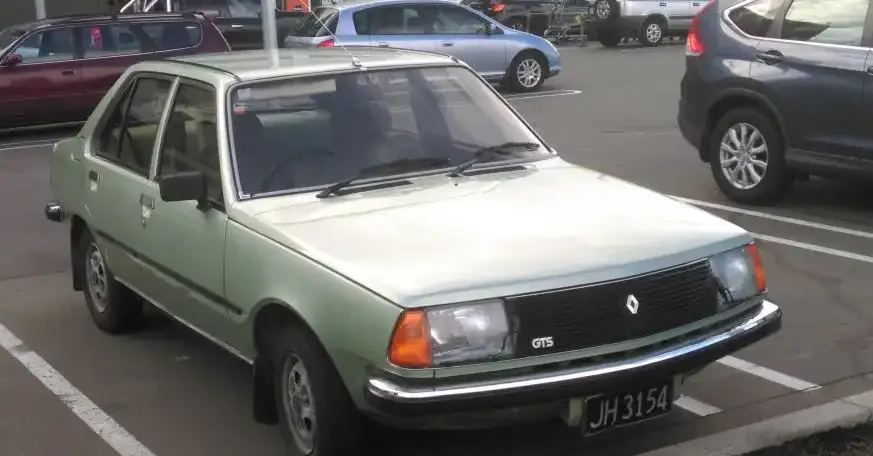
The Renault 18, produced between 1978 and 1986, represented a significant step forward for Renault in the compact family car segment. The “134” designation refers to the initial series, and within this generation, the 1.4-liter (1340cc) engine producing 64 horsepower was a mainstay, particularly in European and South American markets. This variant served as the entry-level offering, providing affordable transportation for a broad customer base. It was positioned below the more powerful 1.6 and 2.0-liter versions, and aimed at buyers prioritizing economy and practicality over outright performance. The Renault 18 was a key model for Renault, contributing to their increased market share during the late 1970s and early 1980s.
Technical Specifications
| Brand | Renault |
| Model | 18 |
| Generation | 18 (134) |
| Type (Engine) | 1.4 (1340) (64 Hp) |
| Start of Production | 1978 |
| End of Production | 1986 |
| Powertrain Architecture | Internal Combustion Engine |
| Body Type | Sedan |
| Seats | 5 |
| Doors | 4 |
| Fuel Type | Petrol (Gasoline) |
| Power | 64 Hp |
| Engine Model/Code | 847-20 |
| Engine Aspiration | Naturally Aspirated |
| Engine Oil Capacity | 3.3 l (3.49 US qt | 2.9 UK qt) |
| Coolant Capacity | 6 l (6.34 US qt | 5.28 UK qt) |
| Fuel Tank Capacity | 53 l (14 US gal | 11.66 UK gal) |
Powertrain & Engine Architecture
The Renault 18 1.4-liter engine, designated 847-20, was a relatively simple, overhead valve (OHV) design. It featured a cast iron block and cylinder head, contributing to its durability. The engine utilized a single, two-barrel Solex carburetor for fuel delivery, a common setup for the era. While not particularly sophisticated, this system proved reliable and easy to maintain. The engine’s 80.5mm bore and 76mm stroke resulted in a displacement of 1340cc. The valvetrain consisted of a single camshaft operating the intake and exhaust valves. The 64 horsepower output was achieved at approximately 5300 rpm, with peak torque of around 88 lb-ft (120 Nm) at 3000 rpm. The engine was typically paired with a four-speed manual transmission, but a three-speed automatic transmission was also available, though less common. The automatic transmission was a conventional hydraulic unit, offering smooth but not particularly quick shifts.
Driving Characteristics
The Renault 18 1.4, particularly when equipped with the three-speed automatic transmission, was not known for its blistering performance. Acceleration was modest, taking approximately 14-16 seconds to reach 60 mph (97 km/h). The automatic transmission’s gear ratios were geared towards fuel economy rather than spirited driving. The engine felt strained at higher speeds, and overtaking required careful planning. However, in urban driving conditions, the 1.4-liter engine provided adequate power for everyday commuting. The automatic transmission made the car easy to drive, especially for those unfamiliar with manual gearboxes. Compared to the 1.6 and 2.0-liter versions, the 1.4 felt noticeably slower, but it offered a smoother and more relaxed driving experience. The manual transmission version offered slightly better performance and fuel economy, but at the cost of increased driver involvement.
Equipment & Trim Levels
The base-level Renault 18 1.4 was fairly spartan in its equipment. Standard features typically included cloth upholstery, vinyl floor covering, and basic instrumentation consisting of a speedometer, fuel gauge, and temperature gauge. The steering was unassisted, and power steering was not available on this trim level. The car featured drum brakes on all four wheels, which were adequate for the car’s weight and performance. Optional extras included a radio, upgraded upholstery, and a sunroof. Higher trim levels, such as the “GTS” and “TS”, offered more luxurious features, including power steering, disc brakes on the front wheels, and upgraded interior trim. The 1.4 model was often seen as a practical, no-frills option for budget-conscious buyers.
Chassis & Braking
The Renault 18 utilized a relatively simple chassis design. It featured a MacPherson strut front suspension and a torsion beam rear suspension. The suspension was tuned for comfort rather than sporty handling. The car’s unladen weight was around 2200-2300 lbs (998-1043 kg), depending on the specific equipment. As mentioned previously, the braking system consisted of drum brakes on all four wheels. While adequate for normal driving, the drum brakes lacked the stopping power and fade resistance of disc brakes. The car’s steering was direct but required a fair amount of effort, especially at low speeds. Stabilizer bars were not standard on the base 1.4 model, further contributing to its less-than-sporty handling characteristics.
Market Reception & Comparison
The Renault 18 1.4 was generally well-received as an affordable and reliable family car. Critics praised its fuel economy and practicality, but noted its lack of performance. Compared to competitors such as the Ford Escort and Opel Kadett, the Renault 18 1.4 offered a similar level of equipment and performance at a competitive price. The 1.6 and 2.0-liter versions of the Renault 18 were generally considered to be better performers, but they also came with a higher price tag. The 1.4-liter engine’s fuel economy was a key selling point, particularly during the oil crises of the 1970s and 1980s. Reliability was generally good, although the carburetor required periodic adjustment and maintenance.
Legacy
The Renault 18, and specifically the 1.4-liter variant, remains a relatively common sight on European and South American roads today. The engine’s simplicity and durability have contributed to its longevity. Parts availability is generally good, making it relatively easy to maintain and repair. However, finding well-preserved examples is becoming increasingly difficult. The Renault 18 1.4 is often viewed as a classic car, representing a bygone era of affordable and practical motoring. While not a particularly exciting car to drive by modern standards, it offers a charming and nostalgic driving experience. The 847-20 engine, while not a technological marvel, proved to be a robust and reliable powerplant, cementing the Renault 18’s place in automotive history.

