
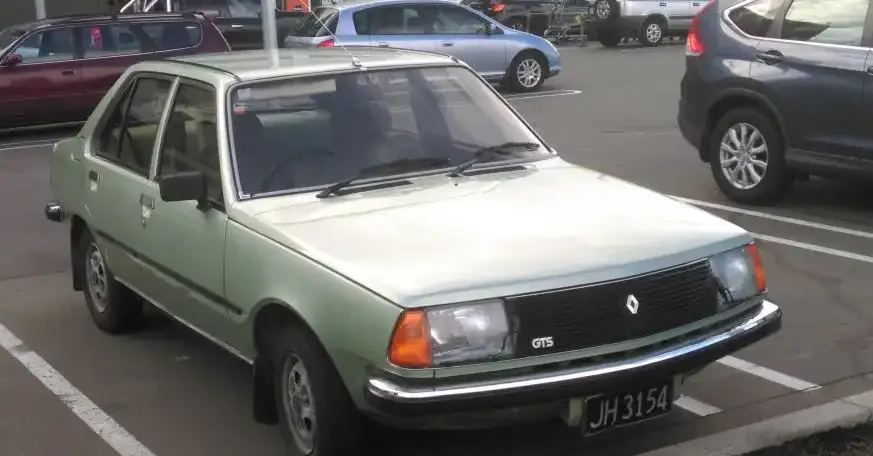
The Renault 18, produced between 1982 and 1986, represented a significant step forward for Renault in the compact family car segment. The “134” designation refers to the body style, a four-door sedan, while the “1.6 (1341)” identifies the engine displacement and code. This particular variant, powered by the 1.6-liter 843 engine producing 73 horsepower, served as a mainstay in the Renault 18 lineup, offering a balance of affordability, practicality, and reasonable performance. It was positioned as the entry-level to mid-range offering, appealing to buyers seeking a comfortable and reliable family vehicle.
Technical Specifications
| Brand | Renault |
| Model | 18 |
| Generation | 18 (134) |
| Type (Engine) | 1.6 (1341) (73 Hp) |
| Start of Production | 1982 |
| End of Production | 1986 |
| Powertrain Architecture | Internal Combustion Engine |
| Body Type | Sedan |
| Seats | 5 |
| Doors | 4 |
| Fuel Consumption (Urban) | 8.7 l/100 km (27 US mpg, 32.5 UK mpg, 11.5 km/l) |
| Fuel Consumption (Extra Urban) | 4.9 l/100 km (48 US mpg, 57.6 UK mpg, 20.4 km/l) |
| Fuel Type | Petrol (Gasoline) |
| Maximum Speed | 162 km/h (100.66 mph) |
| Power | 73 Hp |
| Engine Model/Code | 843 |
| Engine Aspiration | Naturally Aspirated |
| Engine Oil Capacity | 4.3 l (4.54 US qt, 3.78 UK qt) |
| Coolant Capacity | 6.3 l (6.66 US qt, 5.54 UK qt) |
| Fuel Tank Capacity | 53 l (14 US gal, 11.66 UK gal) |
Powertrain & Engine Architecture
The Renault 18 1.6 utilized the Renault 843 engine, a naturally aspirated, inline-four cylinder powerplant. This engine featured a cast iron block and an aluminum cylinder head. It employed a single overhead camshaft (SOHC) valvetrain, operating two valves per cylinder. Fuel delivery was managed by a Solex carburetor, a common setup for vehicles of this era. While not particularly advanced, the carburetor provided reliable fuel atomization and contributed to the engine’s relatively simple maintenance requirements. The 1341cc displacement, combined with a compression ratio of approximately 8.8:1, resulted in a modest 73 horsepower at 5,800 rpm and 98 lb-ft of torque at 3,500 rpm. The engine was paired with a three-speed automatic transmission, which, while offering convenience, did impact overall performance and fuel efficiency compared to the available five-speed manual.
Driving Characteristics
The Renault 18 1.6 Automatic offered a comfortable, if not particularly exhilarating, driving experience. The automatic transmission, while smooth in operation, featured relatively widely spaced gear ratios. This resulted in noticeable acceleration lag during kickdown and a tendency for the engine to operate at higher rpm during cruising speeds. The 73 horsepower output was adequate for everyday driving, but overtaking maneuvers required careful planning. Compared to the manual transmission version, the automatic suffered a slight performance penalty. The manual offered quicker acceleration and better fuel economy. The suspension, tuned for comfort, provided a compliant ride, absorbing bumps and imperfections in the road surface effectively. However, this came at the expense of sharp handling; the car exhibited noticeable body roll during cornering.
Equipment & Trim Levels
The Renault 18 1.6 Automatic typically came equipped with a reasonable level of standard features for its time. These included cloth upholstery, a basic instrument cluster with speedometer, fuel gauge, and temperature indicator, and manually adjustable seats. Power steering was often an optional extra, as was air conditioning. The interior trim was generally functional and durable, prioritizing practicality over luxury. Higher trim levels, such as the “GTE” or “TS”, offered additional features like upgraded upholstery, a more comprehensive instrument panel, and alloy wheels. The base 1.6 Automatic was generally characterized by its simplicity and focus on essential features.
Chassis & Braking
The Renault 18 utilized a relatively conventional chassis design, featuring a front MacPherson strut suspension and a rear trailing arm setup. The suspension geometry was tuned for ride comfort, as previously mentioned. Braking duties were handled by disc brakes on the front wheels and drum brakes on the rear. This configuration was typical for vehicles in this price range during the early 1980s. The braking system provided adequate stopping power for normal driving conditions, but lacked the sophistication of more modern systems. A stabilizer bar was fitted to the front suspension to reduce body roll, but its effectiveness was limited by the overall suspension design.
Market Reception & Comparison
The Renault 18 1.6 Automatic was generally well-received by automotive critics as a practical and affordable family car. It was praised for its comfortable ride, spacious interior, and reasonable fuel economy. However, the automatic transmission was often criticized for its sluggish performance and lack of responsiveness. Compared to competitors like the Peugeot 305 and the Citroën BX, the Renault 18 offered a more conventional and less technologically advanced package. However, it was often considered more reliable and easier to maintain. Fuel economy figures were competitive for the time, averaging around 27 mpg in urban driving and 48 mpg on the highway. The 1.6L engine was considered a good compromise between performance and fuel efficiency, although the more powerful 1.8L and 2.0L engines offered significantly more spirited driving experiences.
Legacy
The Renault 18, and specifically the 1.6 Automatic variant, has proven to be a relatively durable and reliable vehicle. While finding well-maintained examples today can be challenging, those that remain are often cherished by enthusiasts for their simplicity and classic charm. The 843 engine is known for its robustness and relatively straightforward maintenance requirements. However, age-related issues such as corrosion and wear on rubber components are common. The automatic transmission, while generally reliable, can be prone to issues if not properly maintained. In the used car market, the Renault 18 1.6 Automatic represents an affordable entry point into classic European motoring, appealing to those seeking a nostalgic and practical vehicle.

