
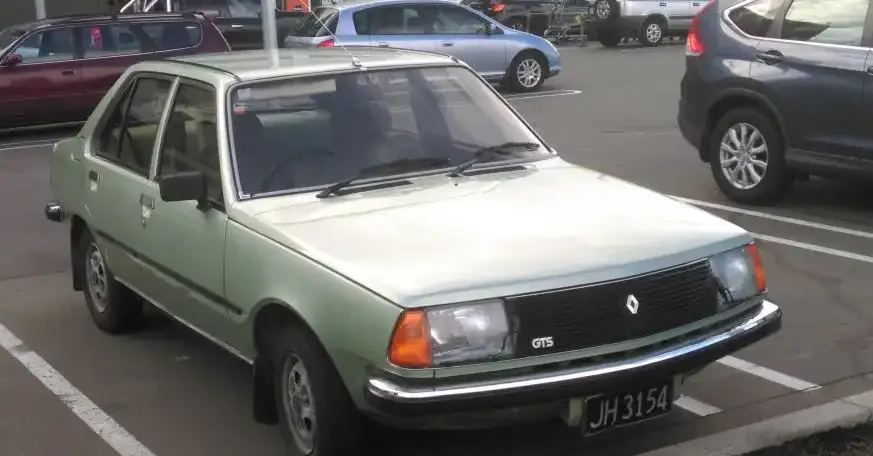
The Renault 18, specifically the 1.6-liter (1341cc) 79 horsepower variant produced between 1978 and 1982, represented a significant step forward for Renault in the compact family car segment. Falling under the internal designation 134, this model was a key component of Renault’s strategy to offer a modern, comfortable, and relatively affordable vehicle to a broad European audience. It was positioned as a practical and reliable choice, aimed at families and individuals seeking a no-nonsense sedan. The Renault 18 was built upon Renault’s new ‘X’ platform, which would later underpin other models like the Renault 20 and Peugeot 505, showcasing a commitment to modular design and cost-effectiveness.
Technical Specifications
| Brand | Renault |
| Model | 18 |
| Generation | 18 (134) |
| Type (Engine) | 1.6 (1341) (79 Hp) |
| Start of production | 1978 |
| End of production | 1982 |
| Powertrain Architecture | Internal Combustion engine |
| Body type | Sedan |
| Seats | 5 |
| Doors | 4 |
| Fuel consumption (urban) | 9.9 l/100 km (23.8 US mpg) |
| Fuel consumption (extra urban) | 6.6 l/100 km (35.6 US mpg) |
| Fuel Type | Petrol (Gasoline) |
| Maximum speed | 160 km/h (99.42 mph) |
| Power | 79 Hp |
| Engine Model/Code | 841-25 |
| Engine aspiration | Naturally aspirated |
| Engine oil capacity | 4.3 l (4.54 US qt) |
| Coolant capacity | 6.3 l (6.66 US qt) |
| Fuel tank capacity | 53 l (14 US gal) |
Powertrain & Engine Architecture
The heart of the Renault 18 1.6 was the 841-25 engine, a 1341cc inline-four cylinder petrol engine. This engine featured a relatively simple, yet robust design. It employed a single overhead camshaft (SOHC) valvetrain operating two valves per cylinder. Fuel delivery was managed by a Solex carburetor, a common setup for the era, providing adequate but not particularly sophisticated fuel atomization. The engine’s block was cast iron, contributing to its durability, while the cylinder head was aluminum, helping to reduce weight. The 79 horsepower output was achieved at 5,800 rpm, with peak torque of approximately 86 lb-ft at 3,500 rpm. This engine was paired with a three-speed automatic transmission, a relatively uncommon option in Europe at the time, and one that significantly altered the driving experience compared to the available four-speed manual.
Driving Characteristics
The Renault 18 1.6 Automatic offered a comfortable, if not particularly sporty, driving experience. The three-speed automatic transmission, while providing convenience, resulted in noticeable performance compromises compared to the manual gearbox equipped models. Acceleration was adequate for everyday driving, but overtaking maneuvers required careful planning. The gear ratios were optimized for fuel economy and smooth cruising rather than outright speed. The automatic transmission tended to hunt for gears on inclines, and the lack of a lock-up torque converter further impacted fuel efficiency at highway speeds. Compared to the later Renault 18 1.4 models, the 1.6 offered a noticeable power advantage, but the automatic transmission negated much of that benefit. The suspension, while comfortable, leaned towards a softer setup, resulting in some body roll during cornering.
Equipment & Trim Levels
The Renault 18 1.6 Automatic typically came with a reasonable level of standard equipment for its time. Interior appointments included cloth upholstery, a basic dashboard layout with analog gauges, and a four-spoke steering wheel. Power steering was often an optional extra, as was air conditioning. The trim level, often simply referred to as the ‘L’ or ‘TL’ variant, determined the level of equipment. Higher trim levels might include features like a more sophisticated radio, upgraded interior trim, and additional exterior chrome detailing. The automatic transmission itself was often considered a luxury feature, placing this variant slightly above the base models in terms of perceived value.
Chassis & Braking
The Renault 18 utilized a MacPherson strut front suspension and a torsion beam rear suspension. This setup provided a good balance between ride comfort and handling. The braking system consisted of disc brakes on the front wheels and drum brakes on the rear wheels. The braking performance was adequate for the vehicle’s weight and power output, but lacked the stopping power of more modern systems. Stabilizer bars were typically fitted to the front suspension, helping to reduce body roll. The chassis was a monocoque construction, providing a good level of structural rigidity.
Market Reception & Comparison
The Renault 18 1.6 Automatic was generally well-received by the motoring press as a practical and comfortable family car. However, the automatic transmission was often criticized for its sluggish performance and impact on fuel economy. Critics noted that the manual transmission versions offered a more engaging driving experience and better fuel efficiency. Compared to rivals like the Peugeot 305 and Citroën GSA, the Renault 18 offered a competitive package in terms of price and features. The 1.6-liter engine provided a reasonable balance between performance and fuel consumption, although it wasn’t as refined as some of its competitors. Reliability was generally good, although carburetor maintenance could be required periodically.
Legacy
The Renault 18, and specifically the 1.6 Automatic variant, holds a nostalgic place in the hearts of many European car enthusiasts. While not a performance icon, it represented a solid and dependable family car of its era. The 841 engine, while simple, proved to be relatively durable and is still found in running condition in many classic car circles today. The automatic transmission, however, is often considered the weakest link in the powertrain, and finding well-maintained examples can be challenging. In the used car market, these Renault 18s are increasingly sought after by collectors and enthusiasts looking for a piece of automotive history. Parts availability is generally good, although some specific trim pieces can be difficult to source. The Renault 18 paved the way for Renault’s continued success in the compact family car segment, and its influence can still be seen in modern Renault models.

