
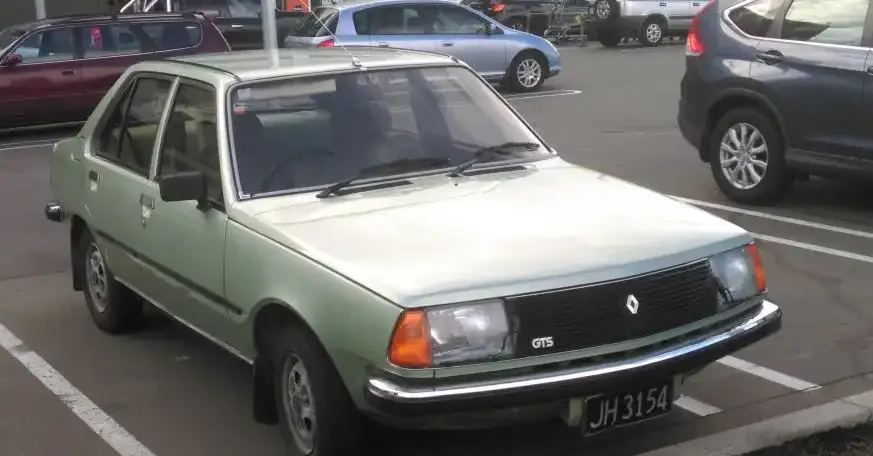
The Renault 18 1.6 Turbo, designated internally as the 1345, was a performance-oriented variant of the Renault 18, produced between 1980 and 1982. It represented a significant step up in power and driving experience compared to the standard 18 models, aiming to attract buyers seeking a more engaging and sporty compact sedan. The 18 itself was Renault’s replacement for the Renault 12, and was a key model in the company’s lineup during the early 1980s, particularly in European markets. The 1.6 Turbo variant was positioned as a premium offering within the range, bridging the gap between the base models and more luxurious trims.
Technical Specifications
| Brand | Renault |
| Model | 18 |
| Generation | 18 (134) |
| Type (Engine) | 1.6 Turbo (1345) (109 Hp) |
| Start of Production | 1980 |
| End of Production | 1982 |
| Powertrain Architecture | Internal Combustion Engine |
| Body Type | Sedan |
| Seats | 5 |
| Doors | 4 |
| Fuel Type | Petrol (Gasoline) |
| Power | 109 Hp |
| Engine Model/Code | A5L 807 |
| Engine Aspiration | Turbocharger |
| Engine Oil Capacity | 4.3 l (4.54 US qt | 3.78 UK qt) |
| Coolant Capacity | 6.3 l (6.66 US qt | 5.54 UK qt) |
| Fuel Tank Capacity | 53 l (14 US gal | 11.66 UK gal) |
Powertrain & Engine Architecture
The heart of the Renault 18 1.6 Turbo was the A5L 807 engine, a 1595cc inline-four cylinder gasoline engine equipped with a turbocharger and intercooler. This engine represented a significant technological advancement for Renault at the time. The turbocharger, supplied by Garrett, boosted power output considerably compared to the naturally aspirated 1.4 and 1.6 liter engines available in other 18 models. The engine utilized Bosch K-Jetronic mechanical fuel injection, a sophisticated system for its era, providing precise fuel delivery for optimal performance and efficiency. The cylinder head featured a single overhead camshaft (SOHC) operating two valves per cylinder. The turbocharger’s addition necessitated a lower compression ratio than the naturally aspirated versions, typically around 8.8:1, to prevent pre-ignition. While specific transmission options varied by market, the 1.6 Turbo was often paired with a four-speed manual gearbox, though a three-speed automatic transmission was also available, albeit less common. The automatic transmission was a Borg-Warner unit, known for its durability but also for its relatively conservative gear ratios.
Driving Characteristics
The Renault 18 1.6 Turbo offered a noticeably more spirited driving experience than its naturally aspirated counterparts. The turbocharger provided a distinct surge of power in the mid-range, making overtaking maneuvers easier and more confident. While 109 horsepower might seem modest by modern standards, it was a substantial figure for a compact sedan in the early 1980s. The manual transmission version delivered the most engaging experience, allowing drivers to fully exploit the engine’s power band. The automatic transmission, while offering convenience, did somewhat diminish the sense of urgency, with the gear ratios prioritizing fuel economy over outright acceleration. Handling was generally considered good for a car of its class, with a relatively compliant suspension providing a comfortable ride. However, the steering lacked the precision found in some contemporary rivals.
Equipment & Trim Levels
The 1.6 Turbo variant of the Renault 18 typically came with a higher level of standard equipment than the base models. This included features such as upgraded upholstery (often featuring a sporty cloth pattern), a more comprehensive instrument cluster with additional gauges (including a boost gauge), and often, alloy wheels. Optional extras included a sunroof, upgraded audio systems, and power windows. The interior trim was generally well-appointed for its price point, although the materials used were not as luxurious as those found in more expensive vehicles. The dashboard layout was functional and straightforward, with all essential controls within easy reach of the driver.
Chassis & Braking
The Renault 18 1.6 Turbo utilized a MacPherson strut front suspension and a torsion beam rear suspension. The suspension was tuned to provide a balance between comfort and handling. Braking systems varied depending on the market and specific trim level. Most 1.6 Turbo models were equipped with disc brakes on the front wheels and drum brakes on the rear. Higher-specification versions sometimes featured disc brakes all around. The braking system was generally adequate for the car’s performance, but lacked the stopping power of more modern vehicles. Stabilizer bars were fitted to both the front and rear axles to reduce body roll during cornering.
Market Reception & Comparison
The Renault 18 1.6 Turbo was generally well-received by automotive critics, who praised its performance and value for money. It was often compared to rivals such as the Volkswagen Golf GTI and the Ford Escort XR3. While the Renault 18 1.6 Turbo didn’t quite match the outright performance of the Golf GTI, it offered a compelling alternative at a lower price point. Fuel economy was reasonable for a turbocharged engine of that era, although it was not as efficient as the naturally aspirated versions. Reliability was generally good, although the turbocharger and fuel injection system required regular maintenance to ensure optimal performance. Compared to the 1.4L and standard 1.6L Renault 18 models, the Turbo offered a significant performance boost, but at a slightly higher purchase price and with potentially increased maintenance costs.
Legacy
The Renault 18 1.6 Turbo holds a special place in the hearts of many Renault enthusiasts. It represented a bold step forward for the company, showcasing its engineering capabilities and willingness to embrace new technologies. Today, well-maintained examples of the 1.6 Turbo are becoming increasingly collectible. The A5L 807 engine, while not without its quirks, is generally considered to be a robust and reliable unit when properly maintained. Finding parts can be challenging, but a dedicated network of Renault parts suppliers exists to support owners of classic Renault vehicles. The Renault 18 1.6 Turbo remains a testament to a time when manufacturers were beginning to explore the potential of turbocharging in mainstream vehicles, offering a unique blend of performance, practicality, and affordability.

