
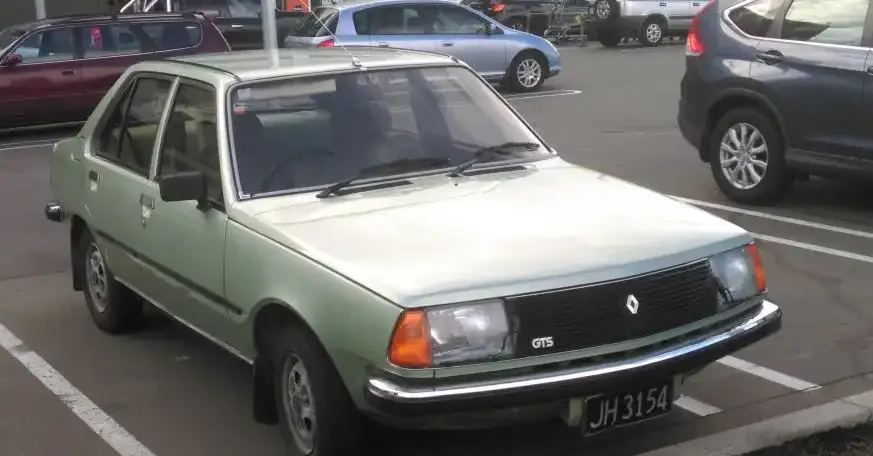
The Renault 18 1.6 Turbo, designated internally as the 1345, was a performance-oriented variant of the Renault 18, produced between 1982 and 1986. Positioned as a more sporting alternative to the standard 1.4 and 1.6 liter models, the 1.6 Turbo aimed to capture a segment of the market seeking a blend of practicality and respectable performance in a compact sedan. It represented Renault’s attempt to offer a turbocharged option in the increasingly competitive European C-segment, competing with cars like the Volkswagen Golf GTI and Opel/Vauxhall Astra SR. The 18 itself was a significant model for Renault, replacing the aging Renault 12 and offering a more modern design and improved mechanicals.
Technical Specifications
| Brand | Renault |
| Model | 18 |
| Generation | 18 (134) |
| Type (Engine) | 1.6 Turbo (1345) (125 Hp) |
| Start of production | 1982 |
| End of production | 1986 |
| Powertrain Architecture | Internal Combustion engine |
| Body type | Sedan |
| Seats | 5 |
| Doors | 4 |
| Fuel Type | Petrol (Gasoline) |
| Power | 125 Hp |
| Engine Model/Code | A5L 807-17 |
| Engine aspiration | Turbocharger |
| Engine oil capacity | 4.3 l (4.54 US qt | 3.78 UK qt) |
| Coolant capacity | 6.3 l (6.66 US qt | 5.54 UK qt) |
| Fuel tank capacity | 53 l (14 US gal | 11.66 UK gal) |
Powertrain & Engine Architecture
The heart of the Renault 18 1.6 Turbo was the A5L 807-17 engine, a 1595cc inline-four cylinder unit. This engine was notable for its single overhead camshaft (SOHC) valvetrain and, crucially, a Garrett T2 turbocharger. The turbocharger significantly boosted power output compared to the naturally aspirated 1.6L engine found in other 18 models. Fuel delivery was managed by Bosch mechanical fuel injection, a system common for the era, providing a balance between performance and reliability. The injection system was calibrated to work effectively with the turbocharger, delivering increased fuel under boost. The engine featured a relatively modest compression ratio, typical for turbocharged engines, to prevent pre-ignition. While specific torque figures varied slightly depending on the market, the 1.6 Turbo generally produced around 160 lb-ft of torque. The engine was typically paired with a four-speed manual transmission, although a three-speed automatic transmission was also available, albeit less common and impacting performance.
Driving Characteristics
The Renault 18 1.6 Turbo offered a noticeable step up in performance compared to the standard models. The turbocharger provided a distinct surge of power in the mid-range, making overtaking and highway cruising considerably easier. However, turbo lag was present, a characteristic of early turbocharger technology. Drivers needed to be mindful of this lag, anticipating acceleration and allowing the turbo to spool up. The four-speed manual transmission was well-suited to the engine’s powerband, allowing drivers to keep the engine in its optimal operating range. The automatic transmission, while offering convenience, significantly dulled the car’s responsiveness. Handling was generally considered good for a car of its class, with a relatively compliant suspension providing a comfortable ride. However, it wasn’t a particularly sporty car, lacking the sharp handling characteristics of some of its rivals.
Equipment & Trim Levels
The Renault 18 1.6 Turbo was generally positioned as a mid-range to upper-mid-range trim level. Standard equipment typically included cloth upholstery, a basic stereo system, and power-assisted steering. Higher-spec versions could be equipped with features such as electric windows, central locking, and a sunroof. Interior trim was generally functional and durable, reflecting the car’s overall practicality. The dashboard layout was typical of early 1980s Renaults, with a straightforward design and clearly labeled controls. Optional extras included upgraded stereo systems, alloy wheels, and metallic paint finishes.
Chassis & Braking
The Renault 18 utilized a relatively conventional chassis design, with MacPherson strut front suspension and a torsion beam rear axle. The front suspension provided a good balance between ride comfort and handling. The rear torsion beam was a cost-effective solution, offering adequate stability without being overly complex. Braking systems varied depending on the market and trim level. Most 1.6 Turbo models were equipped with disc brakes on the front wheels and drum brakes on the rear. Higher-spec versions sometimes featured disc brakes all around. Power assistance was standard on most models. Stabilizer bars were fitted to both the front and rear axles to reduce body roll during cornering.
Market Reception & Comparison
The Renault 18 1.6 Turbo was generally well-received by automotive critics, who praised its performance and value for money. It was seen as a credible alternative to rivals like the Volkswagen Golf GTI, although it lacked the GTI’s outright sporting prowess. Fuel economy was reasonable for a turbocharged car of the era, but not exceptional. Reliability was generally good, although the turbocharger did add a potential point of failure. Compared to the naturally aspirated 1.6L Renault 18, the Turbo offered a significant performance boost, but at a slightly higher price point. Compared to the diesel-powered Renault 18 models, the Turbo offered more power and a more engaging driving experience, but at the cost of fuel economy.
Legacy
The Renault 18 1.6 Turbo holds a modest but respected place in automotive history. It represented Renault’s early foray into forced induction technology in the mainstream market. While not a groundbreaking performance car, it offered a compelling combination of practicality, performance, and affordability. Today, the Renault 18 1.6 Turbo is becoming increasingly sought after by classic car enthusiasts, particularly those interested in 1980s European motoring. Well-maintained examples are relatively rare, and prices are steadily increasing. The A5L engine, while not known for being exceptionally durable, is generally considered reliable if properly maintained. Parts availability can be a challenge, but a dedicated community of Renault enthusiasts helps to keep these cars on the road. The 18 Turbo remains a reminder of a time when turbocharging was becoming more accessible to the average car buyer.

