
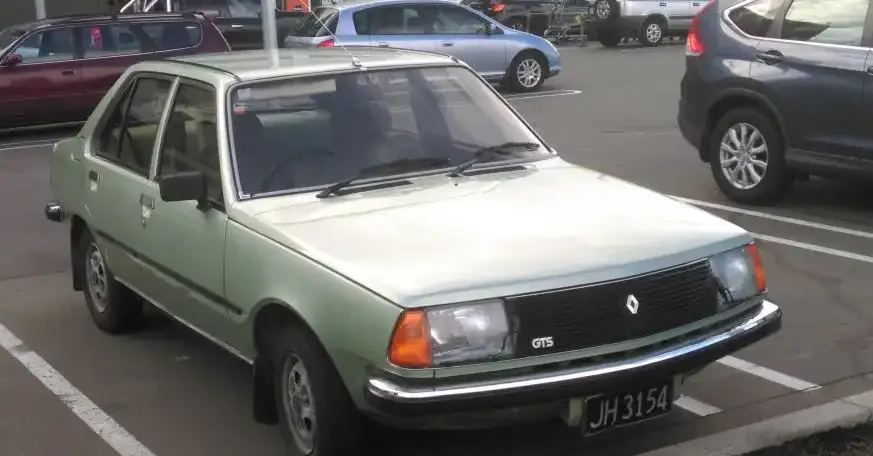
The Renault 18 2.1 Diesel, internally designated as the 1344 variant, was produced between 1981 and 1986. It represented a fuel-efficient option within the broader Renault 18 range, a compact family car designed to compete in the European market. This diesel version aimed to provide economical transportation, particularly appealing to drivers covering long distances. The 18 was a significant model for Renault, offering a modern design and a range of engine options, and the 2.1 Diesel slotted into the lineup as the entry-level engine choice for those prioritizing fuel economy over outright performance.
Technical Specifications
| Brand | Renault |
| Model | 18 |
| Generation | 18 (134) |
| Type (Engine) | 2.1 Diesel (1344) (67 Hp) |
| Start of production | 1981 |
| End of production | 1986 |
| Powertrain Architecture | Internal Combustion engine |
| Body type | Sedan |
| Seats | 5 |
| Doors | 4 |
| Fuel consumption (urban) | 7.4 l/100 km (31.8 US mpg) |
| Fuel consumption (extra urban) | 4.7 l/100 km (50 US mpg) |
| Fuel Type | Diesel |
| Maximum speed | 160 km/h (99.42 mph) |
| Power | 67 Hp |
| Engine Model/Code | 852-700 |
| Engine aspiration | Naturally aspirated |
| Engine oil capacity | 5.5 l (5.81 US qt) |
| Coolant capacity | 8.5 l (8.98 US qt) |
| Fuel tank capacity | 53 l (14 US gal) |
Powertrain & Engine Architecture
The Renault 18 2.1 Diesel was powered by the 852-700 engine, a 2.1-liter inline-four diesel. This engine was a naturally aspirated unit, meaning it did not employ a turbocharger or supercharger. It featured indirect injection, a common technology for diesel engines of the era, utilizing a pre-chamber combustion system. This system involved a small auxiliary combustion chamber where fuel was initially injected and ignited, then transferred to the main cylinder for complete combustion. This design helped improve cold-starting performance and reduce engine noise compared to direct injection systems. The engine utilized a mechanically controlled fuel injection pump, delivering fuel to the pre-chambers based on engine load and speed. The valvetrain consisted of a single overhead camshaft operating two valves per cylinder. The engine was known for its robust construction and relative simplicity, contributing to its longevity. While specific transmission options varied by market, the 2.1 Diesel was commonly paired with a four-speed manual gearbox, and a three-speed automatic transmission was also available, though less common.
Driving Characteristics
The 18 2.1 Diesel, particularly when equipped with the three-speed automatic transmission, was not designed for spirited driving. Its 67 horsepower output and relatively high weight resulted in modest acceleration. The automatic transmission, while offering convenience, further reduced performance due to its limited number of gears and inherent efficiency losses. Gear ratios were optimized for fuel economy rather than rapid acceleration. In real-world conditions, the car felt most comfortable cruising at highway speeds, where the engine could operate within its optimal torque band. The manual transmission version offered slightly improved performance and driver control, but still prioritized fuel efficiency over outright speed. Compared to the gasoline-powered Renault 18 variants, such as the 1.4 or 1.6-liter engines, the diesel version was significantly slower, but offered a substantial advantage in fuel economy. The suspension was tuned for comfort, providing a relatively soft ride, but handling was not particularly sharp.
Equipment & Trim Levels
The Renault 18 2.1 Diesel typically occupied the base trim level within the range. Standard equipment generally included cloth upholstery, basic instrumentation (speedometer, fuel gauge, temperature gauge), and manual windows and door locks. Power steering was not typically standard on the base diesel model, though it could be added as an option. The dashboard layout was functional and straightforward, with a focus on practicality. Optional extras included a radio, upgraded upholstery, and, in some markets, air conditioning. The interior trim was generally durable but lacked the refinement of higher-spec Renault 18 models. The exterior featured steel wheels with hubcaps, and basic chrome trim. The overall impression was one of affordability and practicality rather than luxury.
Chassis & Braking
The Renault 18 featured a front-engine, front-wheel-drive layout. The suspension consisted of MacPherson struts at the front and a torsion beam axle at the rear. The torsion beam rear suspension was a cost-effective solution that provided adequate ride comfort for everyday use. Braking systems varied depending on the market and year of production. Earlier models often featured drum brakes on the rear wheels, while later models and higher trim levels were upgraded to disc brakes all around. The front brakes were typically ventilated discs. The braking system was adequate for the car’s weight and performance, but lacked the stopping power of more modern vehicles. A stabilizer bar was fitted to the front suspension to reduce body roll during cornering.
Market Reception & Comparison
The Renault 18 2.1 Diesel was generally well-received as an economical and reliable family car. Critics praised its fuel efficiency, particularly in comparison to gasoline-powered alternatives. However, its performance was often criticized as being sluggish, especially with the automatic transmission. Compared to other diesel-powered cars of the era, such as the Peugeot 505 Diesel or the Volkswagen Golf Diesel, the Renault 18 offered a competitive price point and a comfortable ride. Its fuel economy was comparable to its rivals, but its performance lagged behind some of the more powerful diesel options. The 2.1 Diesel appealed to drivers who prioritized fuel savings and practicality over sporty handling or rapid acceleration.
Legacy
The Renault 18 2.1 Diesel powertrain, while not known for its high performance, proved to be remarkably durable and reliable. Many examples remain on the road today, testament to the engine’s robust construction. In the used car market, these models are often sought after by those looking for a simple, economical, and easy-to-maintain vehicle. Parts availability can be a challenge, but many components are still available through specialist suppliers. The 852-700 engine is relatively straightforward to work on, making it a popular choice for DIY mechanics. While not a collector’s item, the Renault 18 2.1 Diesel holds a place in automotive history as a practical and fuel-efficient family car that provided affordable transportation for many drivers during the 1980s.

