
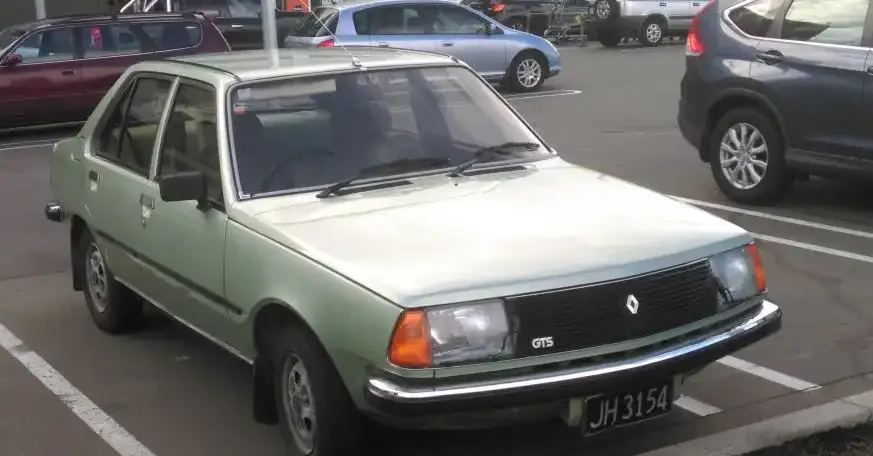
The Renault 18 2.1 TD, produced between 1981 and 1986, represented a significant offering in the European compact car market. Designated internally as the 134 series, this variant featured a turbocharged diesel engine, providing a blend of fuel efficiency and reasonable performance. It occupied a middle ground within the Renault 18 lineup, positioned above the naturally aspirated gasoline models but below the higher-specification trims. The 18 was Renault’s replacement for the Renault 12, aiming to offer a more modern and spacious package while maintaining affordability.
Technical Specifications
| Brand | Renault |
| Model | 18 |
| Generation | 18 (134) |
| Type (Engine) | 2.1 TD (88 Hp) |
| Start of production | 1981 |
| End of production | 1986 |
| Powertrain Architecture | Internal Combustion engine |
| Body type | Sedan |
| Seats | 5 |
| Doors | 4 |
| Fuel consumption (urban) | 8.1 l/100 km (29 US mpg, 34.9 UK mpg) |
| Fuel consumption (extra urban) | 4.8 l/100 km (49 US mpg, 58.9 UK mpg) |
| Fuel Type | Diesel |
| Maximum speed | 175 km/h (108.74 mph) |
| Power | 88 Hp |
| Engine Model/Code | J8S 852-10 |
| Engine aspiration | Turbocharger |
| Engine oil capacity | 6.3 l (6.66 US qt, 5.54 UK qt) |
| Coolant capacity | 8.5 l (8.98 US qt, 7.48 UK qt) |
| Fuel tank capacity | 53 l (14 US gal, 11.66 UK gal) |
Powertrain & Engine Architecture
The heart of the Renault 18 2.1 TD was the J8S 852-10 engine, a 2.1-liter inline-four cylinder diesel. This engine was notable for its turbocharger, a relatively uncommon feature on diesel engines of this era, which boosted power output to 88 horsepower. The engine employed indirect injection, a common practice for diesel engines at the time, utilizing a pre-chamber combustion system. This system improved combustion efficiency and reduced engine noise compared to direct injection designs. The turbocharger was a Garrett unit, providing increased air intake to the engine, enhancing power and torque. The engine featured a cast iron block and an aluminum cylinder head, a typical construction for durability and weight reduction. While specific transmission details varied by market, the 2.1 TD was typically paired with a four-speed automatic transmission, offering convenience but at the expense of some performance and fuel economy compared to the available manual gearbox.
Driving Characteristics
The Renault 18 2.1 TD with the automatic transmission offered a comfortable, if not particularly sporty, driving experience. The turbocharger provided a noticeable boost in power, especially during overtaking maneuvers, but the automatic transmission’s gear ratios were geared more towards fuel efficiency than rapid acceleration. Acceleration from 0 to 60 mph was estimated to be around 13-14 seconds, making it slower than the gasoline-powered versions and even some contemporary diesel rivals. The automatic transmission, while convenient, lacked the responsiveness of a manual gearbox, and downshifts could be slow to engage. The suspension, tuned for comfort, provided a relatively smooth ride, absorbing bumps and imperfections in the road surface effectively. However, this came at the cost of some body roll during cornering. Steering was light and easy, making it suitable for urban driving, but lacked the precision desired by more enthusiastic drivers.
Equipment & Trim Levels
The Renault 18 2.1 TD typically came equipped with a reasonable level of standard features for its time. These included cloth upholstery, a basic instrument cluster, and manual windows and door locks. Power steering was often included, enhancing ease of maneuverability. Optional extras included a sunroof, upgraded audio systems, and more luxurious interior trim options. The trim level of the 2.1 TD generally positioned it as a mid-range offering, bridging the gap between the basic gasoline models and the more luxurious versions with features like central locking and electric windows. The interior design was functional and straightforward, prioritizing practicality over aesthetics.
Chassis & Braking
The Renault 18 2.1 TD utilized a relatively simple chassis design. It featured a front independent suspension with MacPherson struts and a rear rigid axle suspension with trailing arms. The braking system consisted of front disc brakes and rear drum brakes, a common configuration for cars of this era. The brakes were adequate for normal driving conditions, but lacked the stopping power of more modern braking systems. Stabilizer bars were fitted to both the front and rear axles to reduce body roll during cornering. The chassis was designed to provide a balance between comfort and handling, prioritizing ride quality over sporty performance.
Market Reception & Comparison
The Renault 18 2.1 TD was generally well-received in the European market, particularly by those seeking a fuel-efficient and reliable family car. Critics praised its comfortable ride and spacious interior, but noted its relatively slow acceleration and lack of sporty handling. Compared to the gasoline-powered Renault 18 models, the 2.1 TD offered significantly better fuel economy, making it an attractive option for high-mileage drivers. However, it was more expensive to purchase and maintain due to the complexity of the turbocharger and diesel injection system. Compared to other diesel-powered cars in its class, such as the Peugeot 505 TD, the Renault 18 2.1 TD offered a competitive combination of performance, fuel economy, and price.
Legacy
The Renault 18 2.1 TD, while not a particularly groundbreaking vehicle, played a significant role in popularizing diesel engines in the European market. Its turbocharged diesel engine offered a compelling blend of fuel efficiency and performance, making it a popular choice for fleet operators and private buyers alike. The J8S engine proved to be relatively durable and reliable, and many examples are still on the road today. In the used car market, the Renault 18 2.1 TD is often sought after by enthusiasts and collectors who appreciate its classic styling and robust mechanicals. However, finding well-maintained examples can be challenging, as many have suffered from neglect or have been subjected to heavy use. Parts availability can also be an issue, although many components are still available from specialist suppliers.

