
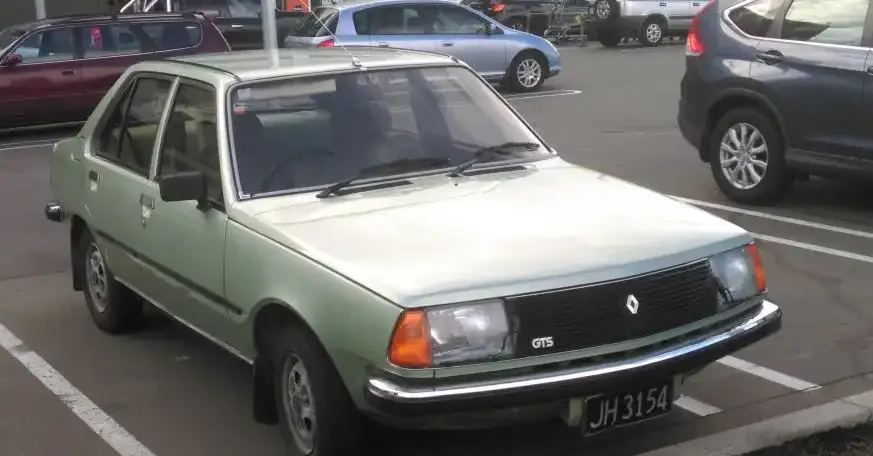
The Renault 18 2.2i (103 hp), produced between 1984 and 1986, represents a mid-range offering within the broader Renault 18 lineup. The Renault 18, designated internally as the XJ6 series, was a compact family car manufactured by Renault from 1978 to 1993. It was designed to replace the Renault 12, offering a more modern and spacious alternative in the increasingly competitive European compact car segment. The 2.2i variant aimed to provide a balance between performance and affordability, appealing to buyers seeking a more refined driving experience than the base models, but without the expense of the top-tier trims. This model was primarily sold in Europe and select export markets, and was a key part of Renault’s strategy to modernize its image and compete with rivals like the Volkswagen Golf and Opel/Vauxhall Astra.
Technical Specifications
| Brand | Renault |
| Model | 18 |
| Generation | 18 (134) |
| Type (Engine) | 2.2 i (103 Hp) |
| Start of production | 1984 |
| End of production | 1986 |
| Powertrain Architecture | Internal Combustion engine |
| Body type | Sedan |
| Fuel Type | Petrol (Gasoline) |
| Power | 103 Hp |
| Engine aspiration | Naturally aspirated engine |
Powertrain & Engine Architecture
The Renault 18 2.2i was powered by the Renault F8Q engine, a 2.2-liter (2165 cc) inline-four cylinder, naturally aspirated gasoline engine. This engine featured a cast iron block and an aluminum cylinder head, a common configuration for Renault engines of the period. The F8Q utilized a single overhead camshaft (SOHC) valvetrain with two valves per cylinder. Fuel delivery was managed by a Bosch mechanical fuel injection system, a relatively sophisticated setup for the time, offering improved efficiency and driveability compared to carbureted engines. The engine produced 103 horsepower (77 kW) at 5300 rpm and 138 Nm (102 lb-ft) of torque at 3500 rpm. While a five-speed manual transmission was available on other Renault 18 models, the 2.2i was typically paired with a three-speed automatic transmission, although a four-speed manual was also offered in some markets. The automatic transmission, while providing convenience, was known to slightly diminish the car’s acceleration and fuel economy.
Driving Characteristics
The Renault 18 2.2i Automatic offered a comfortable and relatively refined driving experience for its time. The 2.2-liter engine provided adequate power for highway cruising and overtaking, although it wasn’t particularly sporty. The three-speed automatic transmission, while smooth in operation, had relatively wide gear ratios. This meant that the engine often felt strained during hard acceleration, and downshifts could be slow to respond. Compared to the 1.4-liter and 1.6-liter versions of the Renault 18, the 2.2i offered significantly more power and torque, resulting in noticeably quicker acceleration and improved hill-climbing ability. However, it lacked the responsiveness of the five-speed manual versions. The steering was light and easy, making it well-suited for city driving, but lacked the precision of some competitors. The suspension provided a comfortable ride, absorbing bumps and imperfections in the road reasonably well, but wasn’t particularly sporty or engaging.
Equipment & Trim Levels
The Renault 18 2.2i typically came equipped with a reasonable level of standard features. Interior appointments included cloth upholstery, a basic instrument cluster, and a four-spoke steering wheel. Power steering was often included as standard equipment, enhancing ease of maneuverability. Optional extras included a sunroof, upgraded audio systems, and more luxurious interior trim options. The 2.2i trim generally sat above the base models in terms of equipment, but below the higher-specification versions which might have featured features like central locking, electric windows, and alloy wheels. The dashboard layout was functional and straightforward, with clearly labeled controls. The interior space was generous for a compact car, offering comfortable seating for four adults.
Chassis & Braking
The Renault 18 utilized a MacPherson strut front suspension and a torsion beam rear suspension. This setup provided a good balance between ride comfort and handling. The front suspension featured coil springs and telescopic shock absorbers, while the rear suspension relied on a simple and robust torsion beam design. Braking on the Renault 18 2.2i typically consisted of disc brakes on the front wheels and drum brakes on the rear wheels. The braking system was hydraulically operated, providing adequate stopping power for normal driving conditions. Stabilizer bars were fitted to both the front and rear axles, helping to reduce body roll during cornering. The chassis was a monocoque construction, providing a good level of structural rigidity.
Market Reception & Comparison
The Renault 18 2.2i was generally well-received by automotive critics as a comfortable and practical family car. The 2.2-liter engine was praised for its smooth operation and adequate power, although the automatic transmission was sometimes criticized for its lack of responsiveness. Fuel economy was considered average for a car of its size and engine capacity. Compared to the smaller-engined Renault 18 models, the 2.2i offered a more refined driving experience, but at a higher price point. It competed directly with other mid-range compact cars such as the Volkswagen Golf GL, Opel/Vauxhall Astra SR, and Ford Escort GL. The Renault 18 2.2i offered a compelling alternative to these rivals, particularly for buyers who prioritized comfort and practicality over sporty handling.
Legacy
The Renault 18 2.2i, while not a particularly rare or collectible model, remains a reasonably popular classic car among enthusiasts. The F8Q engine is known for its durability and reliability, provided it is properly maintained. The automatic transmission, however, can be prone to wear and tear, and may require occasional servicing. Today, well-maintained examples of the Renault 18 2.2i can be found in the used car market, often at affordable prices. The car represents a significant milestone in Renault’s history, marking a move towards more modern and sophisticated designs. Its blend of comfort, practicality, and affordability made it a popular choice for families in Europe during the 1980s, and it continues to be appreciated by classic car enthusiasts today. Finding parts can be challenging, but a dedicated network of Renault classic car specialists exists to support owners.

