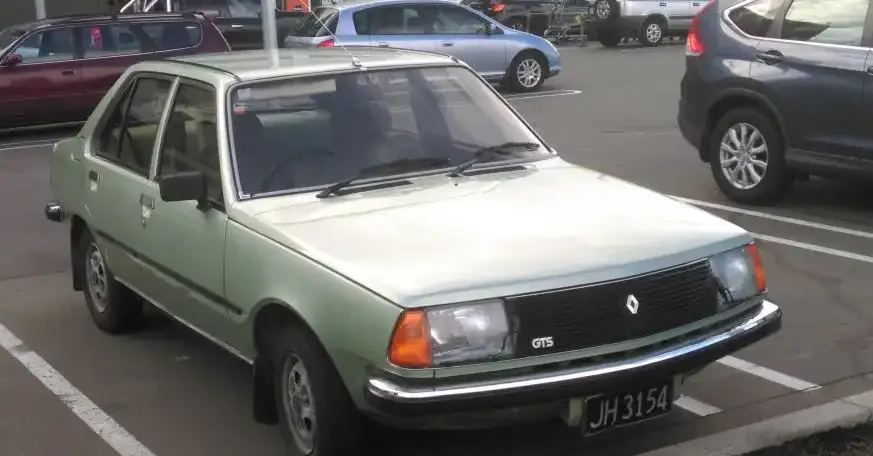
The Renault 18 Variable (135) 2.0, produced between 1981 and 1986, represents a significant offering in the compact family car segment, specifically as a station wagon (estate) body style. Positioned as a practical and relatively upscale option within the Renault 18 range, the “Variable” designation denoted a higher trim level, and the 2.0-liter engine provided a step up in performance compared to the smaller displacement models. This variant was primarily aimed at the European market, where the demand for spacious and versatile family vehicles was strong. It played a role in Renault’s strategy to offer a modern, comfortable, and reasonably priced car to a broad customer base.
Technical Specifications
| Brand | Renault |
| Model | 18 |
| Generation | 18 Variable (135) |
| Type (Engine) | 2.0 (1353) (105 Hp) |
| Start of production | 1981 |
| End of production | 1986 |
| Powertrain Architecture | Internal Combustion engine |
| Body type | Station wagon (estate) |
| Fuel Type | Petrol (Gasoline) |
| Power | 105 Hp |
| Engine Model/Code | J6R 714-5 |
| Engine aspiration | Naturally aspirated engine |
| Engine oil capacity | 5.3 l (5.6 US qt | 4.66 UK qt) |
| Coolant capacity | 8 l (8.45 US qt | 7.04 UK qt) |
| Fuel tank capacity | 57 l (15.06 US gal | 12.54 UK gal) |
Powertrain & Engine Architecture
The Renault 18 Variable 2.0 was powered by the J6R 714-5 engine, a 1,995 cc (121.6 cubic inches) inline-four cylinder gasoline engine. This engine was a key component of Renault’s efforts to modernize its offerings. It featured a cast iron block and an aluminum cylinder head, a common configuration for the era. The engine utilized a single overhead camshaft (SOHC) valvetrain, operating two valves per cylinder. Fuel delivery was managed by a Bosch mechanical fuel injection system, a significant upgrade over earlier carburetor-equipped models. This injection system improved fuel efficiency and reduced emissions compared to carbureted engines. The engine produced 105 horsepower (78 kW) at 5,800 rpm and 138 Nm (102 lb-ft) of torque at 3,500 rpm. While not a high-performance engine, it provided adequate power for comfortable cruising and hauling a full load. The engine was typically paired with a four-speed automatic transmission, although a five-speed manual transmission was also available. The automatic transmission, while offering convenience, was known for being somewhat conservative in its shift points, prioritizing fuel economy over spirited acceleration.
Driving Characteristics
The driving experience in the Renault 18 Variable 2.0 with the automatic transmission was characterized by smoothness and ease of use. The 2.0-liter engine provided sufficient power for everyday driving, including highway merging and overtaking. However, it wasn’t a particularly quick car; acceleration was adequate but not exhilarating. The automatic transmission, while convenient, contributed to a slightly less engaging driving experience compared to the manual version. Gear ratios were tuned for fuel efficiency and comfortable cruising, meaning the engine often operated at lower rpm. This resulted in a relaxed driving experience but could feel strained when climbing hills or accelerating quickly with a full load. Compared to the smaller 1.4-liter or 1.6-liter engine options, the 2.0-liter offered a noticeable improvement in performance, particularly when fully loaded. It also felt more refined and less stressed during extended highway driving. Compared to potential performance-oriented trims (which weren’t common on the 18), this variant prioritized comfort and practicality.
Equipment & Trim Levels
The “Variable” trim level placed the Renault 18 2.0 above the base models in terms of standard equipment. Typical features included cloth upholstery, a more comprehensive instrument cluster, and often, power steering. The interior design was functional and relatively modern for its time, with a focus on practicality. Optional extras available for the Variable trim included a sunroof, upgraded audio systems, and metallic paint finishes. The dashboard layout was straightforward, with clearly labeled controls. The station wagon body style offered a generous amount of cargo space, making it a popular choice for families. The rear seats could be folded down to further increase cargo capacity. The quality of materials used in the interior was typical for a car in this price range – durable but not luxurious.
Chassis & Braking
The Renault 18 Variable 2.0 utilized a MacPherson strut front suspension and a torsion beam rear suspension. This suspension setup provided a comfortable ride, although it wasn’t particularly sporty. The torsion beam rear suspension was a cost-effective solution that offered reasonable handling characteristics. The braking system consisted of disc brakes on the front wheels and drum brakes on the rear wheels. This configuration was common for cars of this era and price point. The braking performance was adequate for normal driving conditions, but it lacked the stopping power of more modern braking systems. Stabilizer bars were typically fitted to both the front and rear axles, helping to reduce body roll during cornering. The steering was power-assisted in most Variable models, making it easier to maneuver at low speeds.
Market Reception & Comparison
The Renault 18 Variable 2.0 was generally well-received by automotive critics in Europe. It was praised for its spacious interior, comfortable ride, and relatively modern features. The 2.0-liter engine was considered a good compromise between performance and fuel economy. However, some critics noted that the automatic transmission could feel sluggish and that the car lacked the sporty handling of some of its competitors. Compared to other station wagons in its class, such as the Ford Sierra Estate or the Opel Ascona Caravan, the Renault 18 offered a competitive level of equipment and a comfortable driving experience. Fuel economy was reasonable for the time, averaging around 8-10 liters per 100 kilometers (23-28 mpg) in mixed driving conditions. Reliability was generally good, although some owners reported issues with the Bosch fuel injection system and the automatic transmission.
Legacy
The Renault 18 Variable 2.0, while not a groundbreaking vehicle, remains a fondly remembered car for many European drivers. The J6R engine proved to be reasonably durable, and many examples are still on the road today. The automatic transmission, however, is often the first component to fail in older examples. In the used car market, well-maintained Renault 18 Variable 2.0 models are sought after by enthusiasts and collectors. They represent a relatively affordable and practical classic car that offers a glimpse into the automotive landscape of the 1980s. The car’s enduring appeal lies in its combination of practicality, comfort, and relatively simple mechanical design, making it a relatively easy car to maintain and repair for those with some mechanical aptitude.