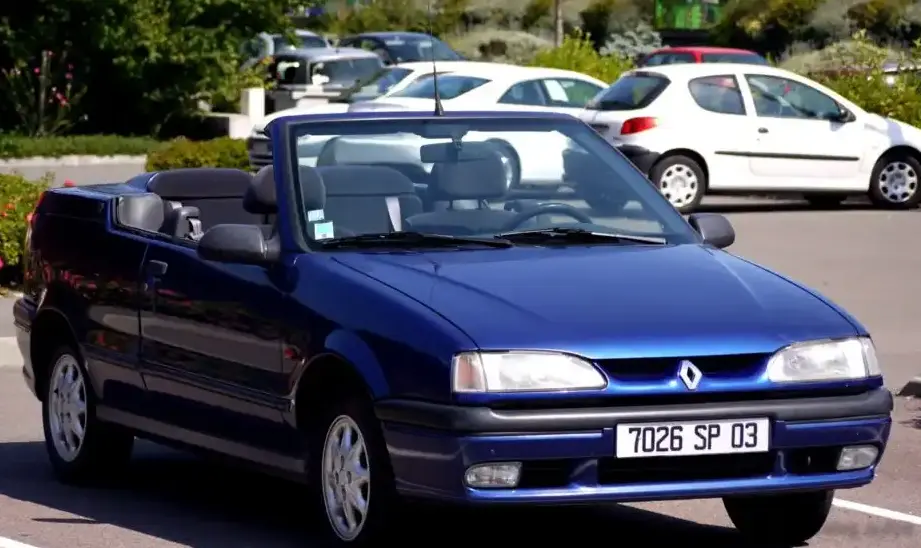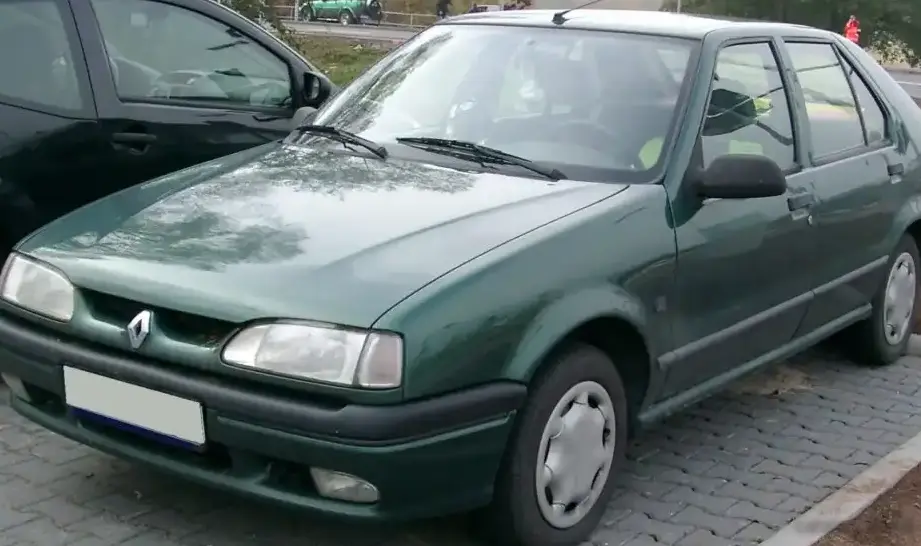
The Renault 19, specifically the 1.4 i variant produced from 1992 to 1996, represents an entry-level offering within the B/C53 generation of Renault’s popular compact hatchback. This facelifted model, introduced in 1992, aimed to modernize the original 19 while providing an affordable and economical transportation option for European buyers. Positioned below the more powerful 1.8 and 2.0-liter versions, and the diesel options, the 1.4 i catered to drivers prioritizing fuel efficiency and lower running costs. It was a common sight on European roads during its production run, serving as a practical and reliable daily driver.
Technical Specifications
| Brand | Renault |
| Model | 19 |
| Generation | 19 (B/C53) (facelift 1992) |
| Type (Engine) | 1.4 i (60 Hp) |
| Start of production | 1992 |
| End of production | 1996 |
| Powertrain Architecture | Internal Combustion engine |
| Body type | Hatchback |
| Seats | 5 |
| Doors | 3-5 |
| Fuel consumption (urban) | 8.5 l/100 km (27.7 US mpg, 33.2 UK mpg, 11.8 km/l) |
| Fuel consumption (extra urban) | 5.3 l/100 km (44.4 US mpg, 53.3 UK mpg, 18.9 km/l) |
| Fuel consumption (combined) | 6.9 l/100 km (34.1 US mpg, 40.9 UK mpg, 14.5 km/l) |
| Fuel Type | Petrol (Gasoline) |
| Acceleration 0 – 100 km/h | 14.8 sec |
| Acceleration 0 – 62 mph | 14.8 sec |
| Acceleration 0 – 60 mph | 14.1 sec |
| Maximum speed | 162 km/h (100.66 mph) |
| Weight-to-power ratio | 16.1 kg/Hp, 62.2 Hp/tonne |
| Weight-to-torque ratio | 9.5 kg/Nm, 105.7 Nm/tonne |
| Power | 60 Hp @ 4750 rpm |
| Power per litre | 43.2 Hp/l |
| Torque | 102 Nm @ 3000 rpm (75.23 lb.-ft. @ 3000 rpm) |
| Engine layout | Front, Transverse |
| Engine Model/Code | C3J |
| Engine displacement | 1390 cm3 (84.82 cu. in.) |
| Number of cylinders | 4 |
| Engine configuration | Inline |
| Cylinder Bore | 75.8 mm (2.98 in.) |
| Piston Stroke | 77 mm (3.03 in.) |
| Compression ratio | 9:1 |
| Number of valves per cylinder | 2 |
| Fuel injection system | Single-point injection |
| Engine aspiration | Naturally aspirated |
| Engine oil capacity | 3.5 l (3.7 US qt | 3.08 UK qt) |
| Coolant capacity | 6 l (6.34 US qt | 5.28 UK qt) |
| Kerb Weight | 965 kg (2127.46 lbs.) |
| Max. weight | 1420 kg (3130.56 lbs.) |
| Max load | 455 kg (1003.1 lbs.) |
| Trunk (boot) space – minimum | 386 l (13.63 cu. ft.) |
| Trunk (boot) space – maximum | 865 l (30.55 cu. ft.) |
| Fuel tank capacity | 55 l (14.53 US gal | 12.1 UK gal) |
| Length | 4162 mm (163.86 in.) |
| Width | 1696 mm (66.77 in.) |
| Height | 1412 mm (55.59 in.) |
| Wheelbase | 2544 mm (100.16 in.) |
| Front track | 1426 mm (56.14 in.) |
| Rear track | 1417 mm (55.79 in.) |
| Drivetrain Architecture | Front wheel drive |
| Drive wheel | Front wheel drive |
| Number of gears | 5 gears, manual transmission |
| Front suspension | Wishbone |
| Rear suspension | Torsion |
| Front brakes | Disc |
| Rear brakes | Drum |
| Assisting systems | ABS (Anti-lock braking system) |
| Steering type | Steering rack and pinion |
| Power steering | Hydraulic |
| Tires size | 165/70 R13 |
| Wheel rims size | 13 |
Powertrain & Engine Architecture
The Renault 19 1.4 i utilized the C3J engine, a relatively simple and robust four-cylinder, inline engine. This engine featured a single overhead camshaft (SOHC) operating two valves per cylinder. Fuel delivery was managed by a single-point fuel injection system, a common technology for its time, offering a balance between cost and efficiency. The 1390cc displacement produced 60 horsepower at 4750 rpm and 102 Nm (75.23 lb-ft) of torque at 3000 rpm. The engine’s 9:1 compression ratio was typical for naturally aspirated gasoline engines of the era. The engine was transversely mounted, driving the front wheels. The transmission was a five-speed manual gearbox, chosen for its affordability and efficiency. While an automatic transmission was offered on some Renault 19 models, it was not typically paired with the 1.4-liter engine.
Driving Characteristics
The 1.4 i Renault 19 offered modest performance. Acceleration from 0 to 100 km/h (0-62 mph) took approximately 14.8 seconds, and top speed was around 162 km/h (100.66 mph). Compared to the more powerful 1.8 and 2.0-liter versions, the 1.4 i felt noticeably slower, particularly when fully loaded or tackling inclines. However, the engine was reasonably responsive at lower speeds, making it suitable for urban driving. The five-speed manual transmission allowed drivers to keep the engine in its optimal power band, but frequent downshifting was often necessary for overtaking maneuvers. The gear ratios were geared towards fuel economy rather than outright performance. The handling was typical of front-wheel-drive hatchbacks of the period – safe and predictable, but not particularly sporty.
Equipment & Trim Levels
The 1.4 i Renault 19 typically came with a basic level of equipment. Standard features generally included power steering, central locking, and a basic stereo system. Interior upholstery was typically cloth, with a simple dashboard layout. Optional extras included electric windows, a sunroof, and upgraded audio systems. The trim level varied slightly depending on the market, but the 1.4 i generally represented the entry point to the Renault 19 range. It was designed to appeal to budget-conscious buyers who prioritized practicality and reliability over luxury features.
Chassis & Braking
The Renault 19 1.4 i featured a relatively simple chassis design. Front suspension utilized independent wishbones, while the rear suspension employed a torsion beam. This setup provided a reasonable balance between ride comfort and handling. Braking was accomplished via disc brakes on the front wheels and drum brakes on the rear. An Anti-lock Braking System (ABS) was often included as standard equipment, enhancing safety. The steering was rack and pinion, providing precise and responsive control. The tires were typically 165/70 R13, offering a good compromise between grip and fuel efficiency.
Market Reception & Comparison
The Renault 19 1.4 i was generally well-received as an affordable and economical hatchback. Critics praised its fuel efficiency and reliability, but noted its lack of performance compared to higher-spec models. Compared to the 1.8 and 2.0-liter versions, the 1.4 i offered significantly lower running costs but at the expense of driving enjoyment. The 1.4 i also provided a more economical alternative to diesel-powered Renault 19s, which were often more expensive to purchase. It competed with other small hatchbacks such as the Peugeot 205, Citroën Saxo, and Volkswagen Polo.
Legacy
The Renault 19 1.4 i, while not the most exciting version of the model, proved to be a durable and reliable car. The C3J engine is known for its longevity, and many examples are still on the road today. In the used car market, the 1.4 i Renault 19 represents an affordable and practical option for those seeking a classic European hatchback. Maintenance costs are generally low, and parts availability is still reasonable. However, potential buyers should be aware of the age-related issues common to cars of this era, such as rust and wear and tear on suspension components. The 1.4 i Renault 19 remains a testament to Renault’s ability to produce affordable and dependable transportation.