Technical Specifications
| Brand | Renault |
| Model | 19 |
| Generation | 19 (B/C53) (facelift 1992) |
| Type (Engine) | 1.4 i (80 Hp) Automatic |
| Start of production | 1992 |
| End of production | 1995 |
| Powertrain Architecture | Internal Combustion engine |
| Body type | Hatchback |
| Seats | 5 |
| Doors | 3-5 |
| Fuel consumption (urban) | 8.3 l/100 km (28.3 US mpg, 34 UK mpg, 12 km/l) |
| Fuel consumption (extra urban) | 5.5 l/100 km (42.8 US mpg, 51.4 UK mpg, 18.2 km/l) |
| Fuel consumption (combined) | 7.1 l/100 km (33.1 US mpg, 39.8 UK mpg, 14.1 km/l) |
| Fuel Type | Petrol (Gasoline) |
| Acceleration 0 – 100 km/h | 16.5 sec |
| Acceleration 0 – 62 mph | 16.5 sec |
| Acceleration 0 – 60 mph | 15.7 sec |
| Maximum speed | 165 km/h (102.53 mph) |
| Weight-to-power ratio | 12.1 kg/Hp, 82.5 Hp/tonne |
| Weight-to-torque ratio | 8.9 kg/Nm, 112.4 Nm/tonne |
| Power | 80 Hp @ 5750 rpm |
| Power per litre | 57.6 Hp/l |
| Torque | 109 Nm @ 2750 rpm (80.39 lb.-ft. @ 2750 rpm) |
| Engine layout | Front, Transverse |
| Engine Model/Code | E6J |
| Engine displacement | 1390 cm3 (84.82 cu. in.) |
| Number of cylinders | 4 |
| Engine configuration | Inline |
| Cylinder Bore | 75.8 mm (2.98 in.) |
| Piston Stroke | 77 mm (3.03 in.) |
| Compression ratio | 9.5:1 |
| Number of valves per cylinder | 2 |
| Fuel injection system | Single-point injection |
| Engine aspiration | Naturally aspirated engine |
| Valvetrain | OHC |
| Engine oil capacity | 4 l (4.23 US qt | 3.52 UK qt) |
| Coolant capacity | 5.2 l (5.49 US qt | 4.58 UK qt) |
| Kerb Weight | 970 kg (2138.48 lbs.) |
| Max. weight | 1470 kg (3240.8 lbs.) |
| Max load | 500 kg (1102.31 lbs.) |
| Trunk (boot) space – minimum | 386 l (13.63 cu. ft.) |
| Trunk (boot) space – maximum | 865 l (30.55 cu. ft.) |
| Fuel tank capacity | 55 l (14.53 US gal | 12.1 UK gal) |
| Length | 4162 mm (163.86 in.) |
| Width | 1696 mm (66.77 in.) |
| Height | 1412 mm (55.59 in.) |
| Wheelbase | 2544 mm (100.16 in.) |
| Front track | 1426 mm (56.14 in.) |
| Rear track | 1417 mm (55.79 in.) |
| Drivetrain Architecture | Front wheel drive |
| Number of gears | 3 |
| Gearbox type | Automatic transmission |
| Front suspension | Wishbone |
| Rear suspension | Torsion |
| Front brakes | Disc |
| Rear brakes | Drum |
| Assisting systems | ABS (Anti-lock braking system) |
| Steering type | Steering rack and pinion |
| Power steering | Hydraulic |
| Tires size | 165/70 R13 |
| Wheel rims size | 13 |
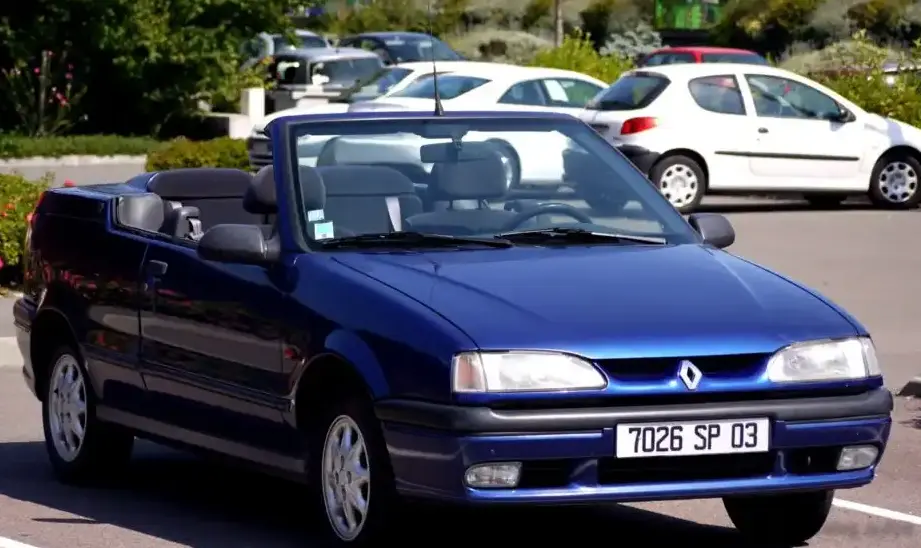
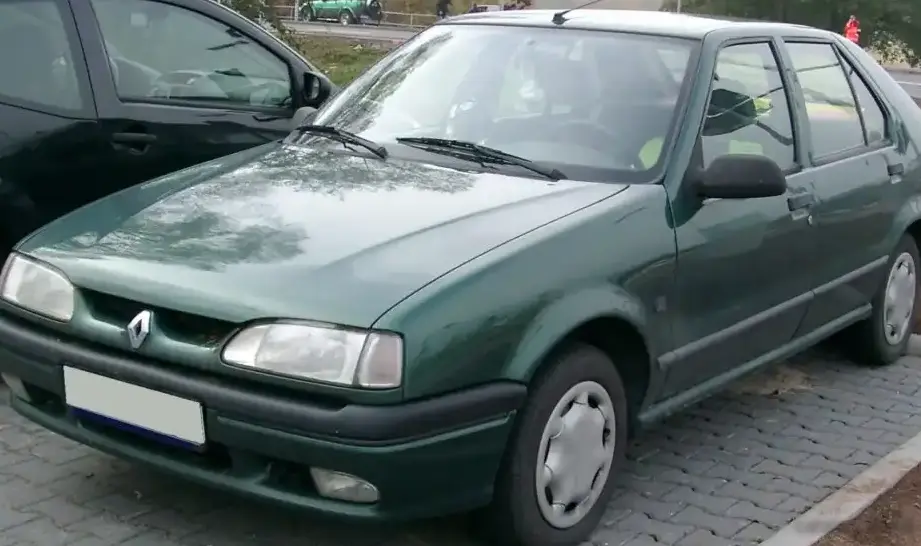
The Renault 19 1.4 i Automatic, produced between 1992 and 1995, was a facelifted version of the popular Renault 19 hatchback. This iteration, part of the B/C53 series, benefited from styling updates and minor mechanical refinements. It occupied the lower end of the 19 range, offering a more affordable and fuel-efficient option compared to the higher-specification 1.8 and 2.0-liter models. The automatic transmission was a key selling point for buyers seeking convenience, particularly in urban environments. The Renault 19, as a whole, was a significant model for Renault, representing a move towards more modern and sophisticated designs in the compact car segment.
Powertrain & Engine Architecture
The heart of the 1.4 i Automatic was the Renault E6J engine, a 1390cc inline-four cylinder petrol engine. This engine featured a single-point fuel injection system, a relatively simple setup for the time, prioritizing reliability and cost-effectiveness over ultimate performance. The engine utilized an overhead camshaft (OHC) valvetrain with two valves per cylinder. The E6J produced 80 horsepower at 5750 rpm and 109 Nm (80.39 lb-ft) of torque at 2750 rpm. Paired with this engine was a three-speed automatic transmission. This transmission, while providing ease of driving, was not known for its responsiveness or efficiency compared to manual counterparts. The automatic gearbox was designed for smooth operation and was a popular choice for drivers who frequently encountered stop-and-go traffic.
Driving Characteristics
The 1.4 i Automatic offered a comfortable, but unhurried, driving experience. Acceleration from 0-60 mph took around 15.7 seconds, and top speed was limited to 165 km/h (102.53 mph). The three-speed automatic transmission meant that the engine often felt strained during acceleration, and gear changes were not particularly quick. Compared to the five-speed manual version of the 1.4, the automatic suffered a noticeable performance deficit. The automatic’s gear ratios were optimized for fuel economy rather than spirited driving. However, for everyday commuting and urban driving, the convenience of the automatic outweighed the performance drawbacks for many buyers.
Equipment & Trim Levels
The 1.4 i Automatic typically came with a modest level of standard equipment. Interior features generally included cloth upholstery, a basic dashboard layout, and manual windows and door locks. Power steering was usually standard, providing some assistance for maneuvering. Optional extras included a sunroof, upgraded stereo systems, and central locking. The trim level was generally considered to be basic, focusing on providing essential features at an affordable price point. The interior materials were durable but not luxurious, reflecting the car’s position in the market.
Chassis & Braking
The Renault 19 1.4 i Automatic utilized a front-wheel-drive layout with a wishbone front suspension and a torsion beam rear suspension. This suspension setup provided a reasonable balance between comfort and handling. Braking was handled by disc brakes on the front wheels and drum brakes on the rear. An Anti-lock Braking System (ABS) was often included as standard equipment, enhancing safety. The chassis was designed to provide a stable and predictable driving experience, although it wasn’t particularly sporty. The relatively lightweight construction of the car helped to mitigate the performance limitations of the engine and transmission.
Market Reception & Comparison
The Renault 19 1.4 i Automatic was generally well-received as a practical and affordable family car. Critics acknowledged its comfortable ride and fuel efficiency, but often pointed out its lack of performance. Compared to the 1.8 and 2.0-liter versions, the 1.4 i Automatic was significantly slower and less engaging to drive. However, it offered better fuel economy and lower running costs. Against competitors like the Peugeot 205 and Citroën Saxo, the Renault 19 offered a more spacious interior and a more comfortable ride, but often lacked the sporty handling characteristics of its rivals. The automatic transmission was a key differentiator, appealing to buyers who prioritized convenience over performance.
Legacy
The Renault 19 1.4 i Automatic, while not the most exciting variant in the range, proved to be a reliable and durable car. The E6J engine, despite its simplicity, was generally known for its longevity. The automatic transmission, while not particularly advanced, was also reasonably reliable with proper maintenance. Today, these cars are relatively rare, and well-maintained examples are sought after by enthusiasts and collectors. The 1.4 i Automatic represents a practical and affordable entry point into Renault 19 ownership, offering a comfortable and economical driving experience. Its simplicity and durability make it a viable option for those seeking a classic French hatchback.