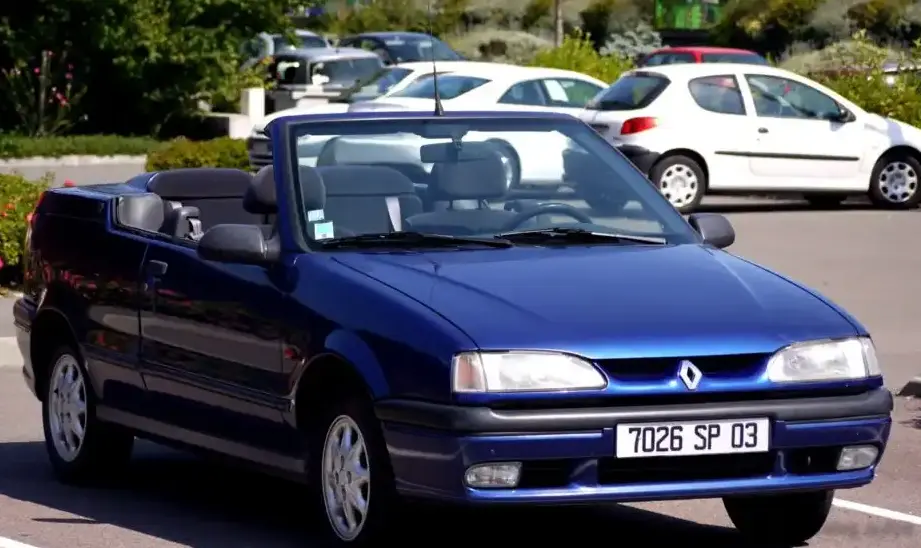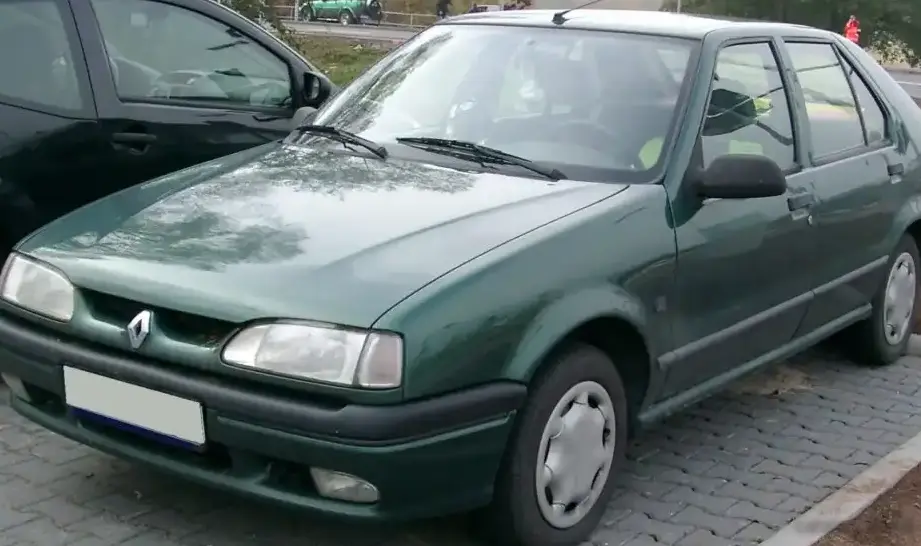
The Renault 19 1.8 i, produced from 1992 to 1996, represented a mid-range offering within the facelifted B/C53 generation of the popular Renault 19 compact hatchback. Positioned above the base 1.4-liter models, it provided a noticeable performance upgrade while remaining more accessible than the sportier 16-valve variants. This model was primarily aimed at buyers seeking a balance of practicality, comfort, and reasonable performance for everyday driving in European markets. The 1992 facelift brought revised styling, improved interior appointments, and refinements to the engine range, solidifying the Renault 19’s position as a competitive player in the crowded small family car segment.
Technical Specifications
| Brand | Renault |
| Model | 19 |
| Generation | 19 (B/C53) (facelift 1992) |
| Type (Engine) | 1.8 i (107 Hp) |
| Start of production | 1992 |
| End of production | 1996 |
| Powertrain Architecture | Internal Combustion engine |
| Body type | Hatchback |
| Seats | 5 |
| Doors | 3-5 |
| Fuel consumption (combined) | 8.3 l/100 km |
| Fuel consumption (US mpg) | 28.3 US mpg |
| Fuel consumption (UK mpg) | 34 UK mpg |
| Fuel consumption (km/l) | 12 km/l |
| Fuel Type | Petrol (Gasoline) |
| Acceleration 0 – 100 km/h | 9.9 sec |
| Acceleration 0 – 62 mph | 9.9 sec |
| Acceleration 0 – 60 mph | 9.4 sec |
| Maximum speed | 192 km/h (119.3 mph) |
| Weight-to-power ratio | 9.8 kg/Hp |
| Power | 107 Hp @ 5500 rpm |
| Power per litre | 59.6 Hp/l |
| Torque | 160 Nm @ 4250 rpm (118.01 lb.-ft. @ 4250 rpm) |
| Engine layout | Front, Transverse |
| Engine Model/Code | F3P |
| Engine displacement | 1794 cm3 (109.48 cu. in.) |
| Number of cylinders | 4 |
| Engine configuration | Inline |
| Cylinder Bore | 82.7 mm (3.26 in.) |
| Piston Stroke | 83.5 mm (3.29 in.) |
| Compression ratio | 9.8:1 |
| Number of valves per cylinder | 2 |
| Fuel injection system | Multi-port manifold injection |
| Engine aspiration | Naturally aspirated engine |
| Valvetrain | OHC |
| Engine oil capacity | 4.3 l (4.54 US qt | 3.78 UK qt) |
| Coolant capacity | 6.1 l (6.45 US qt | 5.37 UK qt) |
| Kerb Weight | 1045 kg (2303.83 lbs.) |
| Max. weight | 1520 kg (3351.03 lbs.) |
| Max load | 475 kg (1047.2 lbs.) |
| Trunk (boot) space – minimum | 386 l (13.63 cu. ft.) |
| Trunk (boot) space – maximum | 865 l (30.55 cu. ft.) |
| Fuel tank capacity | 55 l (14.53 US gal | 12.1 UK gal) |
| Length | 4162 mm (163.86 in.) |
| Width | 1696 mm (66.77 in.) |
| Height | 1412 mm (55.59 in.) |
| Wheelbase | 2544 mm (100.16 in.) |
| Front track | 1426 mm (56.14 in.) |
| Rear track | 1406 mm (55.35 in.) |
| Drivetrain Architecture | Front wheel drive |
| Number of gears | 5 |
| Gearbox type | Manual transmission |
| Front suspension | Independent type McPherson |
| Rear suspension | Torsion |
| Front brakes | Ventilated discs |
| Rear brakes | Drum |
| Assisting systems | ABS (Anti-lock braking system) |
| Steering type | Steering rack and pinion |
| Power steering | Hydraulic Steering |
| Tires size | 175/65 R14 H |
| Wheel rims size | 6J x 14 |
Introduction
The Renault 19 1.8 i, launched in 1992 following the facelift of the B/C53 series, was a key variant in Renault’s compact car lineup. Building upon the success of the original Renault 19, the facelifted models offered improved aesthetics, enhanced safety features, and a more refined driving experience. The 1.8-liter engine provided a step up in performance from the smaller displacement engines, making it a popular choice for drivers who frequently undertook longer journeys or required more power for overtaking. Available in both 3-door and 5-door body styles, the 1.8 i catered to a broad range of customers seeking a practical and reasonably priced family car.
Powertrain & Engine Architecture
The heart of the Renault 19 1.8 i is the F3P engine, an 1794cc inline-four cylinder petrol engine. This engine utilizes a single overhead camshaft (OHC) valvetrain with two valves per cylinder. Fuel delivery is managed by a multi-port fuel injection system, contributing to improved fuel efficiency and smoother power delivery compared to earlier carbureted engines. The F3P engine is known for its relative simplicity and robustness, making it relatively easy to maintain. The 1.8 i was exclusively offered with a five-speed manual transmission, providing drivers with full control over gear selection. The transmission’s gear ratios were tuned to balance acceleration and fuel economy, offering a comfortable driving experience in both urban and highway conditions.
Driving Characteristics
The Renault 19 1.8 i offered a noticeable improvement in performance over the 1.4-liter models. With 107 horsepower and 160 Nm of torque, the 1.8 i could accelerate from 0 to 100 km/h in approximately 9.9 seconds and achieve a top speed of 192 km/h. While not a sports car, the 1.8 i provided ample power for everyday driving, including overtaking maneuvers and climbing hills. The five-speed manual transmission allowed drivers to keep the engine in its optimal power band, maximizing performance. Compared to the higher-performance 16-valve versions, the 1.8 i offered a more relaxed driving experience, prioritizing comfort and fuel efficiency over outright speed. The suspension, tuned for comfort, provided a reasonably smooth ride, even on uneven road surfaces.
Equipment & Trim Levels
The Renault 19 1.8 i typically came equipped with a reasonable level of standard features. These included power steering, central locking, and a basic stereo system. Interior upholstery was typically cloth, with options for upgraded materials available. Depending on the market and optional packages selected, features such as electric windows, a sunroof, and alloy wheels could be added. The dashboard layout was functional and straightforward, with clearly labeled controls. Higher trim levels often included additional features such as a trip computer and upgraded sound systems.
Chassis & Braking
The Renault 19 1.8 i utilized a McPherson strut independent suspension system at the front, providing good handling and ride comfort. The rear suspension employed a torsion beam setup, which was cost-effective and provided adequate stability. Braking duties were handled by ventilated discs at the front and drum brakes at the rear. Anti-lock braking system (ABS) was available as an option, enhancing safety by preventing wheel lockup during hard braking. The steering system was a rack and pinion type with hydraulic power assistance, providing precise steering feel and reducing driver effort.
Market Reception & Comparison
The Renault 19 1.8 i was generally well-received by automotive critics. It was praised for its comfortable ride, reasonable performance, and practical interior. Compared to its rivals, such as the Volkswagen Golf and Opel Astra, the Renault 19 offered a competitive package at a lower price point. The 1.8 i offered a good balance between performance and fuel economy, making it an attractive option for buyers seeking a versatile family car. However, some critics noted that the interior materials were not as high quality as those found in some of its competitors.
Legacy
The Renault 19 1.8 i has proven to be a relatively reliable and durable vehicle. The F3P engine is known for its longevity, and with regular maintenance, it can provide many years of trouble-free service. Today, the Renault 19 1.8 i is a popular choice among classic car enthusiasts and those seeking an affordable and practical used car. Parts availability is generally good, and the relatively simple mechanical design makes it relatively easy to repair. While not a particularly collectible model, the 1.8 i represents a well-rounded and enjoyable driving experience, cementing its place as a significant vehicle in Renault’s history.