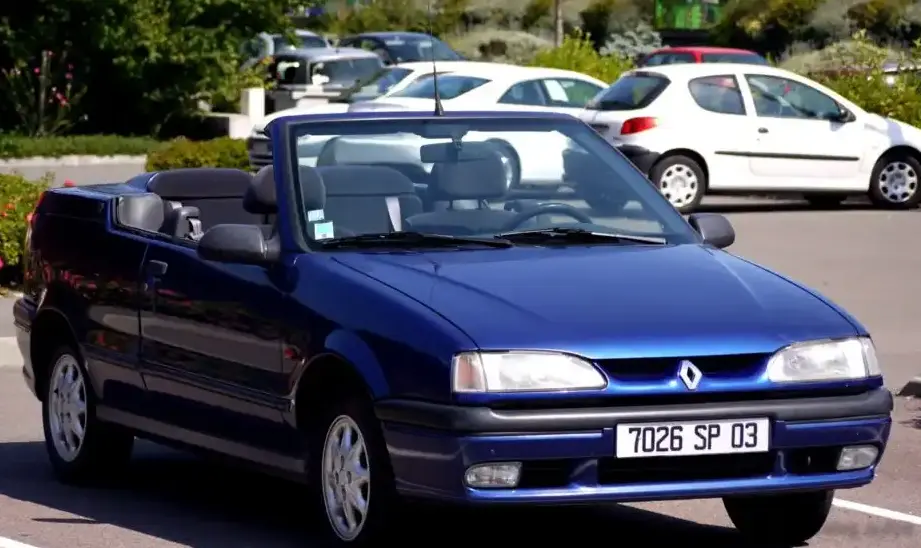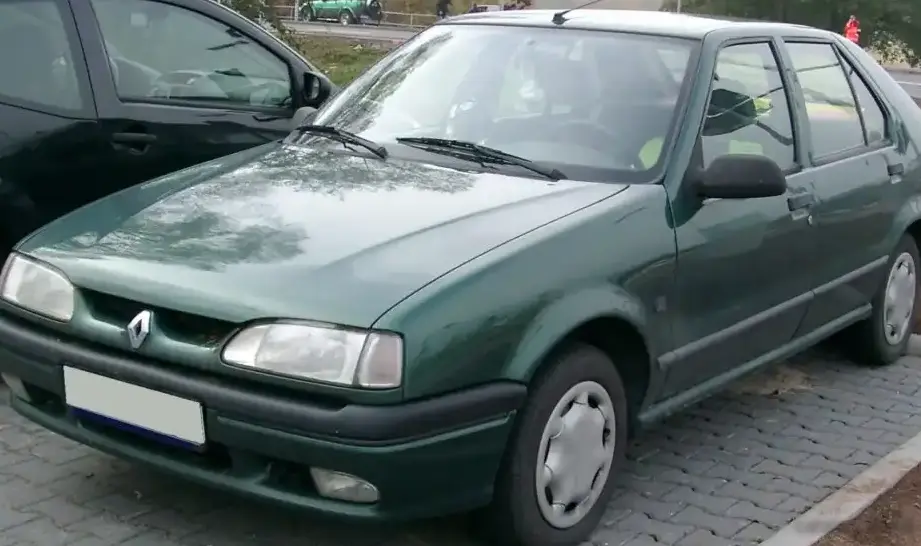
The Renault 19 1.8i 16V, produced from 1992 to 1995, represented a performance-oriented variant within the popular Renault 19 (B/C53) range. This facelifted model, part of the second generation of the 19, aimed to offer a more engaging driving experience compared to lower-spec models. Positioned as a mid-range to upper-mid-range offering, it bridged the gap between the more economical engine options and the later, more focused performance models. The 1.8i 16V was primarily marketed in Europe, where compact hatchbacks were a dominant force, and offered a blend of practicality, style, and respectable performance for the era.
| Brand | Renault |
| Model | 19 |
| Generation | 19 (B/C53) (facelift 1992) |
| Type (Engine) | 1.8 i 16V (137 Hp) |
| Start of production | 1992 |
| End of production | 1995 |
| Powertrain Architecture | Internal Combustion engine |
| Body type | Hatchback |
| Seats | 5 |
| Doors | 3-5 |
| Fuel consumption (urban) | 10.6 l/100 km (22.2 US mpg) |
| Fuel consumption (extra urban) | 6.3 l/100 km (37.3 US mpg) |
| Fuel consumption (combined) | 7.6 l/100 km (30.9 US mpg) |
| Fuel Type | Petrol (Gasoline) |
| Acceleration 0 – 100 km/h | 8.5 sec |
| Acceleration 0 – 62 mph | 8.5 sec |
| Acceleration 0 – 60 mph | 8.1 sec |
| Maximum speed | 212 km/h (131.73 mph) |
| Weight-to-power ratio | 8.5 kg/Hp |
| Weight-to-torque ratio | 7.2 kg/Nm |
| Power | 137 Hp @ 6500 rpm |
| Torque | 162 Nm @ 4250 rpm (119.49 lb.-ft. @ 4250 rpm) |
| Engine layout | Front, Transverse |
| Engine Model/Code | F7P |
| Engine displacement | 1764 cm3 (107.65 cu. in.) |
| Number of cylinders | 4 |
| Engine configuration | Inline |
| Cylinder Bore | 82 mm (3.23 in.) |
| Piston Stroke | 83.5 mm (3.29 in.) |
| Compression ratio | 10:1 |
| Number of valves per cylinder | 4 |
| Fuel injection system | Multi-port manifold injection |
| Engine aspiration | Naturally aspirated engine |
| Valvetrain | DOHC |
| Engine oil capacity | 6.5 l (6.87 US qt | 5.72 UK qt) |
| Coolant capacity | 7 l (7.4 US qt | 6.16 UK qt) |
| Kerb Weight | 1160 kg (2557.36 lbs.) |
| Max. weight | 1600 kg (3527.4 lbs.) |
| Max load | 440 kg (970.03 lbs.) |
| Trunk (boot) space – minimum | 386 l (13.63 cu. ft.) |
| Trunk (boot) space – maximum | 865 l (30.55 cu. ft.) |
| Fuel tank capacity | 55 l (14.53 US gal | 12.1 UK gal) |
| Length | 4162 mm (163.86 in.) |
| Width | 1696 mm (66.77 in.) |
| Height | 1412 mm (55.59 in.) |
| Wheelbase | 2544 mm (100.16 in.) |
| Front track | 1426 mm (56.14 in.) |
| Rear track | 1417 mm (55.79 in.) |
| Drivetrain Architecture | Front wheel drive |
| Drive wheel | Front wheel drive |
| Number of gears | 5 |
| Gearbox type | Manual transmission |
| Front suspension | Independent type McPherson |
| Rear suspension | Torsion |
| Front brakes | Ventilated discs |
| Rear brakes | Disc |
| Assisting systems | ABS (Anti-lock braking system) |
| Steering type | Steering rack and pinion |
| Power steering | Hydraulic Steering |
| Tires size | 195/50 R15 |
| Wheel rims size | 15 |
Powertrain & Engine Architecture
The heart of the Renault 19 1.8i 16V is the F7P engine, a 1.8-liter inline-four cylinder powerplant. This engine, a staple in many Renault and Peugeot models of the era, featured a cast iron block and an aluminum cylinder head. The “16V” designation indicates the engine’s dual overhead camshafts (DOHC) and four valves per cylinder, a configuration that significantly improved breathing and high-rpm performance compared to engines with two valves per cylinder. Fuel delivery was handled by a Bosch multi-port fuel injection system, providing precise fuel metering for optimal combustion. The F7P engine was known for its relatively robust construction and willingness to rev, making it a popular choice for enthusiasts. The 5-speed manual transmission was the standard offering, providing a direct connection between the engine and the front wheels. The gearbox was chosen for its durability and relatively short ratios, complementing the engine’s power characteristics.
Driving Characteristics
The 1.8i 16V offered a noticeable step up in performance compared to the base 1.4-liter Renault 19. With 137 horsepower, acceleration to 60 mph took approximately 8.1 seconds, and it could achieve a top speed of around 132 mph. While not a sports car by modern standards, this performance was competitive within its class in the early 1990s. The engine delivered a smooth power delivery, with a strong mid-range that made it enjoyable for everyday driving. The manual transmission allowed for precise gear selection, and the relatively short ratios kept the engine in its powerband. Compared to the later 1.9-liter 16V models, the 1.8i 16V felt slightly less eager to rev, but offered a more balanced driving experience. The suspension, tuned for comfort and handling, provided a decent ride quality while maintaining reasonable body control in corners.
Equipment & Trim Levels
The Renault 19 1.8i 16V typically came equipped with a reasonable level of standard features. These included power steering, central locking, electric front windows, and an adjustable steering column. Interior upholstery was usually cloth, with a choice of colors available. Higher trim levels offered options such as alloy wheels, a sunroof, and upgraded audio systems. Air conditioning was often an optional extra. The dashboard layout was functional and straightforward, with clearly marked gauges and controls. The overall interior ambiance was typical of European hatchbacks of the era – practical and well-built, but not overly luxurious.
Chassis & Braking
The Renault 19 utilized a McPherson strut front suspension and a torsion beam rear suspension. This setup provided a good balance between ride comfort and handling. The front brakes were ventilated discs, offering good stopping power, while the rear brakes were solid discs. Anti-lock braking system (ABS) was standard, enhancing safety by preventing wheel lockup during hard braking. The steering was a rack and pinion system with hydraulic power assistance, providing precise and responsive steering feel. The chassis was relatively lightweight, contributing to the car’s nimble handling characteristics.
Market Reception & Comparison
The Renault 19 1.8i 16V was generally well-received by automotive critics. It was praised for its lively engine, comfortable ride, and practical interior. However, some critics noted that the interior styling was somewhat dated compared to some of its rivals. In terms of fuel economy, the 1.8i 16V offered a reasonable compromise between performance and efficiency, achieving around 31 mpg on the combined cycle. Compared to the lower-spec 1.4-liter models, the 1.8i 16V offered a significant performance boost, but at the cost of slightly higher fuel consumption. It also provided a more engaging driving experience than the diesel-powered versions.
Legacy
The Renault 19 1.8i 16V has proven to be a relatively reliable car, with the F7P engine being known for its durability. However, like any older vehicle, it is susceptible to age-related issues such as corrosion and wear and tear on suspension components. Today, the Renault 19 1.8i 16V is becoming increasingly sought after by classic car enthusiasts, particularly those who appreciate its blend of style, performance, and affordability. Parts availability is generally good, although some specific trim pieces may be difficult to find. The car represents a significant era in European automotive history, and its enduring appeal is a testament to its well-rounded design and engineering.