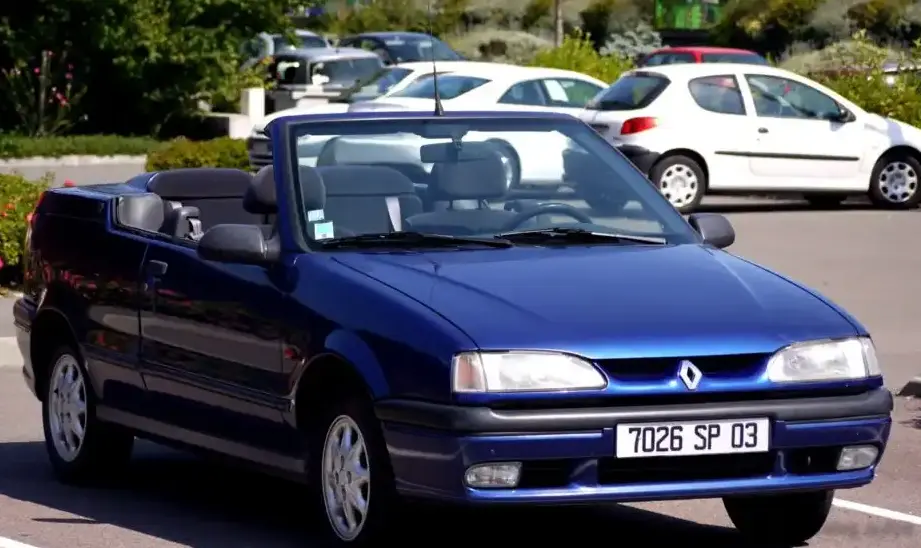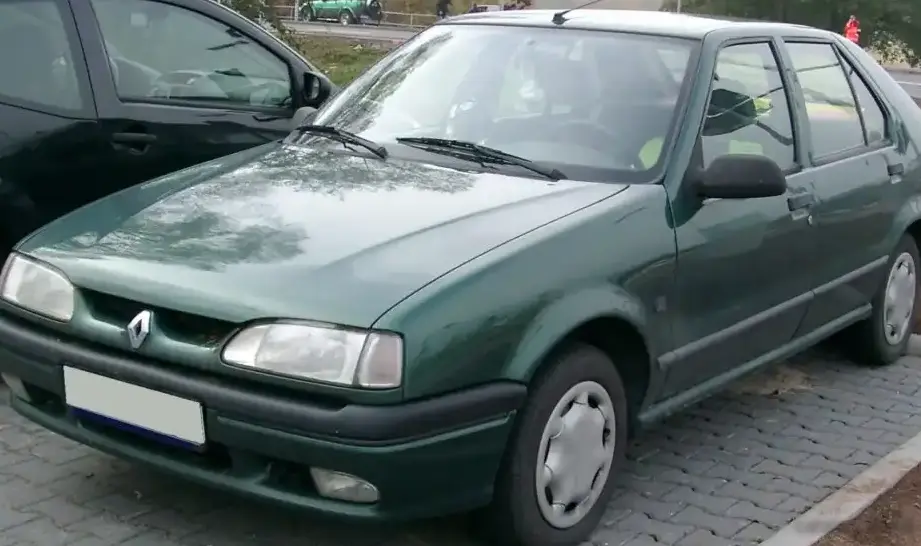
The Renault 19 1.8 i s, produced from 1992 to 1995, represented a mid-range offering within the comprehensively updated B/C53 series of the popular Renault 19 compact hatchback. This facelifted version, introduced in 1992, brought revised styling, improved interior appointments, and refinements to the mechanical components. The 1.8 i s variant, equipped with a 1.8-liter engine producing 90 horsepower and typically paired with a four-speed automatic transmission, aimed to provide a balance of performance and convenience for buyers seeking a comfortable and relatively economical family car. It occupied a position between the base 1.4-liter models and the sportier 16-valve variants, appealing to a broader customer base within the European market.
Technical Specifications
| Brand | Renault |
| Model | 19 |
| Generation | 19 (B/C53) (facelift 1992) |
| Type (Engine) | 1.8 i s (90 Hp) |
| Start of production | 1992 |
| End of production | 1995 |
| Powertrain Architecture | Internal Combustion engine |
| Body type | Hatchback |
| Seats | 5 |
| Doors | 3-5 |
| Fuel consumption (combined) | 8.1 l/100 km (29 US mpg, 34.9 UK mpg, 12.3 km/l) |
| Fuel Type | Petrol (Gasoline) |
| Acceleration 0 – 100 km/h | 10.9 sec |
| Acceleration 0 – 62 mph | 10.9 sec |
| Acceleration 0 – 60 mph | 10.4 sec |
| Maximum speed | 181 km/h (112.47 mph) |
| Weight-to-power ratio | 11.4 kg/Hp, 87.8 Hp/tonne |
| Weight-to-torque ratio | 7.1 kg/Nm, 140.5 Nm/tonne |
| Power | 90 Hp @ 5750 rpm |
| Power per litre | 50.2 Hp/l |
| Torque | 144 Nm @ 2750 rpm (106.21 lb.-ft. @ 2750 rpm) |
| Engine layout | Front, Transverse |
| Engine Model/Code | F3P 704/706 |
| Engine displacement | 1794 cm3 (109.48 cu. in.) |
| Number of cylinders | 4 |
| Engine configuration | Inline |
| Cylinder Bore | 82.7 mm (3.26 in.) |
| Piston Stroke | 83.5 mm (3.29 in.) |
| Compression ratio | 9.7:1 |
| Number of valves per cylinder | 2 |
| Fuel injection system | Single-point injection |
| Engine aspiration | Naturally aspirated engine |
| Valvetrain | OHC |
| Engine oil capacity | 4.3 l (4.54 US qt | 3.78 UK qt) |
| Coolant | 6.1 l (6.45 US qt | 5.37 UK qt) |
| Kerb Weight | 1025 kg (2259.74 lbs.) |
| Max. weight | 1510 kg (3328.98 lbs.) |
| Max load | 485 kg (1069.24 lbs.) |
| Trunk (boot) space – minimum | 386 l (13.63 cu. ft.) |
| Trunk (boot) space – maximum | 865 l (30.55 cu. ft.) |
| Fuel tank capacity | 55 l (14.53 US gal | 12.1 UK gal) |
| Length | 4162 mm (163.86 in.) |
| Width | 1696 mm (66.77 in.) |
| Height | 1412 mm (55.59 in.) |
| Wheelbase | 2544 mm (100.16 in.) |
| Front track | 1426 mm (56.14 in.) |
| Rear (Back) track | 1417 mm (55.79 in.) |
| Drivetrain Architecture | The Internal combustion engine (ICE) drives the front wheels of the vehicle. |
| Drive wheel | Front wheel drive |
| Number of gears and type of gearbox | 5 gears, manual transmission |
| Front suspension | Independent type McPherson |
| Rear suspension | Torsion |
| Front brakes | Ventilated discs |
| Rear brakes | Drum |
| Assisting systems | ABS (Anti-lock braking system) |
| Steering type | Steering rack and pinion |
| Power steering | Hydraulic Steering |
| Tires size | 175/75 R13; 175/65 R14 H |
| Wheel rims size | 6J x 13; 6J x 14 |
INTRODUCTION
The Renault 19 1.8 i s, launched in 1992 as part of the B/C53 facelift, was a significant update to Renault’s popular compact hatchback. Building upon the success of the original Renault 19, the facelift brought a more modern aesthetic, improved safety features, and a refined range of engines. The 1.8 i s variant, with its 1794cc engine, was positioned as a comfortable and practical option for families and commuters. It was designed to offer a step up in performance from the base models while remaining more affordable than the higher-specification 16-valve versions. The car was primarily sold in Europe, where it competed with rivals like the Volkswagen Golf, Opel Astra, and Peugeot 305.
Powertrain & Engine Architecture
The heart of the Renault 19 1.8 i s is the F3P 704 or F3P 706 engine, a 1.8-liter inline-four cylinder gasoline engine. This engine utilizes a single-point fuel injection system, a relatively simple and cost-effective technology for the time. The engine features an overhead camshaft (OHC) valvetrain with two valves per cylinder. The 90 horsepower output is achieved at 5750 rpm, while peak torque of 144 Nm (106.21 lb.-ft.) is delivered at 2750 rpm. The engine’s design prioritized fuel efficiency and smooth operation over outright performance. The automatic transmission used in this variant is a four-speed unit, providing relatively smooth shifts but lacking the responsiveness of a manual gearbox. The transmission was chosen to appeal to drivers prioritizing convenience and ease of use.
Driving Characteristics
The Renault 19 1.8 i s with the automatic transmission offered a comfortable, if not particularly sporty, driving experience. Acceleration from 0 to 60 mph took around 10.4 seconds, and the top speed was approximately 112.47 mph. The automatic gearbox, while convenient, did detract from the engine’s potential, resulting in slightly slower acceleration compared to the manual transmission versions. The gear ratios were optimized for fuel economy and relaxed cruising, rather than aggressive acceleration. The car felt stable and predictable in corners, but the suspension was tuned for comfort rather than sharp handling. The power delivery was linear, making it easy to modulate the throttle, but the engine lacked the punch of the 16-valve variants.
Equipment & Trim Levels
The 1.8 i s trim level typically included features such as power steering, central locking, and electric front windows. Interior upholstery was usually cloth, with a relatively simple dashboard layout. Optional extras included a sunroof, alloy wheels, and upgraded audio systems. The interior design focused on practicality and durability, with hard-wearing materials and a functional layout. The 1.8 i s often served as a base for adding optional packages, allowing buyers to customize the car to their preferences. Safety features included an anti-lock braking system (ABS) as standard equipment, a significant improvement over earlier models.
Chassis & Braking
The Renault 19 1.8 i s utilized an independent McPherson strut suspension at the front and a torsion beam suspension at the rear. This setup provided a good balance of ride comfort and handling. The front brakes were ventilated discs, offering good stopping power, while the rear brakes were drums, a cost-saving measure. The steering was a rack and pinion system with hydraulic power assistance, providing light and precise steering feel. Tire sizes typically ranged from 175/75 R13 to 175/65 R14, depending on the wheel size.
Market Reception & Comparison
The Renault 19 1.8 i s was generally well-received by automotive critics as a practical and affordable family car. It was praised for its comfortable ride, fuel efficiency, and relatively spacious interior. However, the automatic transmission was sometimes criticized for its lack of responsiveness. Compared to the 1.4-liter models, the 1.8 i s offered a noticeable improvement in performance, making it more suitable for highway driving and carrying a full load of passengers. Compared to the 16-valve versions, the 1.8 i s was less sporty but more affordable and offered better fuel economy. The 1.9 TDI diesel variant, introduced later, provided even better fuel economy but lacked the refinement of the 1.8 i s gasoline engine.
Legacy
The Renault 19 1.8 i s, while not a particularly rare or collectible model, remains a relatively reliable and affordable used car. The F3P engine is known for its durability, although regular maintenance is essential to prevent issues such as oil leaks and timing belt failure. The automatic transmission, while not as robust as some later designs, can provide years of reliable service with proper fluid changes. Today, these cars are often sought after by enthusiasts looking for a classic European hatchback that is easy to maintain and relatively inexpensive to run. The Renault 19, in general, is remembered as a well-rounded and practical car that played a significant role in the European automotive landscape of the 1990s.