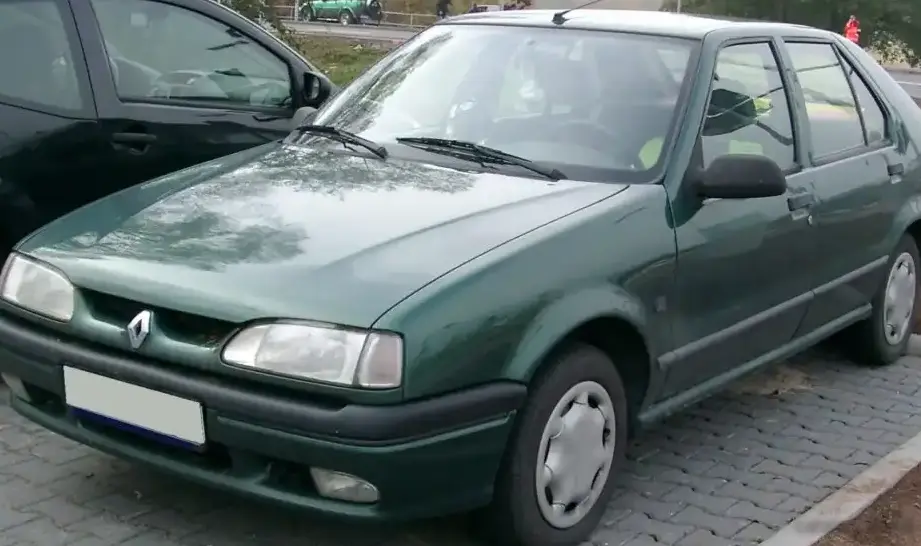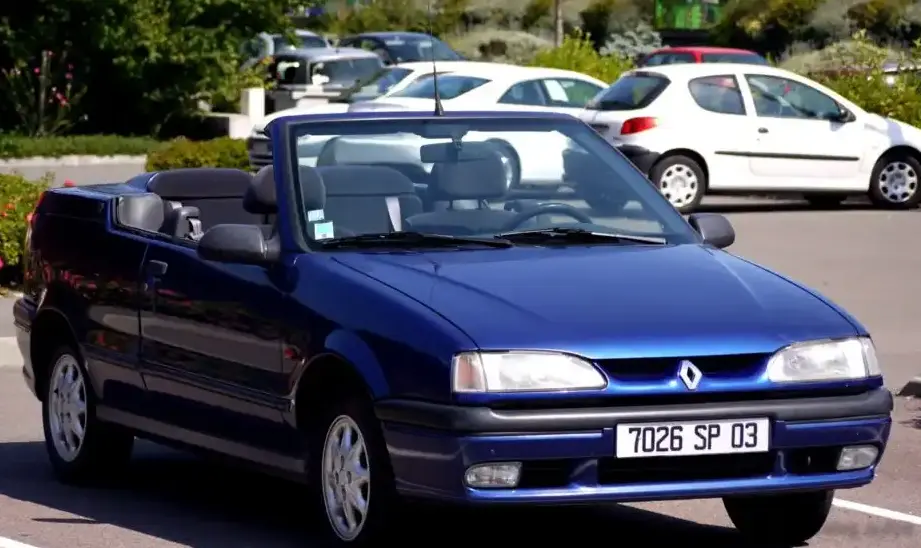
The Renault 19 Cabriolet, specifically the D53 facelift model produced between 1992 and 1996, represented Renault’s entry into the increasingly popular compact convertible market. This iteration, powered by the 1.8-liter 16V engine producing 135 horsepower, occupied a mid-range position within the 19 Cabriolet lineup, offering a balance between performance and affordability. The D53 facelift brought with it revised styling cues, improved interior appointments, and refinements to the mechanical components, solidifying the 19 Cabriolet’s appeal in European markets where open-top motoring was highly valued. It was never officially sold in the United States.
Technical Specifications
| Brand | Renault |
| Model | 19 |
| Generation | 19 Cabriolet (D53) (facelift 1992) |
| Type (Engine) | 1.8 i 16V (135 Hp) |
| Start of production | 1992 |
| End of production | 1996 |
| Powertrain Architecture | Internal Combustion engine |
| Body type | Cabriolet |
| Seats | 5 |
| Doors | 2 |
| Fuel consumption (combined) | 8.3 l/100 km (28.3 US mpg, 34 UK mpg, 12 km/l) |
| Fuel Type | Petrol (Gasoline) |
| Acceleration 0 – 100 km/h | 9.4 sec |
| Acceleration 0 – 62 mph | 9.4 sec |
| Acceleration 0 – 60 mph | 8.9 sec |
| Maximum speed | 208 km/h (129.25 mph) |
| Weight-to-power ratio | 8.8 kg/Hp, 113.4 Hp/tonne |
| Weight-to-torque ratio | 7.5 kg/Nm, 132.8 Nm/tonne |
| Power | 135 Hp @ 6500 rpm |
| Power per litre | 76.5 Hp/l |
| Torque | 158 Nm @ 4250 rpm (116.53 lb.-ft. @ 4250 rpm) |
| Engine layout | Front, Transverse |
| Engine Model/Code | F7P |
| Engine displacement | 1764 cm3 (107.65 cu. in.) |
| Number of cylinders | 4 |
| Engine configuration | Inline |
| Cylinder Bore | 82 mm (3.23 in.) |
| Piston Stroke | 83.5 mm (3.29 in.) |
| Compression ratio | 10:1 |
| Number of valves per cylinder | 4 |
| Fuel injection system | Multi-port manifold injection |
| Engine aspiration | Naturally aspirated engine |
| Valvetrain | DOHC |
| Engine oil capacity | 6.5 l (6.87 US qt | 5.72 UK qt) |
| Coolant | 7 l (7.4 US qt | 6.16 UK qt) |
| Kerb Weight | 1190 kg (2623.5 lbs.) |
| Max. weight | 1530 kg (3373.07 lbs.) |
| Max load | 340 kg (749.57 lbs.) |
| Trunk (boot) space – minimum | 255 l (9.01 cu. ft.) |
| Trunk (boot) space – maximum | 360 l (12.71 cu. ft.) |
| Fuel tank capacity | 55 l (14.53 US gal | 12.1 UK gal) |
| Length | 4162 mm (163.86 in.) |
| Width | 1696 mm (66.77 in.) |
| Height | 1410 mm (55.51 in.) |
| Wheelbase | 2540 mm (100 in.) |
| Front track | 1426 mm (56.14 in.) |
| Rear (Back) track | 1406 mm (55.35 in.) |
| Drivetrain Architecture | The Internal combustion engine (ICE) drives the front wheels of the vehicle. |
| Drive wheel | Front wheel drive |
| Number of gears and type of gearbox | 5 gears, manual transmission |
| Front suspension | Wishbone |
| Rear suspension | Torsion |
| Front brakes | Ventilated discs |
| Rear brakes | Disc |
| Assisting systems | ABS (Anti-lock braking system) |
| Steering type | Steering rack and pinion |
| Power steering | Hydraulic Steering |
| Tires size | 195/50 R15 V |
| Wheel rims size | 15 |
Powertrain & Engine Architecture
The heart of the 19 Cabriolet 1.8 16V was the Renault F7P engine, a naturally aspirated, inline-four cylinder powerplant. This engine was a staple in Renault’s lineup during the 1990s, known for its relatively robust construction and willingness to rev. The “16V” designation indicates a dual overhead camshaft (DOHC) valvetrain, featuring four valves per cylinder, which contributed to improved breathing and higher power output compared to earlier 8-valve versions. Fuel delivery was handled by a multi-port fuel injection system, optimizing the air-fuel mixture for efficient combustion. The engine produced 135 horsepower at 6500 rpm and 158 Nm (116.53 lb-ft) of torque at 4250 rpm. The engine was transversely mounted in the front of the vehicle, driving the front wheels. The standard transmission was a five-speed manual, although an optional four-speed automatic transmission was available, impacting performance and fuel economy.
Driving Characteristics
The 1.8 16V engine provided a respectable level of performance for the 19 Cabriolet. Acceleration from 0 to 60 mph took approximately 8.9 seconds, and the car could reach a top speed of around 129 mph. While not a sports car, the engine offered sufficient power for comfortable cruising and spirited driving. The manual transmission allowed for precise control and maximized the engine’s potential, while the automatic, though convenient, resulted in noticeable performance loss due to its less efficient gear ratios. The Cabriolet’s relatively light weight (around 2623 lbs) helped to offset the engine’s modest output, providing a reasonably engaging driving experience. Handling was typical of front-wheel-drive cars of the era, with a tendency towards understeer when pushed hard.
Equipment & Trim Levels
The 19 Cabriolet 1.8 16V typically came equipped with features such as power steering, front disc brakes, and an AM/FM radio. Higher trim levels offered options like leather upholstery, alloy wheels, electric windows, and a more sophisticated sound system. The interior design was functional and relatively simple, reflecting the car’s affordable positioning. The convertible top was manually operated, although some later models featured an optional electric top. Interior trim colors varied, with options typically including grey, beige, and dark blue.
Chassis & Braking
The 19 Cabriolet utilized a front-wheel-drive chassis with independent wishbone suspension at the front and a torsion beam rear suspension. This setup provided a reasonable balance between ride comfort and handling. Braking duties were handled by ventilated discs at the front and solid discs at the rear. An Anti-lock Braking System (ABS) was available as an option, enhancing safety by preventing wheel lockup during hard braking. The steering system employed a rack-and-pinion setup with hydraulic power assistance, providing light and precise steering feel.
Market Reception & Comparison
The Renault 19 Cabriolet 1.8 16V was generally well-received by automotive critics as an affordable and stylish convertible. It was often compared to other compact convertibles of the time, such as the Peugeot 205 Cabriolet and the Volkswagen Golf Cabriolet. The Renault offered a competitive price point and a relatively spacious interior. However, some critics noted the car’s somewhat basic interior trim and its less-than-stellar build quality compared to some of its German rivals. Fuel economy was reasonable for a convertible, averaging around 28.3 US mpg in combined driving. The 1.8 16V variant offered a noticeable performance upgrade over the base 1.4-liter engine, making it a popular choice for drivers who wanted a more engaging driving experience.
Legacy
The Renault 19 Cabriolet, including the 1.8 16V variant, has developed a modest following among classic car enthusiasts. The F7P engine is known for its durability, although regular maintenance is essential to prevent issues such as oil leaks and timing belt failures. The car’s relatively simple mechanical design makes it relatively easy to maintain and repair. Today, well-maintained examples of the 19 Cabriolet are becoming increasingly collectible, particularly those with low mileage and original features. The car represents a nostalgic reminder of a time when open-top motoring was accessible to a wider range of buyers.