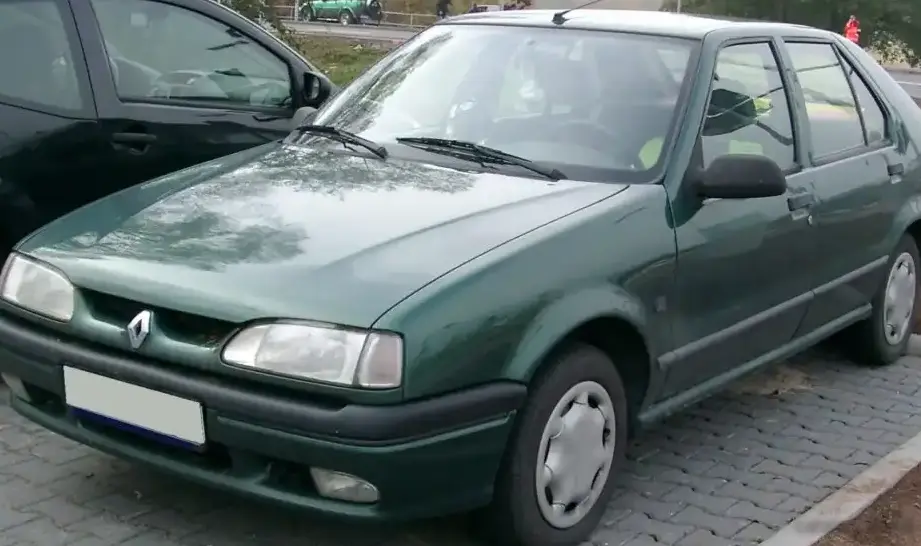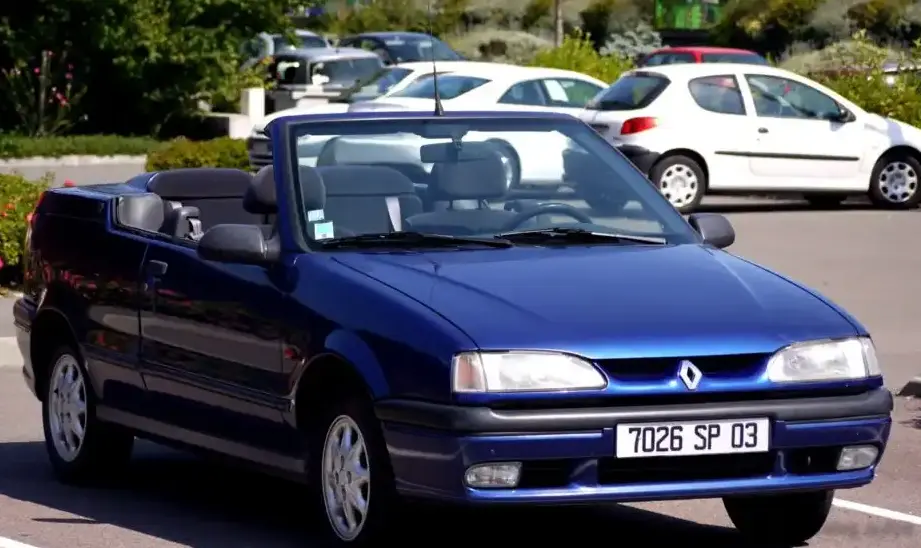
The Renault 19 Cabriolet, specifically the 1.8 i RSi variant produced from 1992 to 1996, represented a stylish and accessible entry into the world of open-top motoring. Part of the second-generation Renault 19 series (D53), this facelifted model built upon the success of its predecessor, offering a blend of French flair, reasonable performance, and affordability. Positioned as a mid-range offering within the Cabriolet lineup, the 1.8 RSi aimed to provide a more spirited driving experience than the base models while remaining more attainable than the higher-specification versions. It was primarily marketed in Europe, where the compact convertible segment enjoyed considerable popularity.
Technical Specifications
| Brand | Renault |
| Model | 19 |
| Generation | 19 Cabriolet (D53) (facelift 1992) |
| Type (Engine) | 1.8 i RSi (107 Hp) |
| Start of production | 1992 |
| End of production | 1996 |
| Powertrain Architecture | Internal Combustion engine |
| Body type | Cabriolet |
| Seats | 5 |
| Doors | 2 |
| Fuel consumption (combined) | 8.5 l/100 km (27.7 US mpg, 33.2 UK mpg, 11.8 km/l) |
| Fuel Type | Petrol (Gasoline) |
| Acceleration 0 – 100 km/h | 10.9 sec |
| Acceleration 0 – 62 mph | 10.9 sec |
| Acceleration 0 – 60 mph | 10.4 sec |
| Maximum speed | 186 km/h (115.58 mph) |
| Weight-to-power ratio | 10.7 kg/Hp, 93.4 Hp/tonne |
| Weight-to-torque ratio | 7.6 kg/Nm, 131 Nm/tonne |
| Power | 107 Hp @ 5500 rpm |
| Power per litre | 59.6 Hp/l |
| Torque | 150 Nm @ 2750 rpm (110.63 lb.-ft. @ 2750 rpm) |
| Engine layout | Front, Transverse |
| Engine Model/Code | F3P |
| Engine displacement | 1794 cm3 (109.48 cu. in.) |
| Number of cylinders | 4 |
| Engine configuration | Inline |
| Cylinder Bore | 82.7 mm (3.26 in.) |
| Piston Stroke | 83.5 mm (3.29 in.) |
| Compression ratio | 9.8:1 |
| Number of valves per cylinder | 2 |
| Fuel injection system | Multi-port manifold injection |
| Engine aspiration | Naturally aspirated engine |
| Valvetrain | OHC |
| Engine oil capacity | 4.3 l (4.54 US qt | 3.78 UK qt) |
| Coolant | 6.1 l (6.45 US qt | 5.37 UK qt) |
| Kerb Weight | 1145 kg (2524.29 lbs.) |
| Max. weight | 1525 kg (3362.05 lbs.) |
| Max load | 380 kg (837.76 lbs.) |
| Trunk (boot) space – minimum | 255 l (9.01 cu. ft.) |
| Trunk (boot) space – maximum | 360 l (12.71 cu. ft.) |
| Fuel tank capacity | 55 l (14.53 US gal | 12.1 UK gal) |
| Length | 4162 mm (163.86 in.) |
| Width | 1696 mm (66.77 in.) |
| Height | 1410 mm (55.51 in.) |
| Wheelbase | 2544 mm (100.16 in.) |
| Front track | 1426 mm (56.14 in.) |
| Rear (Back) track | 1406 mm (55.35 in.) |
| Drivetrain Architecture | The Internal combustion engine (ICE) drives the front wheels of the vehicle. |
| Drive wheel | Front wheel drive |
| Number of gears and type of gearbox | 5 gears, manual transmission |
| Front suspension | Wishbone |
| Rear suspension | Suspension with traction connecting levers |
| Front brakes | Disc |
| Rear brakes | Disc |
| Assisting systems | ABS (Anti-lock braking system) |
| Steering type | Steering rack and pinion |
| Power steering | Hydraulic Steering |
| Tires size | 195/50 R15V |
| Wheel rims size | 15 |
Powertrain & Engine Architecture
The heart of the 1.8 i RSi Cabriolet was the Renault F3P engine, a 1.8-liter (1794 cc) inline-four cylinder powerplant. This engine featured a single overhead camshaft (OHC) valvetrain with two valves per cylinder. Fuel delivery was handled by a multi-port fuel injection system, contributing to improved efficiency and responsiveness compared to earlier carbureted Renault engines. The F3P engine was known for its relatively robust construction and decent power output for its displacement. It produced 107 horsepower at 5500 rpm and 150 Nm (110.63 lb-ft) of torque at 2750 rpm. The engine was transversely mounted in the front of the vehicle, driving the front wheels. The transmission was a five-speed manual gearbox, providing a good balance between performance and fuel economy. While an automatic transmission was offered on other 19 models, it was less common with the RSi trim.
Driving Characteristics
The 1.8 i RSi Cabriolet offered a reasonably engaging driving experience. Acceleration from 0 to 60 mph took around 10.4 seconds, and it could achieve a top speed of 115.58 mph. While not a sports car, the RSi provided sufficient power for comfortable cruising and overtaking. The five-speed manual transmission allowed drivers to keep the engine in its optimal power band. Compared to the lower-powered 1.4-liter versions, the 1.8 RSi felt noticeably more responsive. However, it lacked the outright performance of the more expensive Renault 19 16V models. The Cabriolet’s open-top design added a sense of freedom, but also introduced some body flex, typical of convertibles of this era. The steering was light and precise, making it easy to maneuver in urban environments.
Equipment & Trim Levels
The 1.8 i RSi Cabriolet came reasonably well-equipped for its price point. Standard features typically included power steering, front disc brakes, and an anti-lock braking system (ABS). The interior featured cloth upholstery, although leather was available as an option. The dashboard layout was functional and straightforward, with clear instrumentation. Optional extras included electric windows, central locking, a sunroof (in addition to the convertible top), and upgraded audio systems. The RSi trim generally featured a sportier appearance with unique badging and alloy wheels.
Chassis & Braking
The Renault 19 Cabriolet utilized a front-wheel-drive chassis with independent front suspension using wishbones and a rear suspension system with traction connecting levers. This setup provided a comfortable ride and decent handling characteristics. Brakes were disc brakes on all four wheels, providing adequate stopping power. The ABS system enhanced safety by preventing wheel lockup during hard braking. The car’s relatively light weight (around 2524 lbs) contributed to its agility.
Market Reception & Comparison
The Renault 19 Cabriolet 1.8 i RSi was generally well-received by automotive critics. It was praised for its stylish design, comfortable ride, and reasonable performance. However, some reviewers noted the presence of body flex inherent in convertible designs. Compared to other compact convertibles of the time, such as the Peugeot 205 Cabriolet and the Volkswagen Golf Cabriolet, the Renault 19 offered a competitive package in terms of price and features. The 1.8 RSi offered a better balance of performance and economy than the higher-spec 16V models, making it a popular choice for buyers seeking a fun and affordable open-top car. Fuel economy was respectable for the time, averaging around 27.7 US mpg.
Legacy
The Renault 19 Cabriolet 1.8 i RSi has become a popular classic car among enthusiasts. The F3P engine is known for its reliability, although regular maintenance is essential. Parts availability is generally good, although some trim-specific components may be harder to find. Today, these cars are appreciated for their retro charm and affordable entry into classic car ownership. Well-maintained examples command reasonable prices in the used car market, and they continue to provide a fun and engaging driving experience.