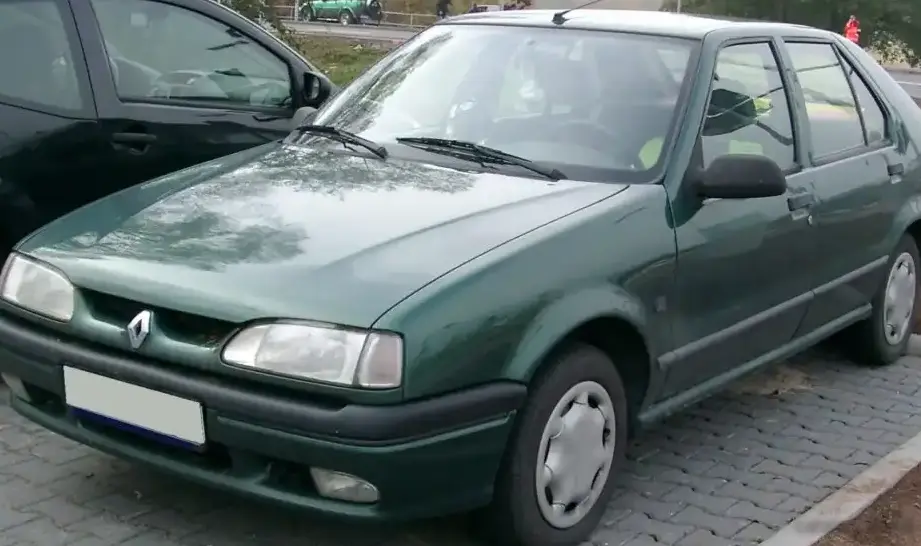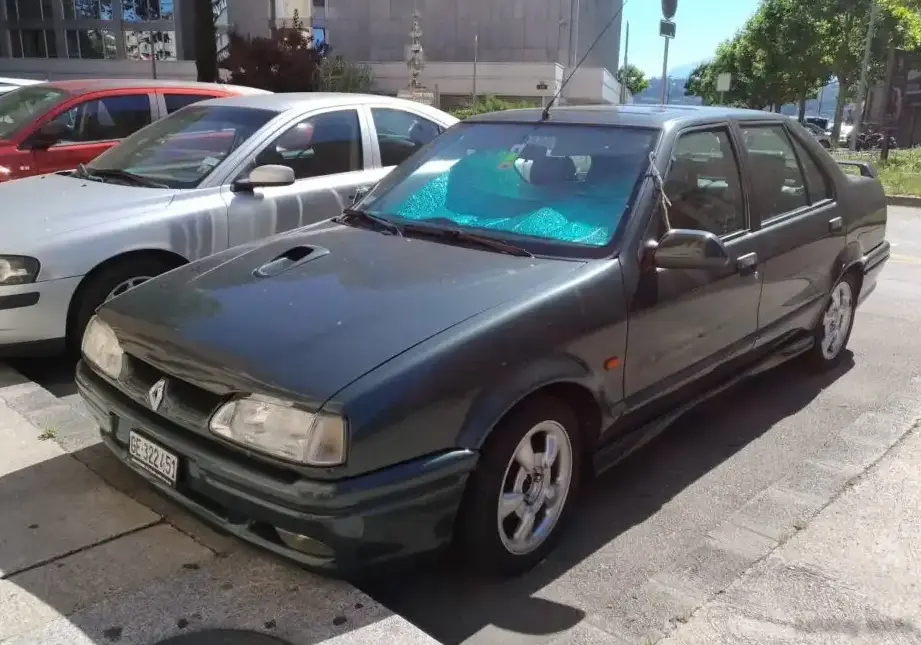
The Renault 19 Chamade 1.8 RSi, produced from 1992 to 1996, represented a performance-oriented variant within the broader Renault 19 range. Part of the L53 series, which benefited from a 1992 facelift, the Chamade was Renault’s compact sedan offering, positioned as a practical and relatively affordable vehicle in the European market. The 1.8 RSi trim aimed to provide a more engaging driving experience than the base models, appealing to buyers seeking a blend of efficiency and modest performance. It sat above the lower-powered 1.4 and 1.6 liter versions, but below any potential future performance models Renault might have considered.
Technical Specifications
| Brand | Renault |
| Model | 19 |
| Generation | 19 Chamade (L53) (facelift 1992) |
| Type (Engine) | 1.8 RSi (113 Hp) |
| Start of production | 1992 |
| End of production | 1996 |
| Powertrain Architecture | Internal Combustion engine |
| Body type | Sedan |
| Seats | 5 |
| Doors | 4 |
| Fuel consumption (urban) | 10.7 l/100 km (22 US mpg, 26.4 UK mpg, 9.3 km/l) |
| Fuel consumption (extra urban) | 6.2 l/100 km (37.9 US mpg, 45.6 UK mpg, 16.1 km/l) |
| Fuel consumption (combined) | 8 l/100 km (29.4 US mpg, 35.3 UK mpg, 12.5 km/l) |
| Fuel Type | Petrol (Gasoline) |
| Acceleration 0 – 100 km/h | 9.9 sec |
| Acceleration 0 – 62 mph | 9.9 sec |
| Acceleration 0 – 60 mph | 9.4 sec |
| Maximum speed | 192 km/h (119.3 mph) |
| Weight-to-power ratio | 9.4 kg/Hp, 106.1 Hp/tonne |
| Weight-to-torque ratio | 6.5 kg/Nm, 154 Nm/tonne |
| Power | 113 Hp @ 5500 rpm |
| Power per litre | 63 Hp/l |
| Torque | 164 Nm @ 4250 rpm (120.96 lb.-ft. @ 4250 rpm) |
| Engine layout | Front, Transverse |
| Engine Model/Code | F3P |
| Engine displacement | 1794 cm3 (109.48 cu. in.) |
| Number of cylinders | 4 |
| Engine configuration | Inline |
| Cylinder Bore | 82.7 mm (3.26 in.) |
| Piston Stroke | 83.5 mm (3.29 in.) |
| Compression ratio | 9.8:1 |
| Number of valves per cylinder | 2 |
| Fuel injection system | Multi-port manifold injection |
| Engine aspiration | Naturally aspirated engine |
| Valvetrain | OHC |
| Engine oil capacity | 4.3 l (4.54 US qt | 3.78 UK qt) |
| Coolant | 6.1 l (6.45 US qt | 5.37 UK qt) |
| Kerb Weight | 1065 kg (2347.92 lbs.) |
| Max. weight | 1540 kg (3395.12 lbs.) |
| Max load | 475 kg (1047.2 lbs.) |
| Trunk (boot) space – minimum | 463 l (16.35 cu. ft.) |
| Trunk (boot) space – maximum | 865 l (30.55 cu. ft.) |
| Fuel tank capacity | 55 l (14.53 US gal | 12.1 UK gal) |
| Length | 4248 mm (167.24 in.) |
| Width | 1696 mm (66.77 in.) |
| Height | 1412 mm (55.59 in.) |
| Wheelbase | 2544 mm (100.16 in.) |
| Front track | 1426 mm (56.14 in.) |
| Rear (Back) track | 1417 mm (55.79 in.) |
| Drivetrain Architecture | The Internal combustion engine (ICE) drives the front wheels of the vehicle. |
| Drive wheel | Front wheel drive |
| Number of gears and type of gearbox | 5 gears, manual transmission |
| Front suspension | Wishbone |
| Rear suspension | Torsion |
| Front brakes | Disc |
| Rear brakes | Drum |
| Assisting systems | ABS (Anti-lock braking system) |
| Steering type | Steering rack and pinion |
| Power steering | Hydraulic Steering |
| Tires size | 175/65 R14 |
| Wheel rims size | 14 |
Powertrain & Engine Architecture
The heart of the 1.8 RSi was the Renault F3P engine, a 1794cc inline-four cylinder unit. This engine featured a single overhead camshaft (OHC) design and utilized multi-port fuel injection. The F3P was a relatively common engine within the Renault range during the 1990s, known for its reasonable reliability and ease of maintenance. The 9.8:1 compression ratio was typical for the era, balancing performance with the ability to run on readily available fuel grades. The engine produced 113 horsepower at 5500 rpm and 164 Nm (120.96 lb-ft) of torque at 4250 rpm. The engine was transversely mounted, driving the front wheels. The standard transmission was a five-speed manual gearbox, although an optional four-speed automatic transmission was available, impacting performance and fuel economy.
Driving Characteristics
The 1.8 RSi offered a noticeable step up in performance compared to the lower-spec Renault 19 models. Acceleration to 60 mph took approximately 9.4 seconds, and it could achieve a top speed of around 119 mph. While not a sports car, the 1.8 RSi provided adequate power for everyday driving and overtaking maneuvers. The five-speed manual transmission allowed drivers to keep the engine in its optimal power band. The automatic transmission, while offering convenience, resulted in slightly slower acceleration and increased fuel consumption. The suspension, tuned for comfort, provided a reasonably compliant ride, although it wasn’t particularly sporty. The steering was light and easy to use, making it well-suited for urban environments.
Equipment & Trim Levels
The 1.8 RSi trim level included several standard features designed to enhance comfort and convenience. These typically included power steering, central locking, electric front windows, and an upgraded interior trim. The seats were often upholstered in a patterned cloth, and the dashboard featured a more comprehensive instrument cluster than the base models. Optional extras included air conditioning, a sunroof, and alloy wheels. The Chamade body style, a three-box sedan, offered a more traditional appearance compared to the five-door hatchback version of the Renault 19.
Chassis & Braking
The Renault 19 Chamade 1.8 RSi utilized a front-wheel-drive layout with a relatively simple suspension setup. The front suspension consisted of independent wishbones, while the rear suspension employed a torsion beam. This configuration provided a good balance between ride comfort and handling. The braking system featured disc brakes on the front wheels and drum brakes on the rear. An Anti-lock Braking System (ABS) was included as standard, enhancing safety by preventing wheel lockup during hard braking. The tires were typically 175/65 R14, providing adequate grip for normal driving conditions.
Market Reception & Comparison
The Renault 19 1.8 RSi was generally well-received by automotive critics as a competent and affordable family car. It was praised for its comfortable ride, decent performance, and relatively low running costs. Compared to its siblings, the 1.8 RSi offered a more engaging driving experience than the lower-powered models, but it wasn’t as focused on fuel economy as the diesel variants. The automatic transmission option was seen as a convenient feature, but it did detract from the car’s overall performance and efficiency. Competitors in the European market included the Volkswagen Golf, Opel Astra, and Peugeot 306.
Legacy
The Renault 19 1.8 RSi, while not a groundbreaking vehicle, remains a fondly remembered car for many owners. The F3P engine is known for its durability, and with proper maintenance, it can provide many years of reliable service. Today, the Renault 19 is becoming increasingly sought after by classic car enthusiasts, particularly well-maintained examples of the 1.8 RSi trim. Parts availability is generally good, and the car’s relatively simple mechanical design makes it accessible for home mechanics. The 1.8 RSi represents a solid and practical choice for those seeking a classic European compact sedan.