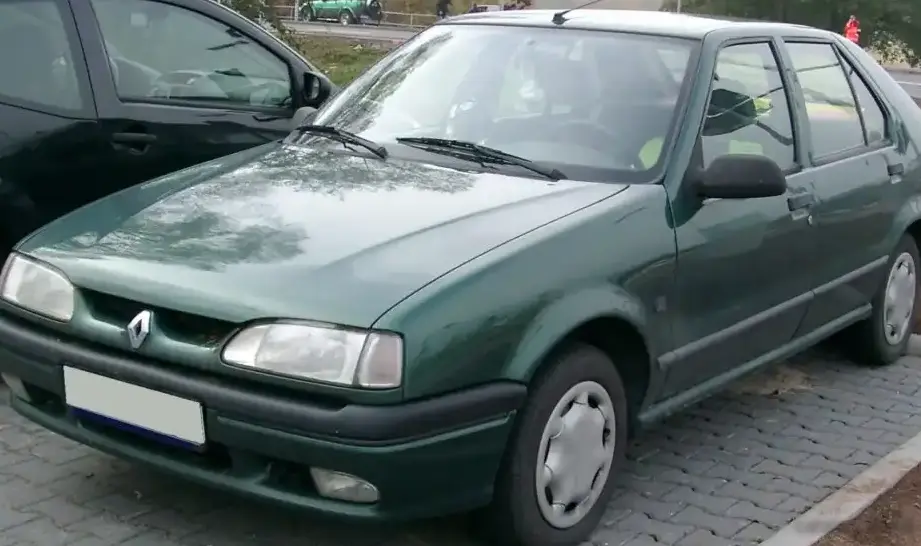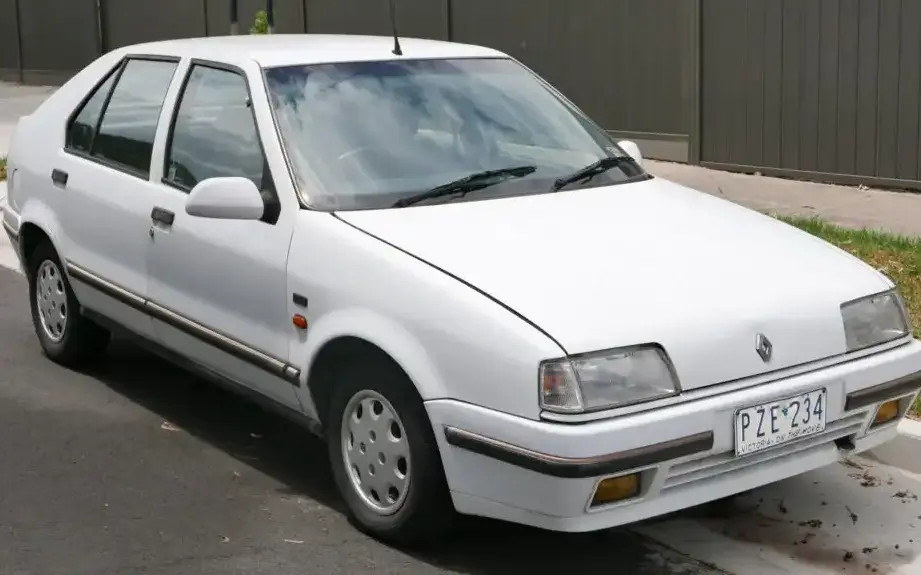
The Renault 19 I (B/C53) 1.4 (B/C532) represents the entry point into the first generation of the Renault 19, produced between 1989 and 1992. Positioned as an affordable and practical hatchback, this variant played a significant role in Renault’s European sales during a period of increasing competition in the small family car segment. The 1.4-liter engine, paired with a five-speed manual transmission, offered a balance of economy and usability, targeting budget-conscious buyers and those seeking a reliable daily driver. It was available in both 3-door and 5-door body styles.
Technical Specifications
| Brand | Renault |
| Model | 19 |
| Generation | 19 I (B/C53) |
| Type (Engine) | 1.4 (B/C532) (58 Hp) CAT |
| Start of production | 1989 |
| End of production | 1992 |
| Powertrain Architecture | Internal Combustion engine |
| Body type | Hatchback |
| Seats | 5 |
| Doors | 3-5 |
| Fuel consumption (urban) | 8.5 l/100 km (27.7 US mpg, 33.2 UK mpg, 11.8 km/l) |
| Fuel consumption (extra urban) | 5.6 l/100 km (42 US mpg, 50.4 UK mpg, 17.9 km/l) |
| Fuel consumption (combined) | 7 l/100 km (33.6 US mpg, 40.4 UK mpg, 14.3 km/l) |
| Fuel Type | Petrol (Gasoline) |
| Weight-to-power ratio | 16.4 kg/Hp, 61.1 Hp/tonne |
| Weight-to-torque ratio | 9.5 kg/Nm, 105.3 Nm/tonne |
| Power | 58 Hp @ 4750 rpm |
| Power per litre | 41.5 Hp/l |
| Torque | 100 Nm @ 3000 rpm (73.76 lb.-ft. @ 3000 rpm) |
| Engine layout | Front, Transverse |
| Engine Model/Code | C1J |
| Engine displacement | 1397 cm3 (85.25 cu. in.) |
| Number of cylinders | 4 |
| Engine configuration | Inline |
| Cylinder Bore | 75.8 mm (2.98 in.) |
| Piston Stroke | 77.1 mm (3.04 in.) |
| Compression ratio | 9:1 |
| Number of valves per cylinder | 2 |
| Fuel injection system | Single-point injection |
| Engine aspiration | Naturally aspirated engine |
| Engine oil capacity | 3.5 l (3.7 US qt | 3.08 UK qt) |
| Coolant capacity | 5.4 l (5.71 US qt | 4.75 UK qt) |
| Kerb Weight | 950 kg (2094.39 lbs.) |
| Max. weight | 1350 kg (2976.24 lbs.) |
| Max load | 400 kg (881.85 lbs.) |
| Trunk (boot) space – minimum | 350 l (12.36 cu. ft.) |
| Fuel tank capacity | 55 l (14.53 US gal | 12.1 UK gal) |
| Drivetrain Architecture | Front wheel drive, Internal Combustion engine |
| Number of gears and type of gearbox | 5 gears, manual transmission |
| Front suspension | Independent type McPherson |
| Rear suspension | Torsion |
| Front brakes | Ventilated discs |
| Rear brakes | Drum |
| Steering type | Steering rack and pinion |
| Tires size | 165/70 R13 |
| Wheel rims size | 13 |
Powertrain & Engine Architecture
The Renault 19 1.4 (B/C532) is powered by the C1J engine, a 1397cc inline-four cylinder unit. This engine utilized a single-point fuel injection system, a common feature for vehicles of this era aiming for affordability. The engine featured a relatively low 9:1 compression ratio and two valves per cylinder. The C1J engine was known for its simplicity and relative ease of maintenance. The five-speed manual transmission provided a reasonable spread of gears, although it wasn’t particularly sporty. The transmission was designed for durability and smooth operation rather than outright performance.
Driving Characteristics
With only 58 horsepower, the 1.4-liter Renault 19 wasn’t a performance car. Acceleration was modest, and overtaking required careful planning. However, the engine proved to be reasonably flexible, delivering usable torque at lower RPMs. The five-speed gearbox allowed drivers to keep the engine in its optimal power band, but it wasn’t a substitute for more horsepower. Compared to the later 1.7 and 2.0-liter versions of the Renault 19, or even the diesel variants, this 1.4 model felt significantly underpowered. The gear ratios were geared towards economy, making it a comfortable cruiser on the highway but less engaging on twisty roads.
Equipment & Trim Levels
The base-level 1.4 model of the Renault 19 was typically equipped with basic features. Standard equipment included cloth upholstery, a simple dashboard layout, and manual windows and door locks. Power steering was often an optional extra, as was a radio. Higher trim levels, such as the RN or RT, added features like central locking, electric windows, and upgraded interior trim. The 1.4 model was often seen as a blank canvas for buyers who wanted to add options to suit their needs and budget.
Chassis & Braking
The Renault 19 utilized an independent McPherson strut suspension at the front, providing a comfortable ride and decent handling. The rear suspension employed a torsion beam setup, which was a cost-effective solution for maintaining ride quality. Braking was handled by ventilated discs at the front and drum brakes at the rear. The braking system was adequate for the car’s weight and performance, but it lacked the stopping power of more advanced systems found on higher-spec models. The steering was a rack and pinion system, offering reasonable precision and feedback.
Market Reception & Comparison
The Renault 19 1.4 was generally well-received as an affordable and practical hatchback. Critics praised its fuel economy and reliability, but noted its lack of performance. Compared to rivals like the Peugeot 205 and Citroën AX, the Renault 19 offered a more spacious interior and a more comfortable ride. However, it wasn’t as sporty to drive as the Peugeot 205. The 1.4-liter engine offered better fuel economy than the larger 1.7 and 2.0-liter engines, but at the cost of performance. The diesel variants offered even better fuel economy, but were more expensive to purchase.
Legacy
The Renault 19 1.4 (B/C532) has proven to be a relatively durable and reliable car, with many examples still on the road today. The C1J engine is known for its longevity, provided it has been properly maintained. Parts availability can be a challenge, but many components are still available from specialist suppliers. In the used car market, these models are often sought after by enthusiasts looking for a classic French hatchback. While not a particularly collectible variant, the 1.4 offers an affordable entry point into Renault 19 ownership, and represents a significant piece of automotive history from the late 1980s and early 1990s.