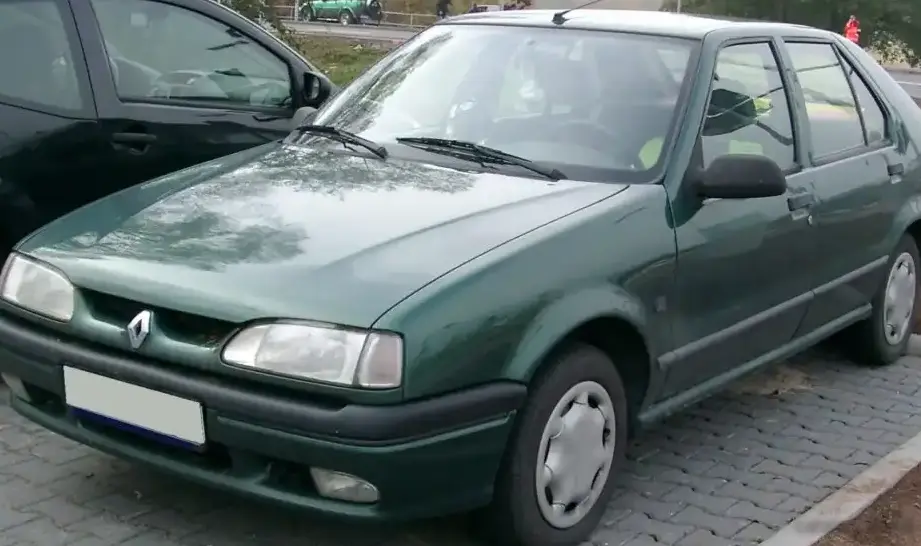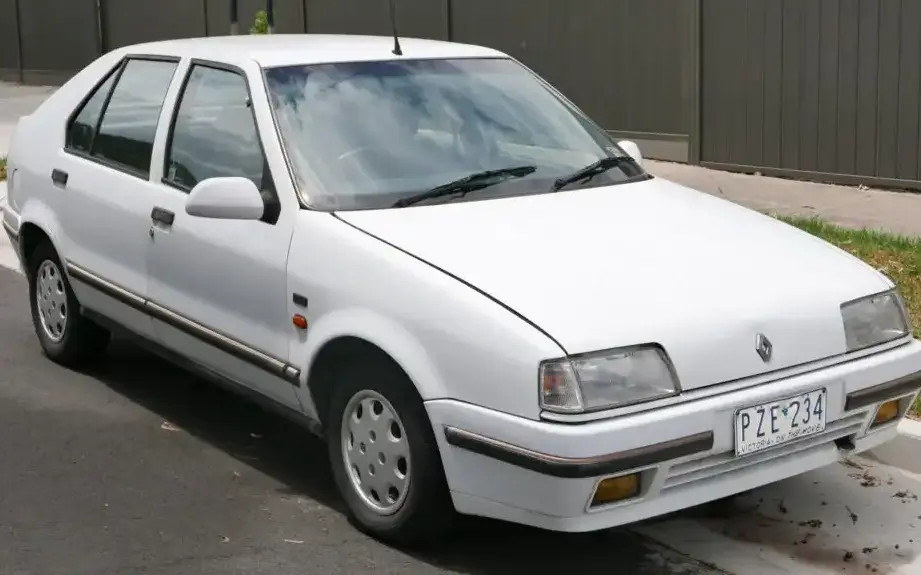
Technical Specifications
| Brand | Renault |
| Model | 19 |
| Generation | 19 I (B/C53) |
| Type (Engine) | 1.9 Diesel (B/C534,B/C53J) (64 Hp) |
| Start of production | 1988 |
| End of production | 1992 |
| Powertrain Architecture | Internal Combustion engine |
| Body type | Hatchback |
| Seats | 5 |
| Doors | 3-5 |
| Fuel Type | Diesel |
| Power | 64 Hp |
| Engine Model/Code | F8Q |
| Engine aspiration | Naturally aspirated engine |
| Engine oil capacity | 5.5 l (5.81 US qt | 4.84 UK qt) |
| Coolant capacity | 6.8 l (7.19 US qt | 5.98 UK qt) |
| Fuel tank capacity | 55 l (14.53 US gal | 12.1 UK gal) |
The Renault 19 I, specifically the 1.9 Diesel variant (chassis codes B/C534 and B/C53J) produced between 1988 and 1992, represented a significant entry point into the compact hatchback market for European buyers. Positioned as an economical and practical option within the broader Renault 19 range, this diesel model aimed to provide fuel efficiency and durability, appealing to drivers prioritizing cost-effectiveness over outright performance. It was a key component of Renault’s strategy to offer a diverse lineup catering to various consumer needs during a period of increasing fuel costs and environmental awareness. This particular configuration, the 1.9 Diesel with an automatic transmission, was less common than the five-speed manual, targeting buyers who valued convenience above all else.
Powertrain & Engine Architecture
The heart of the Renault 19 1.9 Diesel was the F8Q engine, a 1870cc (1.9 liters) inline-four cylinder diesel. This engine was a workhorse for Renault, finding its way into numerous models across their range. The F8Q was a naturally aspirated engine, meaning it didn’t employ a turbocharger or supercharger. It featured indirect injection, a common technology for diesel engines of the era, utilizing a pre-chamber combustion system. This system involved injecting fuel into a small pre-chamber where it partially combusted, then igniting the main combustion chamber. This design helped with smoother combustion and reduced engine noise compared to direct injection systems of the time. The engine utilized a simple SOHC (Single Overhead Camshaft) valvetrain, operating two valves per cylinder. While not particularly powerful, the F8Q was known for its robustness and relatively simple mechanical design, contributing to its longevity. The engine was typically paired with a five-speed manual transmission, but a three-speed automatic transmission was also offered, though less common. This automatic was a conventional hydraulic unit, prioritizing smooth operation over rapid shifts. It lacked the sophistication of modern electronically controlled automatics, featuring a relatively simple torque converter design and limited gear selection.
Driving Characteristics
The 1.9 Diesel Renault 19 wasn’t designed for spirited driving. With only 64 horsepower, acceleration was modest, and highway merging required careful planning. The engine produced a respectable 94 lb-ft (128 Nm) of torque, however, which provided adequate pulling power for everyday driving and carrying a load. The automatic transmission, while offering convenience, further diminished performance. Gear ratios were optimized for fuel economy rather than acceleration, resulting in a somewhat sluggish response. Compared to the gasoline-powered Renault 19 variants, particularly the 1.4 and 1.7 liter engines, the diesel model felt significantly slower. However, the diesel’s superior torque made it more capable of handling inclines and fully loaded conditions. The automatic transmission’s three forward gears meant the engine often operated at higher RPMs during highway cruising, potentially contributing to increased noise and fuel consumption compared to a manual transmission. The manual transmission version offered a more engaging driving experience, allowing drivers to better utilize the available power, but still didn’t transform the car into a performance machine.
Equipment & Trim Levels
The Renault 19 1.9 Diesel typically occupied the lower to mid-range of the model lineup. Standard equipment generally included basic features such as cloth upholstery, a simple dashboard layout with analog gauges, and manual windows and door locks. Power steering was often an optional extra, as was air conditioning. Higher trim levels, such as the “TL” or “RT”, added features like upgraded upholstery, a more comprehensive instrument cluster, and potentially alloy wheels. The interior was functional and durable, prioritizing practicality over luxury. Radio options were available, typically a basic AM/FM unit. Safety features were limited by the standards of the time, generally consisting of seatbelts and a basic braking system. The automatic transmission didn’t necessarily dictate a higher trim level; it was often offered as an option on base models for those prioritizing ease of use.
Chassis & Braking
The Renault 19 I utilized a relatively simple chassis design. It featured independent front suspension with MacPherson struts and a torsion beam rear suspension. The torsion beam setup was a cost-effective solution that provided adequate ride comfort for everyday use. Braking systems varied depending on the trim level. Base models typically featured drum brakes on the rear wheels, while higher-spec versions received disc brakes all around. Front brakes were typically ventilated discs. Steering was rack and pinion, providing reasonable precision. Stabilizer bars were often included, particularly on higher trim levels, to reduce body roll during cornering. The suspension was tuned for comfort, prioritizing a smooth ride over sharp handling. The added weight of the automatic transmission didn’t significantly alter the suspension setup, but it did contribute to a slightly less nimble feel compared to the manual versions.
Market Reception & Comparison
The Renault 19 1.9 Diesel was generally well-received in the European market as a practical and economical choice. Critics praised its fuel efficiency and durability, but noted its lack of performance. Compared to other diesel hatchbacks of the era, such as the Peugeot 205 Diesel or the Citroën AX Diesel, the Renault 19 offered a slightly more spacious interior and a more comfortable ride. However, it wasn’t as nimble or engaging to drive as some of its competitors. Fuel economy was a key selling point, typically achieving around 47-51 mpg (5.0-5.5 liters per 100 kilometers) in mixed driving conditions. Reliability was generally good, with the F8Q engine proving to be a robust and long-lasting unit. However, like all diesel engines of the time, it was susceptible to wear and tear on components such as the fuel injection pump and glow plugs. The automatic transmission, while convenient, was often criticized for its lack of responsiveness and its impact on fuel economy.
Legacy
The Renault 19 1.9 Diesel, and the F8Q engine in particular, has earned a reputation for longevity and affordability. Many examples are still on the road today, testament to the engine’s durability. In the used car market, these models are often sought after by those looking for a simple, reliable, and economical vehicle. Maintenance is relatively straightforward, and parts are generally readily available and inexpensive. While not a collector’s item, the Renault 19 1.9 Diesel represents a significant chapter in the history of affordable European motoring, offering a practical and dependable transportation solution for a generation of drivers. The automatic transmission version, while less desirable to enthusiasts, continues to appeal to those seeking a no-fuss, easy-to-drive classic car. Its simplicity and robust construction ensure it remains a viable option for budget-conscious drivers even today.