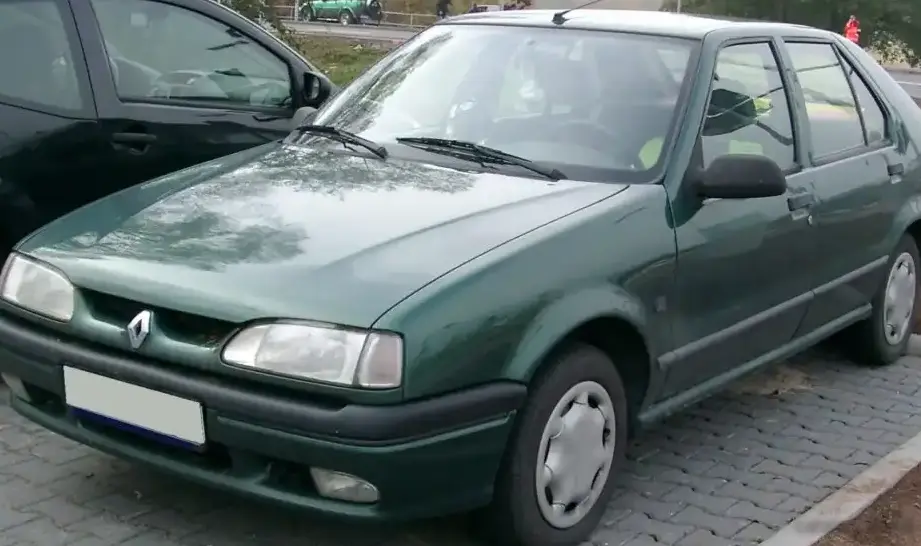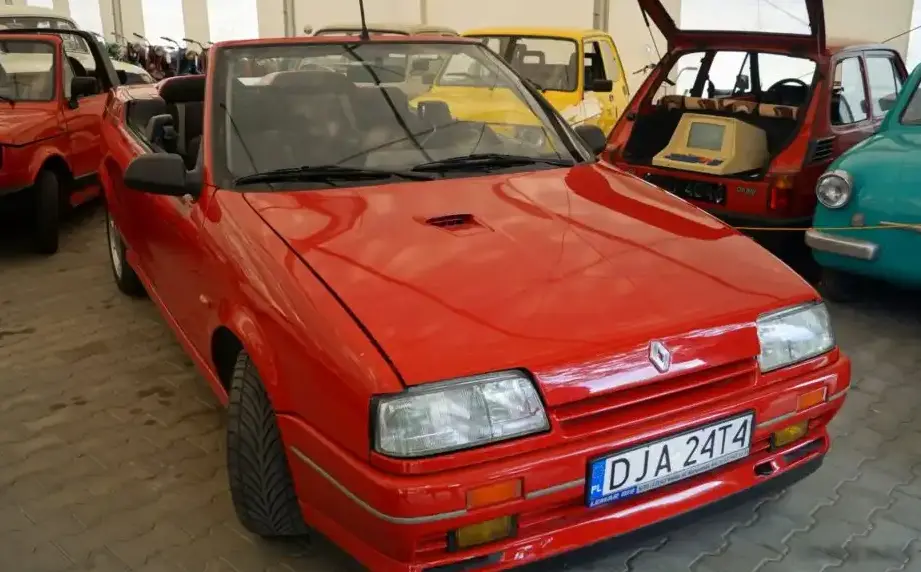
The Renault 19 I Cabriolet 1.7, produced between 1991 and 1992, represents a relatively short-lived but charming iteration of Renault’s popular compact car. Falling within the D53 generation of the Renault 19, the Cabriolet offered open-air motoring at an accessible price point. This particular variant, equipped with the 1.7-liter F3N engine producing 90 horsepower, was positioned as the entry-level offering in the Cabriolet range, prioritizing affordability and ease of use over outright performance. It aimed to capture a segment of the market seeking a stylish and practical convertible without the higher costs associated with more powerful engines or premium trim levels.
Technical Specifications
| Brand | Renault |
| Model | 19 |
| Generation | 19 I Cabriolet (D53) |
| Type (Engine) | 1.7 (90 Hp) |
| Start of production | 1991 |
| End of production | 1992 |
| Powertrain Architecture | Internal Combustion engine |
| Body type | Cabriolet |
| Seats | 5 |
| Doors | 2 |
| Fuel Type | Petrol (Gasoline) |
| Power | 90 Hp |
| Engine Model/Code | F3N |
| Engine aspiration | Naturally aspirated engine |
| Engine oil capacity | 5.3 l (5.6 US qt | 4.66 UK qt) |
| Coolant capacity | 6 l (6.34 US qt | 5.28 UK qt) |
| Fuel tank capacity | 55 l (14.53 US gal | 12.1 UK gal) |
Powertrain & Engine Architecture
The heart of the Renault 19 I Cabriolet 1.7 is the F3N engine, a 1.7-liter inline-four cylinder gasoline engine. This engine, a mainstay in several Renault models of the era, is known for its relative simplicity and durability. It features a single overhead camshaft (SOHC) valvetrain operating two valves per cylinder. Fuel delivery is managed by a Bosch Mono-Jetronic fuel injection system, a relatively basic system compared to multi-point injection found in some contemporary vehicles. Mono-Jetronic, while less precise, contributed to the engine’s affordability and ease of maintenance. The F3N engine produces 90 horsepower at approximately 5,500 rpm and 138 Nm (102 lb-ft) of torque at 3,000 rpm. The engine is paired with a three-speed automatic transmission, a common choice for drivers prioritizing convenience over performance. This transmission, while providing smooth shifts, is geared more towards fuel economy and relaxed cruising than spirited acceleration.
Driving Characteristics
The 1.7-liter engine and three-speed automatic transmission combination in the Renault 19 Cabriolet delivers a driving experience best described as relaxed and comfortable. Acceleration is adequate for everyday driving, but it’s not a particularly quick car. The automatic transmission’s gear ratios are spaced to prioritize fuel efficiency, meaning the engine can feel strained when attempting rapid acceleration or climbing hills. Compared to the 1.4-liter engine available in some markets, the 1.7 offered a noticeable improvement in performance, particularly when fully loaded with passengers and luggage. However, it falls significantly short of the more powerful 1.8 and 2.0-liter engines offered in other Renault 19 variants. The Cabriolet’s suspension, tuned for comfort, provides a reasonably smooth ride, absorbing most road imperfections effectively. Steering is light and easy, making it maneuverable in urban environments, but lacks the precision and feedback desired by more enthusiastic drivers.
Equipment & Trim Levels
The 1.7-liter Cabriolet represented the base trim level for the Renault 19 Cabriolet. Standard equipment typically included cloth upholstery, basic instrumentation (speedometer, fuel gauge, temperature gauge), and a manually operated convertible top. Power steering was often included, but air conditioning and electric windows were typically optional extras. The interior design was functional and straightforward, reflecting the car’s affordable positioning. Optional extras could include upgraded audio systems, alloy wheels, and more luxurious interior trim options. The dashboard layout was typical of Renaults from the period, with a focus on ergonomics and ease of use. Safety features were relatively basic, consisting primarily of seatbelts and a collapsible steering column.
Chassis & Braking
The Renault 19 Cabriolet utilizes a MacPherson strut front suspension and a torsion beam rear suspension. This setup provides a good balance between ride comfort and handling. The Cabriolet’s chassis was reinforced compared to the standard Renault 19 hatchback to compensate for the loss of structural rigidity due to the open-top design. Braking duties are handled by disc brakes on the front wheels and drum brakes on the rear wheels. The braking system is adequate for normal driving conditions, but lacks the stopping power of more modern vehicles. Anti-lock braking system (ABS) was not typically offered on the base 1.7-liter model.
Market Reception & Comparison
The Renault 19 I Cabriolet 1.7 was generally well-received as an affordable and stylish entry into the convertible market. Critics praised its attractive design and comfortable ride, but noted its lack of outright performance. Compared to other convertibles of the time, such as the Peugeot 205 Cabriolet or the Citroën AX Cabriolet, the Renault 19 offered a competitive price point and a relatively spacious interior. However, its automatic transmission was often criticized for being slow and unresponsive. Fuel economy was reasonable for the period, averaging around 30-35 mpg in mixed driving conditions. Reliability was generally good, with the F3N engine proving to be a durable and dependable unit.
Legacy
The Renault 19 I Cabriolet 1.7, while a short-lived model, has gained a following among classic car enthusiasts. The F3N engine, when properly maintained, is known for its longevity. Parts availability can be a challenge, but many components are still available through specialist Renault parts suppliers. Today, these cars are often sought after as affordable and charming classic convertibles. The automatic transmission, while not a performance enhancer, remains relatively reliable. The 1.7-liter variant, being the entry-level model, is generally more affordable to purchase and maintain than the higher-powered versions, making it an attractive option for those looking to experience the joys of open-top motoring without breaking the bank. Its simple mechanicals make it a relatively easy car to work on for amateur mechanics, further adding to its appeal.