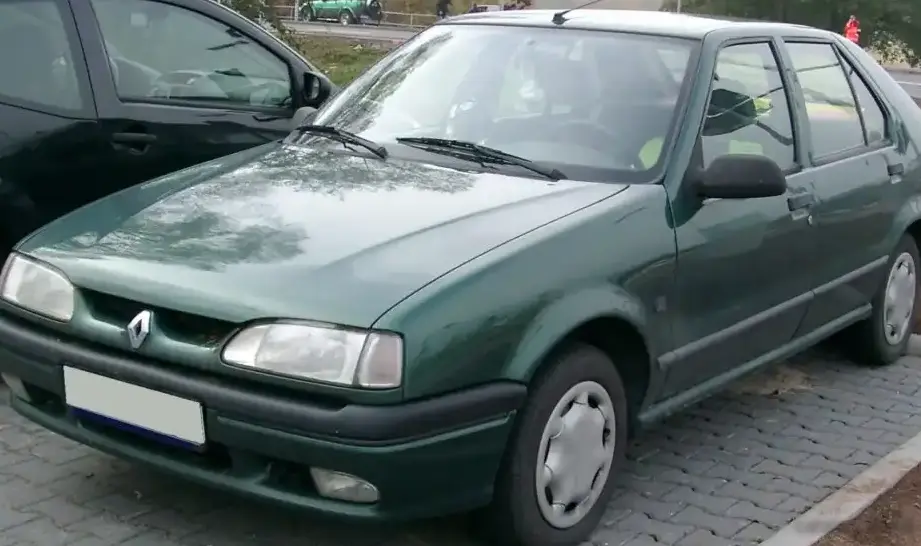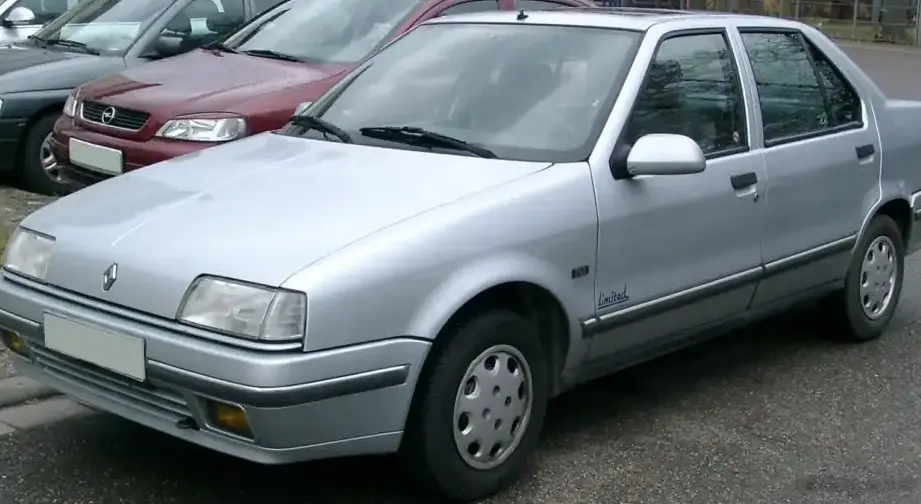
The Renault 19 Chamade 1.4 (L532), produced between 1989 and 1992, represented the entry-level offering within the broader Renault 19 range. The Chamade, a three-door hatchback version of the 19, was aimed at a younger, more budget-conscious buyer than the five-door saloon. This 58 horsepower variant, equipped with a catalytic converter (CAT), was a significant model for Renault, particularly in European markets, offering affordable transportation with a focus on fuel economy. It occupied the base trim level, positioned below the more powerful 1.7 and subsequent engine options.
Technical Specifications
| Brand | Renault |
| Model | 19 |
| Generation | 19 I Chamade (L53) |
| Type (Engine) | 1.4 (L532) (58 Hp) CAT |
| Start of Production | 1989 |
| End of Production | 1992 |
| Powertrain Architecture | Internal Combustion Engine |
| Body Type | Sedan (Chamade – 3-door Hatchback) |
| Seats | 5 |
| Doors | 3 (Chamade) |
| Fuel Type | Petrol (Gasoline) |
| Power | 58 Hp |
| Engine Model/Code | C1J, C3J |
| Engine Aspiration | Naturally Aspirated |
| Engine Oil Capacity | 3.5 l (3.7 US qt | 3.08 UK qt) |
| Coolant Capacity | 5.4 l (5.71 US qt | 4.75 UK qt) |
| Fuel Tank Capacity | 55 l (14.53 US gal | 12.1 UK gal) |
Powertrain & Engine Architecture
The Renault 19 Chamade 1.4 (L532) utilized the C1J or C3J engine, a 1397cc inline-four cylinder engine. This engine was a mainstay of Renault’s small car lineup during the late 1980s and early 1990s. It featured a single overhead camshaft (SOHC) valvetrain operating two valves per cylinder. Fuel delivery was managed by a single-point fuel injection system, a relatively simple and cost-effective technology for the time. The catalytic converter, denoted by the “CAT” designation, was a crucial addition to meet increasingly stringent European emissions regulations. The engine’s modest power output of 58 horsepower at approximately 5,500 rpm and 86 lb-ft of torque at 3,500 rpm was achieved through a relatively low compression ratio and conservative engine tuning. The engine was designed for reliability and fuel efficiency rather than outright performance. The engine block was constructed from cast iron, contributing to its durability, while the cylinder head was made of aluminum alloy to reduce weight.
Driving Characteristics
The 1.4L engine paired with an automatic transmission in the Chamade resulted in a driving experience focused on practicality and ease of use. Acceleration was leisurely, with a 0-60 mph time estimated around 14-16 seconds. The automatic transmission, typically a three-speed unit, was geared for fuel economy, resulting in relatively high engine speeds during highway cruising. Compared to the five-speed manual version, the automatic noticeably reduced responsiveness. The automatic transmission, while convenient, did diminish the overall driving engagement. The gear ratios were spaced to prioritize fuel efficiency over spirited driving. The car felt most comfortable in urban environments, where its compact size and light steering made maneuvering easy. Compared to the later 1.7L versions, the 1.4L automatic lacked the punch needed for confident overtaking maneuvers. The steering, while not particularly quick, offered adequate feedback for everyday driving. The suspension, tuned for comfort, absorbed bumps reasonably well, although it could feel somewhat floaty on uneven surfaces.
Equipment & Trim Levels
The Chamade 1.4 CAT represented the base trim level. Standard equipment typically included cloth upholstery, basic instrumentation (speedometer, fuel gauge, temperature gauge), and a simple AM/FM radio. Power steering was often an optional extra, as were electric windows. The interior plastics were durable but utilitarian, reflecting the car’s budget-oriented positioning. The dashboard layout was functional, with clearly labeled controls. Optional extras included a sunroof, upgraded stereo systems, and central locking. The Chamade’s interior space was adequate for four adults, but rear legroom was somewhat limited. The three-door configuration meant easier access to the rear seats for passengers, though it wasn’t as convenient as the five-door saloon. The seats were generally comfortable for shorter journeys, but lacked significant bolstering.
Chassis & Braking
The Renault 19 Chamade utilized a MacPherson strut front suspension and a torsion beam rear suspension. This setup provided a reasonable balance between ride comfort and handling. The torsion beam rear suspension was a cost-effective solution, but it didn’t offer the same level of sophistication as independent rear suspension systems. Braking was typically accomplished with disc brakes on the front wheels and drum brakes on the rear wheels. The braking system was adequate for the car’s weight and performance, but it lacked the stopping power of more modern systems. Stabilizer bars were often omitted on the base model to further reduce costs. The steering was unassisted or featured optional power assistance, providing a direct but somewhat heavy feel. The car’s relatively light weight helped to offset the limitations of the braking system.
Market Reception & Comparison
The Renault 19 Chamade 1.4 CAT was generally well-received as an affordable and reliable small car. Critics praised its fuel economy and practicality, but noted its lack of performance. Compared to other cars in its class, such as the Peugeot 205 and Citroën AX, the Renault 19 offered a slightly more spacious interior and a more comfortable ride. However, it wasn’t as sporty to drive as the Peugeot 205. The 1.7L versions of the Renault 19 offered significantly more power and a more engaging driving experience, but they came at a higher price point. Fuel economy for the 1.4L automatic was typically in the range of 35-40 mpg, making it an attractive option for budget-conscious buyers. Reliability was generally good, with the C1J/C3J engine proving to be durable and long-lasting. The Chamade’s three-door configuration appealed to younger buyers seeking a more stylish and affordable option.
Legacy
The Renault 19 Chamade 1.4 CAT remains a relatively common sight on European roads today, testament to its durability and affordability. The C1J/C3J engine is known for its simplicity and ease of maintenance. Parts availability is generally good, although some components may be becoming increasingly difficult to find. In the used car market, these models are typically very inexpensive, making them attractive to first-time car owners or those seeking a cheap and reliable runabout. While not a performance icon, the Renault 19 Chamade 1.4 CAT played a significant role in providing affordable transportation to a wide range of buyers during the late 1980s and early 1990s. Its enduring presence is a reflection of its solid engineering and practical design. The car represents a period of accessible motoring, before the increasing complexity and cost of modern vehicles.