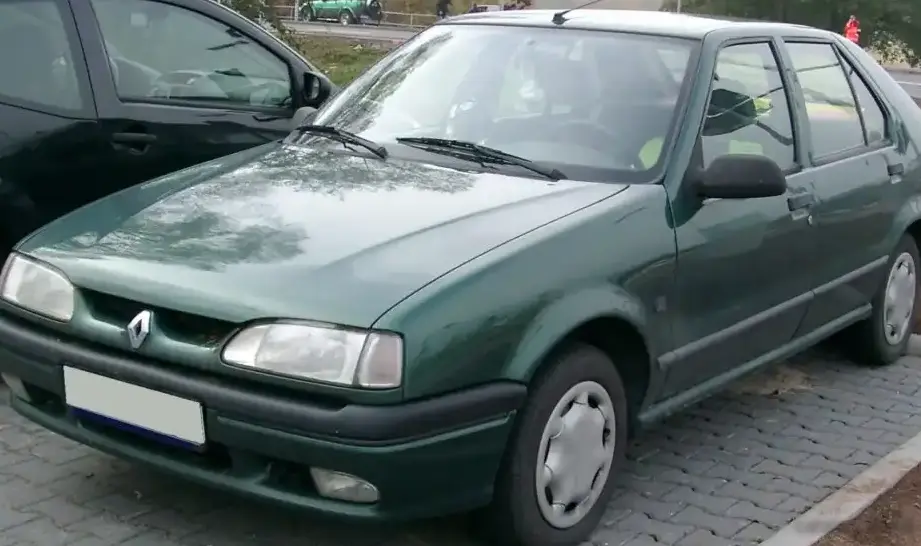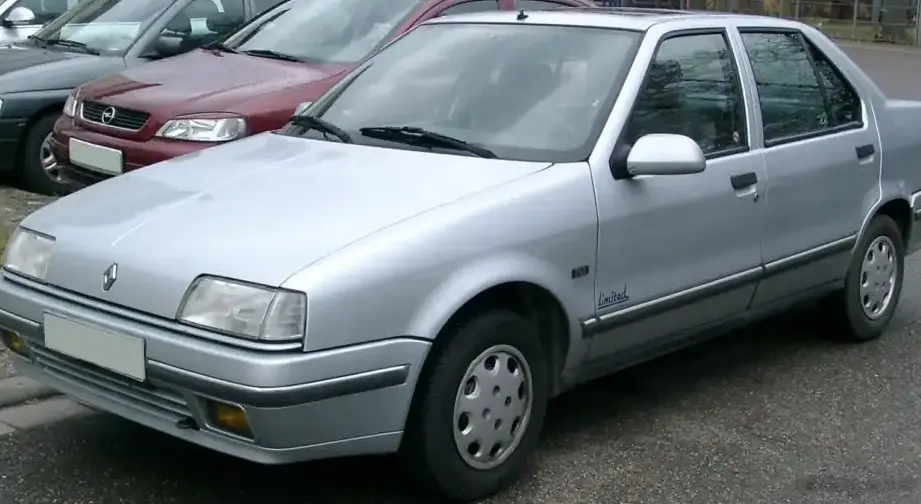
The Renault 19 Chamade 1.7 (L53B), produced between 1989 and 1992, represented an entry-level offering within the broader Renault 19 range. The Chamade, a three-door hatchback version of the 19, was aimed at buyers seeking a practical and affordable family car. This 1.7-liter variant, with its 73 horsepower output and automatic transmission, occupied a specific niche, prioritizing ease of use over outright performance. It was positioned below the more powerful 1.4 and 1.8-liter models, and significantly below the performance-oriented 16-valve versions. The Renault 19, as a whole, was a significant model for Renault, intended to replace the aging Renault 9 and 11, and compete with rivals like the Peugeot 205 and Citroën AX.
Technical Specifications
| Brand | Renault |
| Model | 19 |
| Generation | 19 I Chamade (L53) |
| Type (Engine) | 1.7 (L53B) (73 Hp) |
| Start of production | 1989 |
| End of production | 1992 |
| Powertrain Architecture | Internal Combustion engine |
| Body type | Sedan |
| Seats | 5 |
| Doors | 4 |
| Fuel Type | Petrol (Gasoline) |
| Weight-to-power ratio | 12.9 kg/Hp, 77.2 Hp/tonne |
| Power | 73 Hp @ 6000 rpm |
| Power per litre | 42.3 Hp/l |
| Engine layout | Front, Transverse |
| Engine Model/Code | F3N |
| Engine displacement | 1725 cm3 / 105.27 cu. in. |
| Number of cylinders | 4 |
| Fuel injection system | Single-point injection |
| Engine oil capacity | 5.2 l / 5.49 US qt | 4.58 UK qt |
| Coolant capacity | 6 l / 6.34 US qt | 5.28 UK qt |
| Kerb Weight | 945 kg / 2083.37 lbs |
| Fuel tank capacity | 55 l / 14.53 US gal | 12.1 UK gal |
| Drivetrain Architecture | The Internal combustion engine (ICE) drives the front wheels of the vehicle. |
| Drive wheel | Front wheel drive |
| Number of gears and type of gearbox | 5 gears, automatic transmission |
Powertrain & Engine Architecture
The Renault 19 Chamade 1.7 (L53B) was powered by the F3N engine, a 1.7-liter inline-four cylinder gasoline engine. This engine utilized a single-point fuel injection system, a relatively common technology in the late 1980s and early 1990s. Single-point injection, while simpler and less expensive than multi-point injection, offered less precise fuel delivery and generally resulted in slightly lower performance and fuel efficiency. The F3N engine featured a relatively simple overhead valve (OHV) valvetrain with two valves per cylinder. The engine’s 73 horsepower output at 6000 rpm and modest torque figures were typical for engines of this displacement and technology at the time. The automatic transmission was a four-speed unit, designed for smooth, if not particularly sporty, operation. It was a conventional hydraulic automatic, lacking the electronic controls found in more modern transmissions.
Driving Characteristics
The 1.7-liter automatic Renault 19 Chamade offered a comfortable, but uninspiring, driving experience. The automatic transmission, while convenient, noticeably dulled the engine’s performance. Acceleration was adequate for everyday driving, but overtaking maneuvers required careful planning. The gear ratios were optimized for fuel economy rather than rapid acceleration. Compared to the five-speed manual version of the 1.7, the automatic suffered a noticeable performance penalty. The manual transmission allowed the engine to rev more freely and provided more driver control. The Chamade’s suspension was tuned for comfort, providing a relatively smooth ride over most road surfaces. Handling was predictable, but not particularly engaging. The steering was light and easy, making it well-suited for urban driving.
Equipment & Trim Levels
The Renault 19 Chamade 1.7 automatic typically came with a fairly basic level of equipment. Standard features generally included cloth upholstery, a basic stereo system, and manual windows and door locks. Power steering was often included, but air conditioning was typically an optional extra. The interior was functional and durable, but lacked the refinement of more expensive models. Higher trim levels, such as the “Si” or “RN” variants, offered additional features like upgraded upholstery, alloy wheels, and a more comprehensive stereo system. Optional extras included a sunroof, central locking, and upgraded sound systems. The Chamade’s interior space was reasonable for a car of its size, offering adequate room for four adults.
Chassis & Braking
The Renault 19 Chamade utilized a relatively simple chassis design. The front suspension consisted of MacPherson struts, while the rear suspension employed a torsion beam axle. This setup provided a good balance between ride comfort and handling. The braking system featured disc brakes on the front wheels and drum brakes on the rear wheels. This configuration was common for cars in this price range during the late 1980s and early 1990s. Anti-lock brakes (ABS) were not typically standard equipment on the 1.7-liter model, but were available as an optional extra on higher trim levels. The Chamade’s steering was a rack-and-pinion system, providing light and precise steering feel.
Market Reception & Comparison
The Renault 19 Chamade 1.7 automatic was generally well-received as an affordable and practical family car. Critics praised its comfortable ride and ease of use, but noted its lack of performance. Compared to the more powerful 1.8-liter and 16-valve versions, the 1.7 automatic was significantly slower and less engaging to drive. However, it offered better fuel economy and lower running costs. The 1.9 TDI diesel version, introduced later in the Renault 19’s lifecycle, provided even better fuel economy and a more robust powertrain, but at the expense of refinement. The 1.7 automatic appealed to buyers who prioritized comfort and convenience over performance, such as families and older drivers.
Legacy
The Renault 19, and specifically the 1.7 automatic variant, has developed a reputation for reasonable reliability, although age and maintenance history are critical factors today. The F3N engine is generally considered to be a durable unit, but the automatic transmission can be prone to wear and tear if not properly maintained. Parts availability is generally good, although some components may be becoming increasingly difficult to find. In the used car market, the 1.7 automatic Chamade represents an affordable entry point into Renault 19 ownership. It’s a car that offers a nostalgic driving experience and a glimpse into the automotive landscape of the late 1980s and early 1990s. While not a performance icon, it remains a practical and charming classic for those seeking a simple and reliable hatchback.