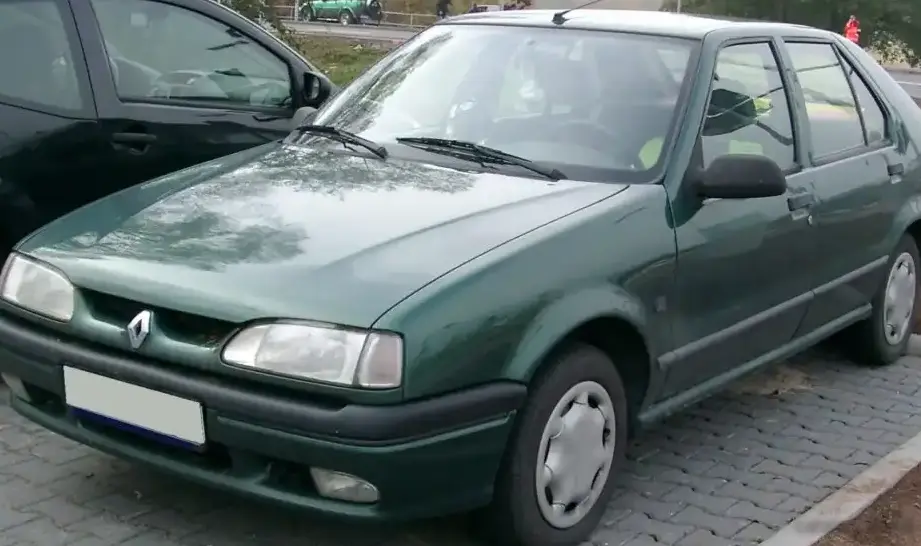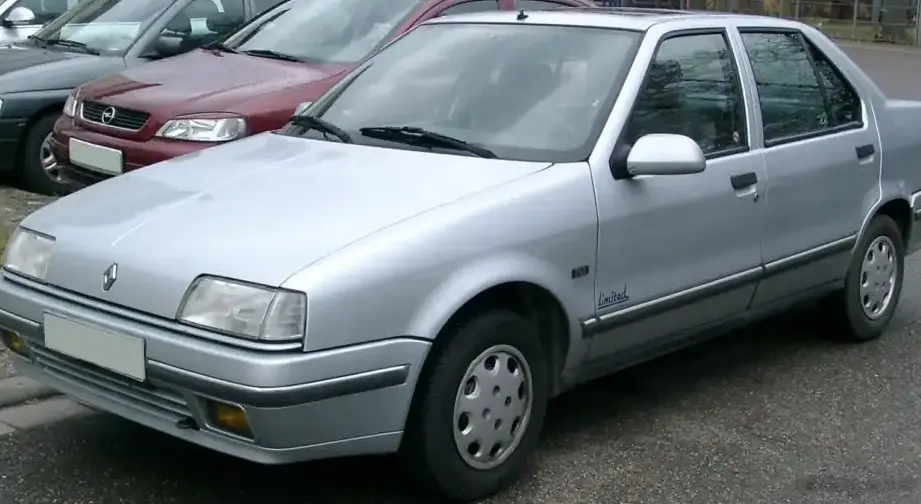
The Renault 19 Chamade 1.7 (L53C), producing 90 horsepower, was a popular compact sedan offered by Renault between 1990 and 1992. Positioned as a mid-range offering within the broader Renault 19 lineup, it aimed to provide a balance of affordability, practicality, and reasonable performance. The Chamade body style, a three-box sedan, was a key variant of the 19, offering a more traditional appearance compared to the hatchback versions. This model played a significant role in Renault’s presence in the European market, competing with vehicles like the Peugeot 305 and Citroën BX.
Technical Specifications
| Brand | Renault |
| Model | 19 |
| Generation | 19 I Chamade (L53) |
| Type (Engine) | 1.7 (L53C) (90 Hp) |
| Start of production | 1990 |
| End of production | 1992 |
| Powertrain Architecture | Internal Combustion engine |
| Body type | Sedan |
| Seats | 5 |
| Doors | 4 |
| Fuel consumption (urban) | 10.1 l/100 km (23.3 US mpg, 28 UK mpg, 9.9 km/l) |
| Fuel consumption (extra urban) | 6 l/100 km (39.2 US mpg, 47.1 UK mpg, 16.7 km/l) |
| Fuel consumption (combined) | 7.9 l/100 km (29.8 US mpg, 35.8 UK mpg, 12.7 km/l) |
| Fuel Type | Petrol (Gasoline) |
| Acceleration 0 – 100 km/h | 10.7 sec |
| Acceleration 0 – 62 mph | 10.7 sec |
| Acceleration 0 – 60 mph | 10.2 sec |
| Maximum speed | 185 km/h (114.95 mph) |
| Weight-to-power ratio | 11.2 kg/Hp, 89.6 Hp/tonne |
| Weight-to-torque ratio | 7.2 kg/Nm, 139.4 Nm/tonne |
| Power | 90 Hp @ 5250 rpm |
| Power per litre | 52.3 Hp/l |
| Torque | 140 Nm @ 3000 rpm (103.26 lb.-ft. @ 3000 rpm) |
| Engine layout | Front, Transverse |
| Engine Model/Code | F3N 742 |
| Engine displacement | 1721 cm3 (105.02 cu. in.) |
| Number of cylinders | 4 |
| Engine configuration | Inline |
| Cylinder Bore | 81 mm (3.19 in.) |
| Piston Stroke | 83.5 mm (3.29 in.) |
| Compression ratio | 9.5:1 |
| Number of valves per cylinder | 2 |
| Fuel injection system | Multi-port manifold injection |
| Engine aspiration | Naturally aspirated engine |
| Engine oil capacity | 5.2 l (5.49 US qt | 4.58 UK qt) |
| Coolant capacity | 6 l (6.34 US qt | 5.28 UK qt) |
| Kerb Weight | 1004 kg (2213.44 lbs.) |
| Max. weight | 1440 kg (3174.66 lbs.) |
| Max load | 436 kg (961.22 lbs.) |
| Trunk (boot) space – minimum | 463 l (16.35 cu. ft.) |
| Fuel tank capacity | 55 l (14.53 US gal | 12.1 UK gal) |
| Length | 4262 mm (167.8 in.) |
| Width | 1694 mm (66.69 in.) |
| Height | 1412 mm (55.59 in.) |
| Wheelbase | 2545 mm (100.2 in.) |
| Front track | 1418 mm (55.83 in.) |
| Rear track | 1417 mm (55.79 in.) |
| Drivetrain Architecture | Front wheel drive |
| Number of gears | 5 |
| Gearbox type | Manual transmission |
| Front brakes | Ventilated discs |
| Rear brakes | Disc |
| Assisting systems | ABS (Anti-lock braking system) |
| Power steering | Hydraulic Steering |
| Tires size | 175/70 R13; 175/65 R14 |
| Wheel rims size | 13; 14 |
Powertrain & Engine Architecture
The Renault 19 Chamade 1.7 (L53C) was powered by the F3N 742 engine, a 1.7-liter inline-four cylinder gasoline engine. This engine was a mainstay in Renault’s lineup during the late 1980s and early 1990s. It featured a cast iron block and an aluminum cylinder head, employing a single overhead camshaft (SOHC) design with two valves per cylinder. Fuel delivery was handled by a Bosch multi-port fuel injection system, contributing to improved efficiency and smoother operation compared to earlier carbureted Renault engines. The engine’s 90 horsepower output at 5250 rpm and 140 Nm (103 lb-ft) of torque at 3000 rpm were considered adequate for the vehicle’s weight class. The engine was transversely mounted, driving the front wheels. The standard transmission was a five-speed manual, although an optional three-speed automatic transmission was available, though less common.
Driving Characteristics
The 1.7-liter engine, paired with the five-speed manual transmission, provided a reasonably engaging driving experience. Acceleration from 0 to 60 mph took approximately 10.2 seconds, and the car had a top speed of around 115 mph. While not particularly sporty, the engine offered sufficient power for everyday driving and highway cruising. The automatic transmission, while offering convenience, noticeably dulled performance, increasing the 0-60 mph time to around 12 seconds. Gear ratios were tuned for fuel economy and relaxed cruising, rather than outright acceleration. Compared to the higher-performance Renault 19 16V models, the 1.7L felt significantly less powerful, but it offered better fuel economy and lower running costs. The suspension provided a comfortable ride, prioritizing smoothness over sharp handling.
Equipment & Trim Levels
The Renault 19 Chamade 1.7 typically came equipped with features considered standard for its class and price point in the early 1990s. These included power steering, a basic stereo system, and cloth upholstery. Higher trim levels, often denoted by additional badging, could add features like electric windows, central locking, and upgraded interior trim. Optional extras included a sunroof, alloy wheels, and a more sophisticated audio system. The interior design was functional and relatively simple, with a focus on practicality. The dashboard layout was straightforward, with clearly marked controls.
Chassis & Braking
The Renault 19 Chamade utilized a MacPherson strut front suspension and a torsion beam rear suspension. This setup provided a good balance of ride comfort and handling. Braking duties were handled by ventilated disc brakes at the front and disc brakes at the rear, offering adequate stopping power for the vehicle’s weight and performance. An anti-lock braking system (ABS) was available as an option, enhancing safety. The steering was hydraulic, making it relatively easy to maneuver at low speeds. Tire sizes typically ranged from 175/70 R13 to 175/65 R14, depending on the trim level.
Market Reception & Comparison
The Renault 19 Chamade 1.7 was generally well-received by automotive critics as a practical and affordable family car. It was praised for its comfortable ride, decent fuel economy (around 30 mpg combined), and relatively spacious interior. However, some critics noted that the engine lacked outright power, particularly when compared to competitors like the Peugeot 305 and Citroën BX. The automatic transmission was often criticized for its sluggish performance. In terms of reliability, the F3N engine was generally considered robust, but regular maintenance was essential to prevent issues. The 1.7L version offered a more economical alternative to the sportier 16V models, appealing to buyers prioritizing fuel efficiency and affordability.
Legacy
The Renault 19, and specifically the 1.7L variants, have become increasingly popular among classic car enthusiasts. The F3N engine is known for its relative simplicity and ease of maintenance, making it a relatively affordable classic to own and operate. Parts availability is generally good, although some components may be becoming increasingly scarce. Today, well-maintained examples of the Renault 19 Chamade 1.7 are sought after by collectors and enthusiasts looking for a nostalgic and affordable taste of 1990s European motoring. The car represents a significant era in Renault’s history, showcasing the company’s commitment to producing practical and reliable vehicles for the mass market.