
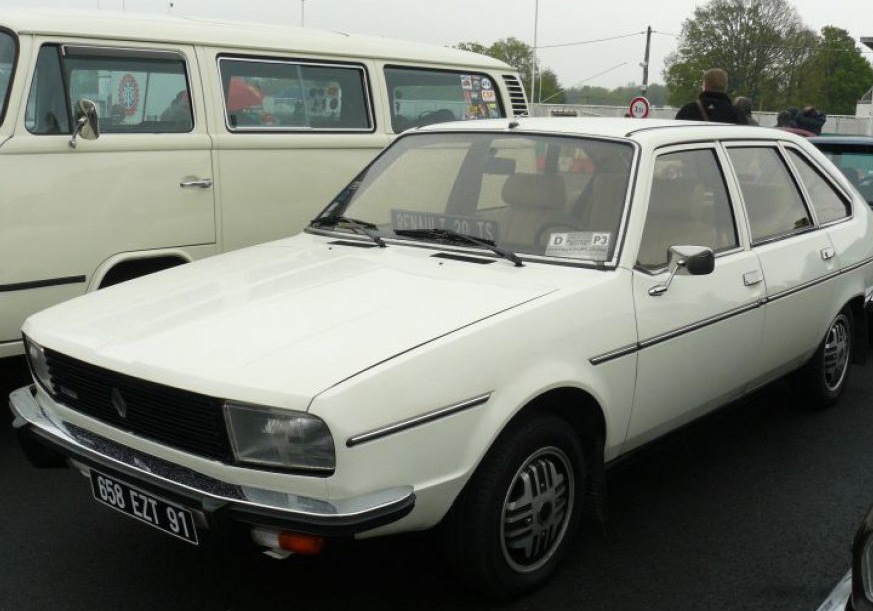
The Renault 20, specifically the 1.6-liter (1271) variant producing 90 horsepower, was a significant offering in the European compact car market from 1975 to 1977. Positioned as a practical and comfortable family vehicle, it represented Renault’s attempt to bridge the gap between smaller, more economical cars like the Renault 5 and larger, more luxurious models. This iteration of the 20, identified internally as the 127 series, played a crucial role in establishing Renault’s reputation for innovative design and engineering within the C-segment. It was a five-door hatchback, a body style gaining popularity at the time, offering increased versatility compared to traditional sedans.
Technical Specifications
| Brand | Renault |
| Model | 20 |
| Generation | 20 (127) |
| Type (Engine) | 1.6 (1271) (90 Hp) |
| Start of production | 1975 |
| End of production | 1977 |
| Powertrain Architecture | Internal Combustion engine |
| Body type | Hatchback |
| Seats | 5 |
| Doors | 5 |
| Fuel Type | Petrol (Gasoline) |
| Acceleration 0 – 100 km/h | 13.5 sec |
| Acceleration 0 – 62 mph | 13.5 sec |
| Acceleration 0 – 60 mph | 12.8 sec |
| Maximum speed | 165 km/h (102.53 mph) |
| Power | 90 Hp |
| Engine Model/Code | A2M-843-20 |
| Engine aspiration | Naturally aspirated engine |
| Engine oil capacity | 4 l (4.23 US qt | 3.52 UK qt) |
| Coolant capacity | 7.2 l (7.61 US qt | 6.34 UK qt) |
| Fuel tank capacity | 67 l (17.7 US gal | 14.74 UK gal) |
Powertrain & Engine Architecture
The heart of the Renault 20 1.6 was the A2M-843-20 engine, a 1,647cc inline-four cylinder gasoline engine. This engine featured a single overhead camshaft (SOHC) valvetrain operating two valves per cylinder. Fuel delivery was managed by a Solex carburetor, a common setup for the era. While not particularly advanced by modern standards, the carburetor provided adequate fuel atomization for the engine’s modest power output. The engine block was cast iron, contributing to its durability, while the cylinder head was aluminum, helping to reduce weight. The 90 horsepower was achieved at approximately 6,000 rpm, with peak torque of around 103 lb-ft at 3,500 rpm. This engine was paired with a three-speed automatic transmission, a relatively uncommon feature in this class of vehicle at the time. The automatic transmission was designed for smooth, comfortable operation rather than outright performance.
Driving Characteristics
The Renault 20 1.6 Automatic offered a comfortable, if not particularly sporty, driving experience. The automatic transmission, while convenient, did detract from the engine’s performance. Acceleration was leisurely, taking around 13.5 seconds to reach 62 mph. The three-speed automatic’s gear ratios were optimized for fuel economy and ease of driving, rather than quick acceleration. Compared to the available manual transmission, the automatic version felt noticeably slower. The suspension, consisting of independent front suspension with MacPherson struts and a torsion beam rear axle, provided a reasonably comfortable ride, absorbing bumps and imperfections in the road surface effectively. However, the car wasn’t particularly engaging to drive, lacking the sharp handling characteristics of some of its competitors.
Equipment & Trim Levels
The Renault 20 1.6 Automatic was generally equipped with a fairly standard level of features for the mid-1970s. Standard equipment included cloth upholstery, a basic instrument cluster, and manually operated windows and door locks. The interior was functional and reasonably spacious for its size. Optional extras included a sunroof, upgraded upholstery, and a radio. The trim level for this variant typically sat in the mid-range of the Renault 20 lineup, offering a step up in comfort and convenience compared to the base models but lacking the more luxurious features found in the higher-spec versions.
Chassis & Braking
The Renault 20 1.6 featured a monocoque chassis construction, providing a good balance of strength and weight. The front suspension utilized MacPherson struts, while the rear suspension employed a torsion beam axle. Braking was accomplished via disc brakes on the front wheels and drum brakes on the rear wheels. The braking system was adequate for the car’s weight and performance, but lacked the stopping power of more modern systems. A stabilizer bar was fitted to the front suspension to reduce body roll during cornering, improving handling stability.
Market Reception & Comparison
The Renault 20 1.6 Automatic was generally well-received by critics as a practical and comfortable family car. However, the automatic transmission was often criticized for its sluggish performance. Compared to other cars in its class, such as the Volkswagen Golf or the Ford Escort, the Renault 20 offered a more spacious interior and a more comfortable ride. Fuel economy was reasonable for the time, averaging around 28-32 mpg. Reliability was generally good, although the carburetor required periodic adjustment and maintenance. The manual transmission versions of the Renault 20 were generally preferred by enthusiasts due to their superior performance and fuel economy.
Legacy
The Renault 20 1.6 Automatic, while not a performance icon, remains a fondly remembered car for many. The A2M-843-20 engine proved to be a durable and reliable unit, and many examples are still on the road today. In the used car market, these vehicles are often sought after by classic car enthusiasts and collectors. The combination of a comfortable ride, spacious interior, and relatively simple mechanical design makes it an appealing choice for those looking for a classic European car. Parts availability can be a challenge, but a dedicated community of Renault enthusiasts helps to keep these cars running. The Renault 20, in all its variants, helped solidify Renault’s position as a major player in the European automotive market and paved the way for future generations of innovative and well-engineered vehicles.
