
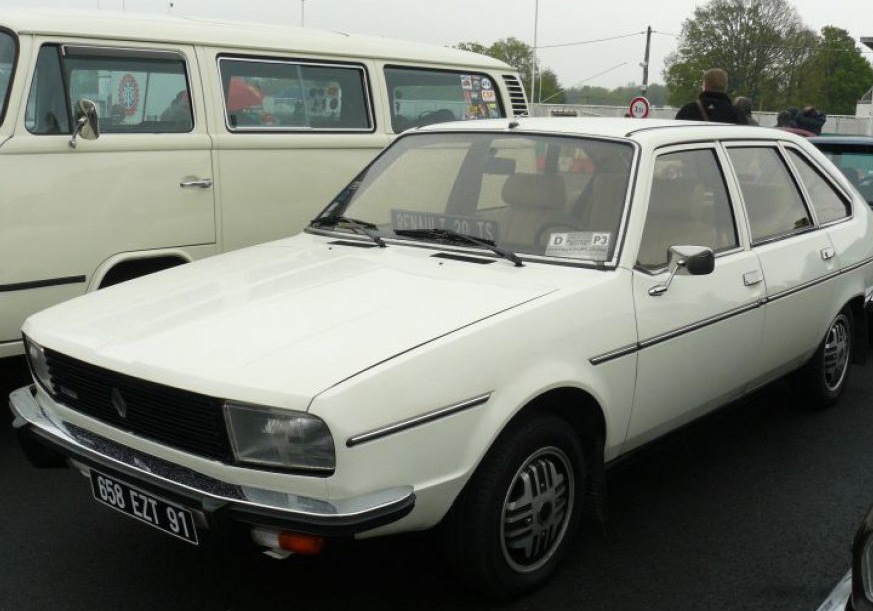
The Renault 20, specifically the 1.6-liter (1271) variant producing 97 horsepower, was a significant offering from the French automaker between 1977 and 1983. Positioned as a mid-range option within the broader Renault 20 lineup, this model aimed to provide a balance of practicality, comfort, and reasonable performance for the European family car market. It was built upon the 127 platform, a design intended to offer a modern and spacious alternative to existing compacts. The 1.6L engine and automatic transmission combination represented a less common configuration, catering to buyers prioritizing ease of driving over outright sportiness.
Technical Specifications
| Brand | Renault |
| Model | 20 |
| Generation | 20 (127) |
| Type (Engine) | 1.6 (1271) (97 Hp) |
| Start of production | 1977 |
| End of production | 1983 |
| Powertrain Architecture | Internal Combustion engine |
| Body type | Hatchback |
| Seats | 5 |
| Doors | 5 |
| Fuel Type | Petrol (Gasoline) |
| Acceleration 0 – 100 km/h | 13.0 sec |
| Acceleration 0 – 62 mph | 13.0 sec |
| Acceleration 0 – 60 mph | 12.4 sec |
| Maximum speed | 165 km/h (102.53 mph) |
| Power | 97 Hp |
| Engine Model/Code | A6M-843 |
| Engine aspiration | Naturally aspirated engine |
| Engine oil capacity | 4 l (4.23 US qt | 3.52 UK qt) |
| Coolant capacity | 7.2 l (7.61 US qt | 6.34 UK qt) |
| Fuel tank capacity | 67 l (17.7 US gal | 14.74 UK gal) |
Powertrain & Engine Architecture
The heart of this Renault 20 variant was the A6M-843 1.6-liter inline-four cylinder engine. This engine featured a relatively simple, yet robust design. It employed a single overhead camshaft (SOHC) valvetrain, operating two valves per cylinder. Fuel delivery was managed by a Solex carburetor, a common setup for the era, rather than fuel injection. This carburetor system, while reliable, wasn’t as precise as later fuel injection systems, impacting fuel economy and emissions. The engine’s 97 horsepower output at approximately 6000 rpm and 107 lb-ft of torque were respectable for its displacement and the time period. The automatic transmission was a three-speed unit, designed for smooth, if not particularly quick, shifts. It was a conventional hydraulic automatic, lacking the electronic controls found in later transmissions. This transmission was chosen to appeal to drivers who preferred the convenience of an automatic over the engagement of a manual gearbox.
Driving Characteristics
The Renault 20 1.6 Automatic offered a comfortable, but not exhilarating, driving experience. The three-speed automatic transmission, while providing ease of use, resulted in noticeable acceleration delays. The 0-60 mph time of around 12.4 seconds reflects this. Compared to the available five-speed manual transmission, the automatic version felt noticeably slower, particularly during overtaking maneuvers. The gear ratios were optimized for fuel efficiency and cruising comfort rather than outright performance. The suspension, while providing a reasonably comfortable ride, wasn’t particularly sporty. Body roll was present during cornering, and the steering lacked the precision of more performance-oriented vehicles. However, for everyday driving and family transport, the Renault 20 1.6 Automatic proved to be a capable and reliable vehicle.
Equipment & Trim Levels
The 1.6-liter automatic Renault 20 typically came equipped with a reasonable level of standard features for the late 1970s and early 1980s. Interior upholstery was generally cloth, with options for upgraded materials available. The dashboard layout was functional and straightforward, featuring analog gauges for speed, fuel level, coolant temperature, and a basic clock. Power steering was often included, enhancing ease of maneuverability, especially in urban environments. Other common features included a radio (often a basic AM/FM unit), heated rear window, and front and rear windscreen wipers. Optional extras could include a sunroof, upgraded sound system, and more luxurious interior trim options. The trim level generally sat in the middle of the Renault 20 range, offering more features than the base models but lacking the premium appointments of the higher-spec versions.
Chassis & Braking
The Renault 20 1.6 Automatic utilized a relatively conventional chassis design for the era. It featured independent front suspension with MacPherson struts and a torsion beam rear suspension. The front brakes were disc brakes, providing adequate stopping power, while the rear brakes were typically drum brakes. This combination was common for vehicles in this class at the time, balancing cost and performance. Stabilizer bars were fitted to both the front and rear axles, helping to reduce body roll during cornering. The steering was a rack-and-pinion system, providing reasonable precision, although it lacked the feedback of more modern systems. The overall chassis setup prioritized ride comfort and stability over sporty handling.
Market Reception & Comparison
The Renault 20 1.6 Automatic received mixed reviews from automotive critics. While praised for its comfortable ride and spacious interior, it was often criticized for its lackluster performance and relatively high fuel consumption compared to some of its competitors. Compared to the manual transmission versions of the Renault 20, the automatic suffered from a noticeable performance deficit. Against rivals like the Peugeot 504 and Citroën CX, the Renault 20 offered a more affordable and practical alternative, but lacked the prestige and advanced technology of those models. Fuel economy was around 25-30 mpg, which was typical for a vehicle of this size and era, but not particularly impressive. Reliability was generally good, although carburetor maintenance could be required periodically.
Legacy
The Renault 20 1.6 Automatic, while not the most sought-after variant of the model, remains a fondly remembered car for many owners. The A6M-843 engine proved to be reasonably durable, and many examples are still on the road today, albeit often requiring ongoing maintenance. The three-speed automatic transmission, while not known for its sophistication, is generally reliable if properly maintained. In the used car market, these Renault 20s are relatively affordable and appeal to enthusiasts looking for a classic French car with a comfortable ride. Parts availability can be a challenge, but a dedicated community of owners and suppliers helps to keep these vehicles running. The Renault 20 1.6 Automatic represents a snapshot of automotive engineering from the late 1970s and early 1980s, offering a blend of practicality, comfort, and French flair.
