
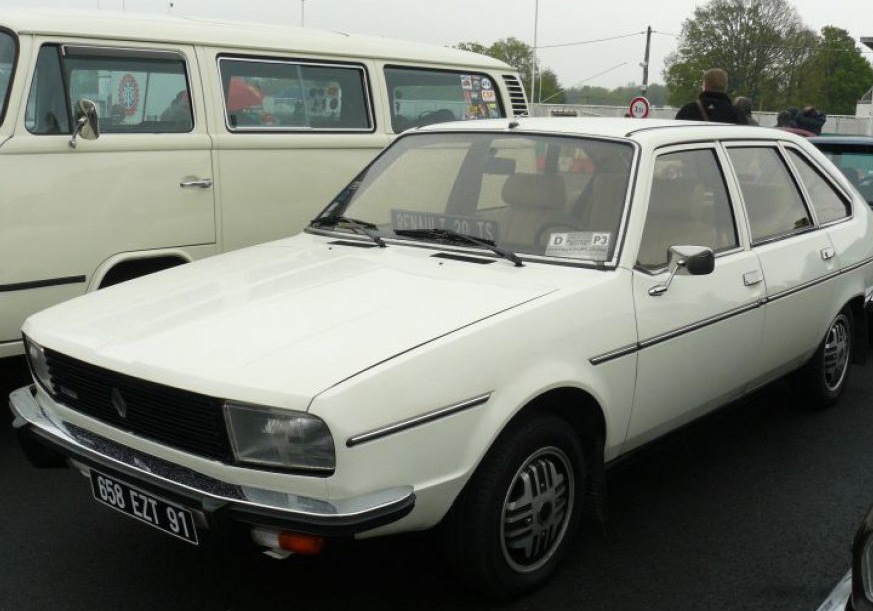
The Renault 20, specifically the 2.0-liter (1272cc) 109 horsepower variant produced between 1977 and 1980, represented a significant step forward for Renault in the mid-size family car segment. Falling under the internal designation 127, this version of the 20 aimed to provide a more refined and powerful option within the range, appealing to buyers seeking a comfortable and capable hatchback. It was built upon Renault’s commitment to innovation and offered a blend of practicality, performance, and relatively modern styling for its time. The 20, and particularly this 2.0L engine, was primarily aimed at the European market, offering a compelling alternative to competitors like the Opel Ascona and Ford Taunus.
Technical Specifications
| Brand | Renault |
| Model | 20 |
| Generation | 20 (127) |
| Type (Engine) | 2.0 (1272) (109 Hp) |
| Start of production | 1977 |
| End of production | 1980 |
| Powertrain Architecture | Internal Combustion engine |
| Body type | Hatchback |
| Seats | 5 |
| Doors | 5 |
| Fuel Type | Petrol (Gasoline) |
| Acceleration 0 – 100 km/h | 12.7 sec |
| Acceleration 0 – 62 mph | 12.7 sec |
| Acceleration 0 – 60 mph | 12.1 sec |
| Maximum speed | 170 km/h (105.63 mph) |
| Power | 109 Hp |
| Engine Model/Code | J6R 823 |
| Engine aspiration | Naturally aspirated engine |
| Engine oil capacity | 5 l (5.28 US qt | 4.4 UK qt) |
| Coolant capacity | 7.7 l (8.14 US qt | 6.78 UK qt) |
| Fuel tank capacity | 67 l (17.7 US gal | 14.74 UK gal) |
Powertrain & Engine Architecture
The heart of the Renault 20 (127) 2.0 was the J6R 823 engine, a 1995cc inline-four cylinder powerplant. This engine was a significant upgrade from the smaller displacement options available in the 20 lineup. It featured a cast iron block and an aluminum cylinder head, a common configuration for the era. The engine utilized a single overhead camshaft (SOHC) valvetrain, operating two valves per cylinder. Fuel delivery was managed by a Solex carburetor, a relatively simple but effective system for the time. While not as sophisticated as fuel injection, the carburetor provided adequate fuel atomization for the engine’s output. The 2.0L engine produced 109 horsepower at approximately 6000 rpm and 138 lb-ft of torque at 4000 rpm. The transmission was a four-speed manual, although a three-speed automatic transmission was also offered, though less common. The automatic transmission, while providing convenience, did impact acceleration and fuel economy.
Driving Characteristics
The Renault 20 2.0 offered a noticeable improvement in performance compared to the lower-spec models. The 109 horsepower engine provided brisk acceleration, capable of reaching 60 mph in around 12.1 seconds, and a top speed of 105.63 mph. The four-speed manual transmission allowed drivers to effectively utilize the engine’s powerband, while the optional automatic, though smoother, resulted in a slight decrease in responsiveness. Handling was generally considered good for a family car of the period, with a comfortable ride quality. The steering was relatively light, making it easy to maneuver in urban environments. However, it lacked the precision found in some of its more sporting competitors. The 2.0L variant felt more composed at highway speeds, offering a stable and relaxed driving experience.
Equipment & Trim Levels
The Renault 20 2.0 typically came with a reasonable level of standard equipment for the late 1970s. This included cloth upholstery, a basic instrument cluster, and front and rear ashtrays (reflective of the era). Optional extras included a sunroof, upgraded stereo systems, and more luxurious interior trim options. The trim level often dictated the exterior appointments, with higher-spec models featuring chrome trim and more elaborate wheel covers. The interior design was functional and straightforward, prioritizing practicality over outright luxury. The dashboard layout was typical of European cars of the time, with clearly labeled controls and a focus on driver ergonomics.
Chassis & Braking
The Renault 20 (127) utilized a MacPherson strut front suspension and a torsion beam rear suspension. This setup provided a good balance between ride comfort and handling. The front suspension featured coil springs and a stabilizer bar, while the rear suspension relied on leaf springs. Braking was initially accomplished with disc brakes on the front wheels and drum brakes on the rear. Later models saw the introduction of rear disc brakes on some trims. Steering was rack and pinion, providing reasonable precision. The chassis was relatively lightweight, contributing to the car’s overall agility. The braking system, while adequate, lacked the stopping power of more modern systems.
Market Reception & Comparison
The Renault 20 2.0 was generally well-received by automotive critics. It was praised for its spacious interior, comfortable ride, and relatively powerful engine. However, some critics noted the carburetor’s impact on fuel economy and the somewhat dated interior design. Compared to its siblings, the 20 2.0 offered a significant performance advantage over the smaller-engined models. It was positioned as the premium offering in the 20 lineup, appealing to buyers who prioritized performance and refinement. Compared to competitors like the Opel Ascona and Ford Taunus, the Renault 20 2.0 offered a compelling combination of features and value. Fuel economy was reasonable for the time, averaging around 25-30 mpg depending on driving conditions.
Legacy
The Renault 20 2.0, while not a groundbreaking vehicle, played an important role in establishing Renault as a major player in the European mid-size car market. The J6R engine proved to be relatively durable, and many examples are still on the road today. In the used car market, the 20 2.0 is appreciated by enthusiasts for its classic styling and relatively simple mechanicals. Parts availability can be a challenge, but a dedicated community of owners and suppliers helps to keep these cars running. The 20’s influence can be seen in subsequent Renault models, which continued to prioritize practicality, comfort, and innovation. While not a collector’s item in the same vein as some other classic cars, the Renault 20 2.0 remains a fondly remembered and capable vehicle from a bygone era.
