
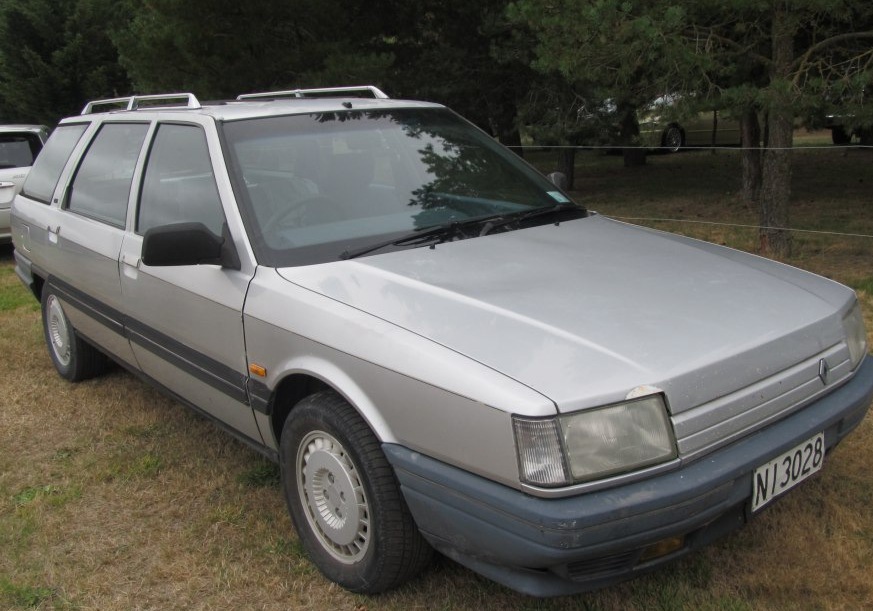
The Renault 21 Combi 1.7 i, produced between 1989 and 1993, was a practical and affordable station wagon aimed at families and those needing versatile cargo space. Part of the second generation Renault 21 (K48) series, the Combi body style – Renault’s term for ‘estate’ or ‘wagon’ – offered a significant increase in load capacity compared to the sedan. This particular variant, powered by the 1.7-liter F3N engine producing 75 horsepower, represented an entry-level option within the Combi range, positioned below the more powerful 2.0-liter and turbocharged diesel versions. It was primarily sold in European markets, where the demand for practical, fuel-efficient family cars was high.
Technical Specifications
| Brand | Renault |
| Model | 21 |
| Generation | 21 Combi (K48) |
| Type (Engine) | 1.7 i (75 Hp) |
| Start of production | 1989 |
| End of production | 1993 |
| Powertrain Architecture | Internal Combustion engine |
| Body type | Station wagon (estate) |
| Seats | 5 |
| Doors | 5 |
| Fuel consumption (urban) | 10.5 l/100 km (22.4 US mpg, 26.9 UK mpg, 9.5 km/l) |
| Fuel consumption (extra urban) | 5.9 l/100 km (39.9 US mpg, 47.9 UK mpg, 16.9 km/l) |
| Fuel consumption (combined) | 7.5 l/100 km (31.4 US mpg, 37.7 UK mpg, 13.3 km/l) |
| Fuel Type | Petrol (Gasoline) |
| Acceleration 0 – 100 km/h | 10.7 sec |
| Acceleration 0 – 62 mph | 10.7 sec |
| Acceleration 0 – 60 mph | 10.2 sec |
| Maximum speed | 185 km/h (114.95 mph) |
| Weight-to-power ratio | 14.3 kg/Hp, 69.8 Hp/tonne |
| Weight-to-torque ratio | 8.3 kg/Nm, 120 Nm/tonne |
| Power | 75 Hp @ 5000 rpm |
| Power per litre | 43.6 Hp/l |
| Torque | 129 Nm @ 3250 rpm (95.15 lb.-ft. @ 3250 rpm) |
| Engine layout | Front, Transverse |
| Engine Model/Code | F3N |
| Engine displacement | 1721 cm3 (105.02 cu. in.) |
| Number of cylinders | 4 |
| Engine configuration | Inline |
| Cylinder Bore | 81 mm (3.19 in.) |
| Piston Stroke | 83.5 mm (3.29 in.) |
| Compression ratio | 9.2:1 |
| Number of valves per cylinder | 2 |
| Fuel injection system | Single-point injection |
| Engine aspiration | Naturally aspirated engine |
| Valvetrain | OHC |
| Engine oil capacity | 5.3 l (5.6 US qt | 4.66 UK qt) |
| Coolant capacity | 6 l (6.34 US qt | 5.28 UK qt) |
| Kerb Weight | 1075 kg (2369.97 lbs.) |
| Max. weight | 1665 kg (3670.7 lbs.) |
| Max load | 590 kg (1300.73 lbs.) |
| Trunk (boot) space – minimum | 674 l (23.8 cu. ft.) |
| Trunk (boot) space – maximum | 1694 l (59.82 cu. ft.) |
| Fuel tank capacity | 66 l (17.44 US gal | 14.52 UK gal) |
| Length | 4693 mm (184.76 in.) |
| Width | 1726 mm (67.95 in.) |
| Height | 1450 mm (57.09 in.) |
| Wheelbase | 2809 mm (110.59 in.) |
| Front track | 1454 mm (57.24 in.) |
| Rear track | 1408 mm (55.43 in.) |
| Drivetrain Architecture | Front wheel drive |
| Number of gears | 5 |
| Gearbox type | Manual transmission |
| Front suspension | Spring Strut |
| Rear suspension | Torsion |
| Front brakes | Ventilated discs |
| Rear brakes | Drum |
| Steering type | Steering rack and pinion |
| Power steering | Hydraulic |
| Tires size | 175/65 R14 |
| Wheel rims size | 14 |
Powertrain & Engine Architecture
The Renault 21 Combi 1.7 i utilized the F3N engine, a relatively simple and robust four-cylinder, inline engine. This engine featured a single overhead camshaft (OHC) operating two valves per cylinder. Fuel delivery was handled by a single-point fuel injection system, which, while less sophisticated than multi-point injection, contributed to reasonable fuel economy and acceptable performance for the intended market segment. The engine’s 9.2:1 compression ratio was typical for the era. The 1.7-liter engine produced 75 horsepower at 5000 rpm and 129 Nm (95.15 lb-ft) of torque at 3250 rpm. This power was transmitted to the front wheels through a five-speed manual transmission, the most common configuration for this variant. While an automatic transmission was offered on some Renault 21 models, it was less frequently paired with the 1.7-liter engine due to its impact on fuel economy and performance.
Driving Characteristics
The 1.7-liter engine, coupled with the five-speed manual transmission, provided adequate, though not exhilarating, performance. Acceleration from 0 to 100 km/h (0-62 mph) took approximately 10.7 seconds, and the top speed was around 185 km/h (115 mph). The engine felt relatively responsive at lower RPMs, making it suitable for everyday driving. However, when fully loaded or tackling steep inclines, the engine could feel strained. Compared to the 2.0-liter versions, the 1.7-liter lacked the extra punch for quicker overtaking maneuvers. The manual transmission offered precise shifts, and the gear ratios were well-suited to maximizing fuel efficiency. The Combi’s suspension provided a comfortable ride, absorbing bumps and imperfections in the road effectively, although it wasn’t particularly sporty in handling.
Equipment & Trim Levels
The 1.7 i Combi typically came with a modest level of standard equipment. This included basic cloth upholstery, a simple dashboard layout, and manual windows and door locks. Power steering was often included, but air conditioning and central locking were usually optional extras. Higher trim levels, such as the ‘Si’ or ‘RT’ variants, offered more luxurious features like upgraded upholstery, alloy wheels, and additional convenience items. The Combi’s interior was designed with practicality in mind, offering ample space for passengers and cargo. The rear seats could be folded down to create a larger, flat load area, further enhancing its versatility.
Chassis & Braking
The Renault 21 Combi featured a front-wheel-drive layout with a relatively simple suspension setup. The front suspension utilized MacPherson struts, while the rear employed a torsion beam axle. This configuration provided a good balance between ride comfort and handling. Braking duties were handled by ventilated discs at the front and drum brakes at the rear. While adequate for normal driving conditions, the braking system wasn’t particularly powerful. The steering was a rack-and-pinion system with hydraulic power assistance, providing light and precise steering feel.
Market Reception & Comparison
The Renault 21 Combi 1.7 i was generally well-received as a practical and affordable family car. Critics praised its spacious interior, comfortable ride, and reasonable fuel economy. However, the 1.7-liter engine was often criticized for its lack of power, particularly when compared to the more potent 2.0-liter versions. In terms of fuel economy, the 1.7-liter offered a noticeable improvement over the larger engines, making it an attractive option for budget-conscious buyers. Reliability was generally good, although the single-point fuel injection system could occasionally require maintenance.
Legacy
The Renault 21 Combi 1.7 i remains a relatively common sight on European roads today, testament to its durability and practicality. While not a particularly sought-after classic, well-maintained examples are appreciated by enthusiasts for their simplicity and affordability. The F3N engine is known for its robustness, and with regular maintenance, it can provide many years of reliable service. The 1.7-liter variant, while not the fastest or most luxurious, represents a sensible and practical choice for those seeking a classic French station wagon.