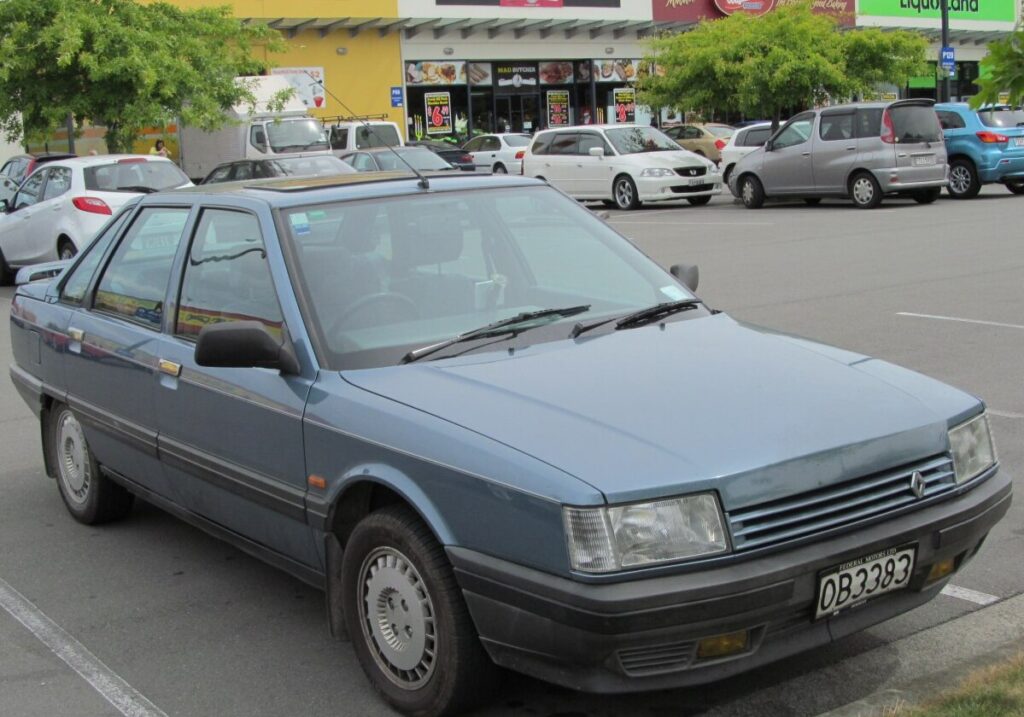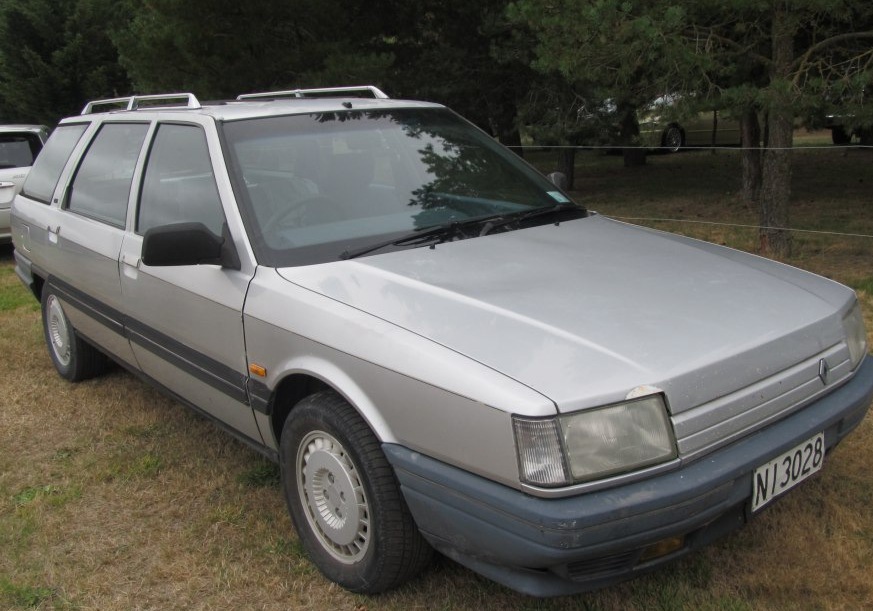
The Renault 21 Combi 1.7 i, produced between 1989 and 1993, represented a practical and affordable option within the broader Renault 21 range. Part of the K48 generation, the Combi – Renault’s designation for a station wagon or estate – aimed to provide family-oriented buyers with increased cargo capacity without sacrificing the comfort and features of the standard saloon. This particular 1.7-liter, 90 horsepower variant occupied the entry-level to mid-range position in the lineup, offering a balance between fuel economy and usability. It was primarily marketed in Europe, where the station wagon body style held significant popularity, and served as a competitor to vehicles like the Peugeot 305 Break and Citroën BX Estate.
Technical Specifications
| Brand | Renault |
| Model | 21 |
| Generation | 21 Combi (K48) |
| Type (Engine) | 1.7 i (90 Hp) |
| Start of production | 1989 |
| End of production | 1993 |
| Powertrain Architecture | Internal Combustion engine |
| Body type | Station wagon (estate) |
| Seats | 5 |
| Doors | 5 |
| Fuel consumption (combined) | 8.3 l/100 km |
| Fuel consumption (US mpg) | 28.3 US mpg |
| Fuel consumption (UK mpg) | 34 UK mpg |
| Fuel consumption (km/l) | 12 km/l |
| Fuel Type | Petrol (Gasoline) |
| Acceleration 0 – 100 km/h | 11.5 sec |
| Acceleration 0 – 62 mph | 11.5 sec |
| Acceleration 0 – 60 mph | 10.9 sec |
| Maximum speed | 179 km/h (111.23 mph) |
| Weight-to-power ratio | 11.6 kg/Hp |
| Weight-to-torque ratio | 7.7 kg/Nm |
| Power | 90 Hp @ 5250 rpm |
| Power per litre | 52.3 Hp/l |
| Torque | 135 Nm @ 4000 rpm (99.57 lb.-ft. @ 4000 rpm) |
| Engine layout | Front, Transverse |
| Engine Model/Code | F3N |
| Engine displacement | 1721 cm3 (105.02 cu. in.) |
| Number of cylinders | 4 |
| Engine configuration | Inline |
| Cylinder Bore | 81 mm (3.19 in.) |
| Piston Stroke | 83.5 mm (3.29 in.) |
| Compression ratio | 9.5:1 |
| Number of valves per cylinder | 2 |
| Fuel injection system | Multi-port manifold injection |
| Engine aspiration | Naturally aspirated engine |
| Valvetrain | OHC |
| Engine oil capacity | 5.3 l (5.6 US qt | 4.66 UK qt) |
| Coolant capacity | 6 l (6.34 US qt | 5.28 UK qt) |
| Kerb Weight | 1044 kg (2301.63 lbs.) |
| Max. weight | 1700 kg (3747.86 lbs.) |
| Max load | 656 kg (1446.23 lbs.) |
| Trunk (boot) space – minimum | 674 l (23.8 cu. ft.) |
| Trunk (boot) space – maximum | 1694 l (59.82 cu. ft.) |
| Fuel tank capacity | 66 l (17.44 US gal | 14.52 UK gal) |
| Length | 4693 mm (184.76 in.) |
| Width | 1726 mm (67.95 in.) |
| Height | 1450 mm (57.09 in.) |
| Wheelbase | 2809 mm (110.59 in.) |
| Front track | 1454 mm (57.24 in.) |
| Rear track | 1408 mm (55.43 in.) |
| Drivetrain Architecture | Front wheel drive |
| Number of gears | 5 gears, manual transmission |
| Front suspension | Spring Strut |
| Rear suspension | Torsion |
| Front brakes | Ventilated discs |
| Rear brakes | Drum |
| Assisting systems | ABS (Anti-lock braking system) |
| Steering type | Steering rack and pinion |
| Power steering | Hydraulic Steering |
| Tires size | 175/65 R14 T |
| Wheel rims size | 14 |
INTRODUCTION
The Renault 21 Combi 1.7 i, launched in 1989, was a key variant within the second generation of the Renault 21 (designated K48). Building upon the success of the saloon, the Combi offered increased practicality for families and those requiring additional cargo space. The 1.7-liter engine, producing 90 horsepower, was positioned as a sensible choice for buyers prioritizing fuel efficiency and affordability over outright performance. It represented a step down from the more powerful 2.0-liter and turbocharged variants, but offered a more economical alternative to the diesel options available. The Combi body style was particularly popular in European markets, where Renault sought to cater to a diverse range of customer needs.
Powertrain & Engine Architecture
The heart of the Renault 21 Combi 1.7 i is the F3N engine, a 1721cc inline-four cylinder petrol engine. This engine utilized a naturally aspirated configuration with a single overhead camshaft (OHC) operating two valves per cylinder. Fuel delivery was managed by a multi-port fuel injection system, contributing to improved fuel economy and smoother operation compared to earlier carbureted Renault engines. The F3N engine, while not known for its high output, was regarded as a reliable and relatively simple design. The 90 horsepower peak was achieved at 5250 rpm, while torque of 135 Nm (99.57 lb-ft) was available at 4000 rpm. The engine’s compression ratio was 9.5:1. The 1.7L engine was paired with a five-speed manual transmission, offering a reasonable balance between acceleration and fuel consumption. An automatic transmission was also available, though it impacted performance and fuel economy.
Driving Characteristics
The Renault 21 Combi 1.7 i offered a comfortable, if not particularly exhilarating, driving experience. With 90 horsepower propelling a vehicle weighing around 1044 kg (2301.63 lbs), acceleration was modest, taking approximately 11.5 seconds to reach 100 km/h (62 mph). The five-speed manual transmission allowed drivers to make the most of the available power, while the automatic option prioritized convenience. The gear ratios were tuned for fuel efficiency, resulting in a relaxed cruising experience on motorways. Compared to the higher-output 2.0-liter versions, the 1.7 i felt noticeably slower, particularly when fully loaded. However, the lower engine weight contributed to better handling and a more forgiving ride. The torsion beam rear suspension provided a comfortable ride, but didn’t offer the same level of handling precision as more sophisticated independent setups found in some competitors.
Equipment & Trim Levels
The Renault 21 Combi 1.7 i typically came equipped with a reasonable level of standard features. Interior upholstery was generally cloth, with a functional and durable design. Dashboard configuration was straightforward, with clearly labeled controls. Standard equipment often included power steering, central locking, and an AM/FM radio. Optional extras included air conditioning, electric windows, and a sunroof. Trim levels varied depending on the market, with higher-spec versions offering upgraded interior materials, alloy wheels, and additional comfort features. The Combi’s primary appeal lay in its practicality, with a generous boot space ranging from 674 to 1694 liters (23.8 to 59.82 cubic feet) depending on the rear seats’ configuration.
Chassis & Braking
The Renault 21 Combi 1.7 i utilized a front-wheel-drive layout with a relatively simple suspension setup. The front suspension consisted of MacPherson strut springs, while the rear employed a torsion beam. This configuration provided a good balance between ride comfort and handling. Braking duties were handled by ventilated discs at the front and drum brakes at the rear. An Anti-lock Braking System (ABS) was available as an option, enhancing safety by preventing wheel lockup during hard braking. Steering was rack and pinion, providing precise and responsive control. The standard tire size was 175/65 R14, mounted on 14-inch steel wheels.
Market Reception & Comparison
The Renault 21 Combi 1.7 i was generally well-received by critics as a practical and affordable family car. Its fuel economy was a key selling point, particularly in a period of rising fuel prices. However, its performance was often criticized as being somewhat underwhelming, especially when compared to more powerful alternatives. Compared to the 2.0-liter and turbocharged versions of the Renault 21, the 1.7 i offered a more economical option, but at the expense of performance. The diesel variants provided even better fuel economy, but were often noisier and less refined. The Combi’s spacious interior and large boot were consistently praised, making it a popular choice for families.
Legacy
The Renault 21 Combi 1.7 i, while not a particularly iconic or high-performance vehicle, remains a fondly remembered car for many owners. The F3N engine, while not without its quirks, proved to be relatively reliable with proper maintenance. Today, well-maintained examples are becoming increasingly rare, and are sought after by classic car enthusiasts. The 1.7 i variant is often considered a good entry point into Renault 21 ownership, offering a balance between affordability and usability. Its simple mechanical design makes it relatively easy to maintain and repair, appealing to those who enjoy hands-on automotive work. The Combi’s spacious interior and practical design continue to resonate with those seeking a classic family car.