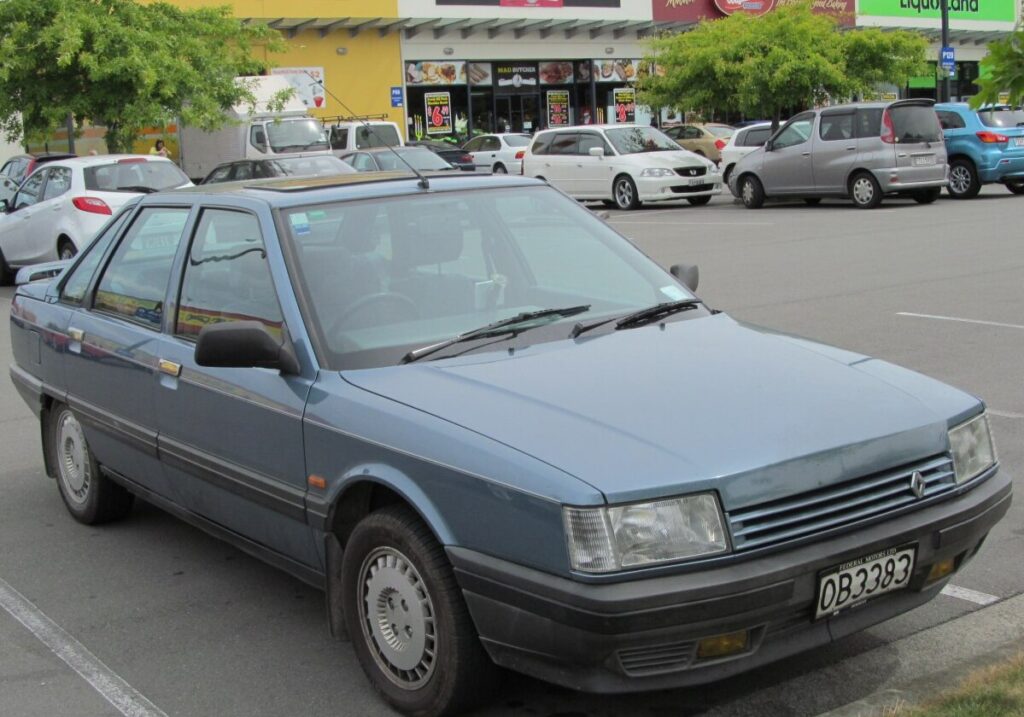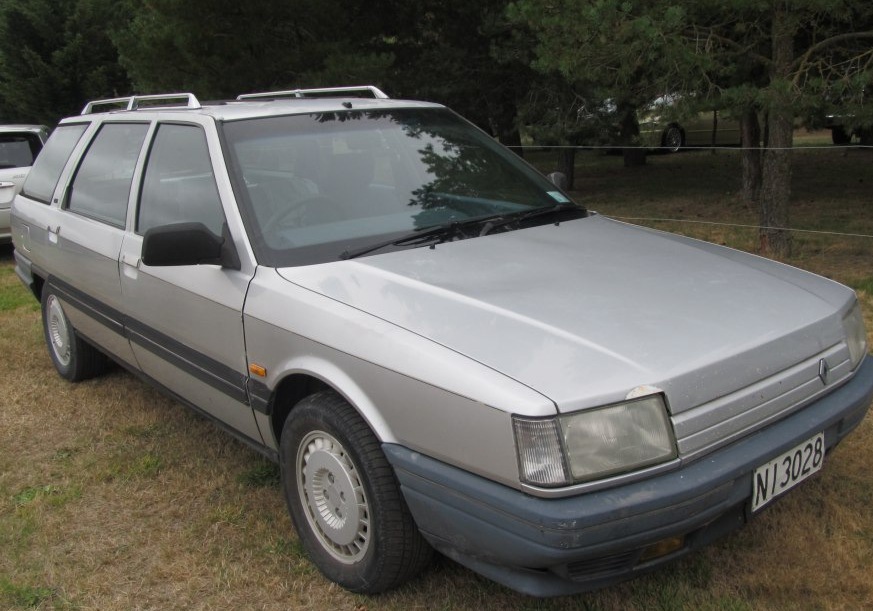
The Renault 21 Combi 1.9D, produced between 1989 and 1994, represented a practical and economical offering within the broader Renault 21 range. Part of the K48 generation, the Combi – Renault’s designation for a station wagon or estate – aimed to provide family-oriented buyers with increased cargo capacity and versatility. This particular variant, powered by the 1.9-liter diesel engine producing 65 horsepower, was positioned as the entry-level diesel option, prioritizing fuel efficiency and affordability over outright performance. It played a significant role in the European market, where diesel engines were increasingly popular due to favorable taxation and fuel costs.
Technical Specifications
| Brand | Renault |
| Model | 21 |
| Generation | 21 Combi (K48) |
| Type (Engine) | 1.9 D (65 Hp) |
| Start of production | 1989 |
| End of production | 1994 |
| Powertrain Architecture | Internal Combustion engine |
| Body type | Station wagon (estate) |
| Seats | 5 |
| Doors | 5 |
| Fuel consumption (urban) | 7.3 l/100 km (32.2 US mpg, 38.7 UK mpg, 13.7 km/l) |
| Fuel consumption (extra urban) | 4.6 l/100 km (51.1 US mpg, 61.4 UK mpg, 21.7 km/l) |
| Fuel consumption (combined) | 6.1 l/100 km (38.6 US mpg, 46.3 UK mpg, 16.4 km/l) |
| Fuel Type | Diesel |
| Acceleration 0 – 100 km/h | 16 sec |
| Acceleration 0 – 62 mph | 16 sec |
| Acceleration 0 – 60 mph | 15.2 sec |
| Maximum speed | 155 km/h (96.31 mph) |
| Weight-to-power ratio | 17.2 kg/Hp, 58 Hp/tonne |
| Weight-to-torque ratio | 9.3 kg/Nm, 108 Nm/tonne |
| Power | 65 Hp @ 4500 rpm |
| Power per litre | 34.8 Hp/l |
| Torque | 121 Nm @ 2250 rpm (89.25 lb.-ft. @ 2250 rpm) |
| Engine layout | Front, Transverse |
| Engine Model/Code | F8Q |
| Engine displacement | 1870 cm3 (114.11 cu. in.) |
| Number of cylinders | 4 |
| Engine configuration | Inline |
| Cylinder Bore | 80 mm (3.15 in.) |
| Piston Stroke | 93 mm (3.66 in.) |
| Compression ratio | 21.5:1 |
| Number of valves per cylinder | 2 |
| Fuel injection system | Precombustion chamber injection |
| Engine aspiration | Naturally aspirated engine |
| Valvetrain | OHC |
| Engine oil capacity | 6.5 l (6.87 US qt | 5.72 UK qt) |
| Coolant capacity | 7 l (7.4 US qt | 6.16 UK qt) |
| Kerb Weight | 1120 kg (2469.18 lbs.) |
| Max. weight | 1690 kg (3725.81 lbs.) |
| Max load | 570 kg (1256.63 lbs.) |
| Trunk (boot) space – minimum | 674 l (23.8 cu. ft.) |
| Trunk (boot) space – maximum | 1694 l (59.82 cu. ft.) |
| Fuel tank capacity | 66 l (17.44 US gal | 14.52 UK gal) |
| Length | 4693 mm (184.76 in.) |
| Width | 1726 mm (67.95 in.) |
| Height | 1450 mm (57.09 in.) |
| Wheelbase | 2809 mm (110.59 in.) |
| Front track | 1454 mm (57.24 in.) |
| Rear track | 1408 mm (55.43 in.) |
| Drivetrain Architecture | Front wheel drive |
| Number of gears | 5 |
| Gearbox type | Manual transmission |
| Front suspension | Spring Strut |
| Rear suspension | Torsion |
| Front brakes | Ventilated discs |
| Rear brakes | Drum |
| Assisting systems | ABS (Anti-lock braking system) |
| Steering type | Steering rack and pinion |
| Power steering | Hydraulic Steering |
| Tires size | 175/65 R14 |
| Wheel rims size | 14 |
Powertrain & Engine Architecture
The heart of the Renault 21 Combi 1.9D was the F8Q engine, a 1.9-liter inline-four diesel. This engine was a mainstay of Renault’s diesel lineup during the late 1980s and early 1990s, known for its robustness and relatively simple design. It employed precombustion chamber injection, a system where fuel is injected into a small chamber connected to the main cylinder, promoting more complete combustion. The engine featured an overhead camshaft (OHC) valvetrain operating two valves per cylinder. The 65 horsepower output was achieved at 4500 rpm, while peak torque of 121 Nm (89.25 lb-ft) arrived at a more accessible 2250 rpm. The engine was transversely mounted in the front of the vehicle, driving the front wheels. The five-speed manual transmission was the standard offering, providing a reasonable spread of gears for maximizing fuel economy and managing the engine’s torque characteristics.
Driving Characteristics
The 1.9D Combi was not designed for spirited driving. Acceleration was modest, taking around 16 seconds to reach 62 mph (100 km/h). The focus was firmly on fuel efficiency and practicality. The engine’s torque delivery was relatively flat, providing adequate pulling power for everyday driving and hauling loads, but lacking the responsiveness of higher-output gasoline engines. The manual transmission’s gear ratios were optimized for economy, with taller gearing in the upper gears to reduce engine speed at highway speeds. Compared to the gasoline-powered Renault 21 variants, the 1.9D offered significantly better fuel economy but at the expense of performance. Even compared to other diesel versions, like the later 2.1-liter engine, the 1.9D was the more economical, if less powerful, choice.
Equipment & Trim Levels
The 1.9D Combi typically came with a fairly basic level of equipment, reflecting its position as the entry-level diesel model. Standard features generally included power steering, central locking, and a basic stereo system. Interior upholstery was typically cloth, and the dashboard featured a functional, if somewhat utilitarian, design. Optional extras included electric windows, a sunroof, and upgraded audio systems. The Combi’s defining feature was its spacious interior and large cargo area, offering up to 1694 liters of space with the rear seats folded down. The rear suspension was tuned to handle heavier loads, making it suitable for carrying luggage or work equipment.
Chassis & Braking
The Renault 21 Combi 1.9D utilized a relatively simple chassis design. Front suspension consisted of MacPherson strut springs, while the rear employed a torsion beam setup. This configuration provided a comfortable ride, although it wasn’t particularly sporty. Braking was handled by ventilated discs at the front and drum brakes at the rear. An anti-lock braking system (ABS) was often included as standard equipment, enhancing safety. The steering was a rack-and-pinion system with hydraulic power assistance, providing reasonable steering feel and maneuverability.
Market Reception & Comparison
The Renault 21 Combi 1.9D was well-received in the European market as a practical and economical family vehicle. Critics praised its fuel efficiency, spacious interior, and robust engine. However, its lack of performance was often noted. Compared to the gasoline-powered Renault 21 models, the 1.9D offered significantly better fuel economy, making it a popular choice for high-mileage drivers. Compared to other diesel estate cars of the time, such as the Peugeot 505 Break or the Citroën BX Break, the Renault 21 Combi 1.9D offered a competitive combination of price, fuel economy, and practicality.
Legacy
The Renault 21 Combi 1.9D, while not a particularly glamorous vehicle, proved to be a reliable and durable workhorse. The F8Q engine is known for its longevity, and many examples are still on the road today. In the used car market, these vehicles are often sought after by those looking for an affordable and practical estate car. Maintenance is generally straightforward, and parts availability is still reasonable. The 1.9D powertrain, while lacking in performance by modern standards, remains a testament to the robustness and simplicity of diesel engine technology of the era.