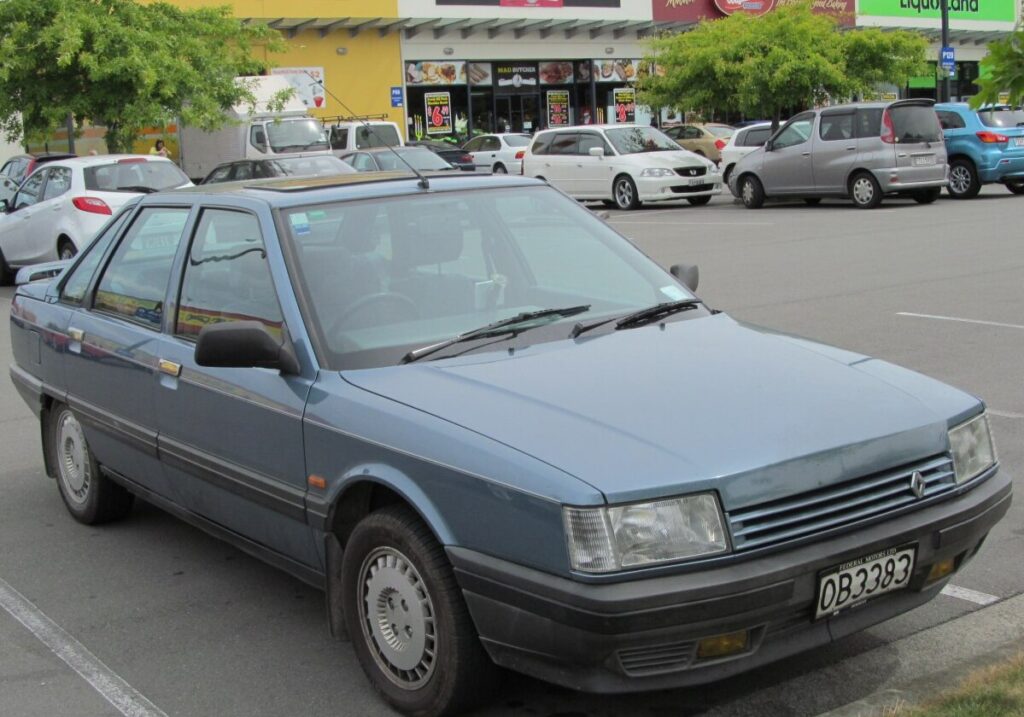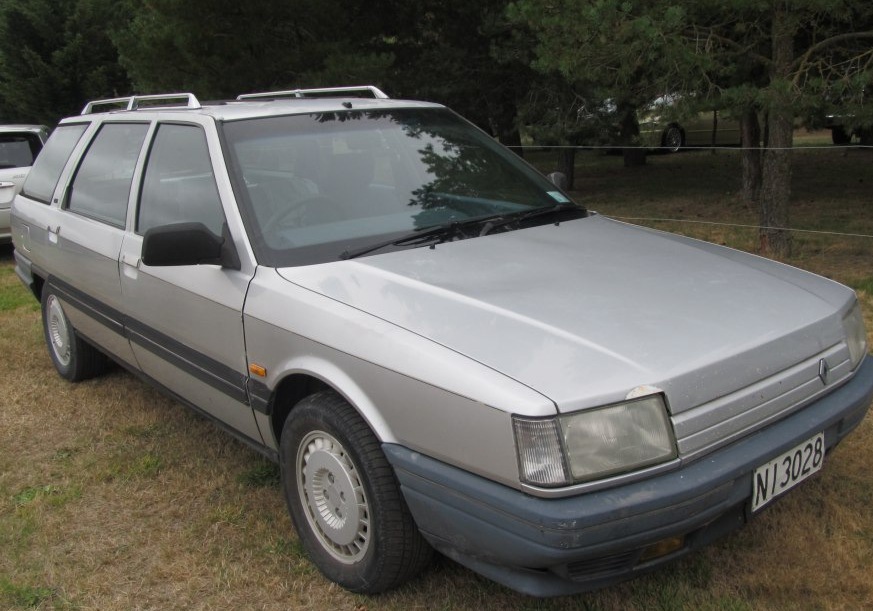
The Renault 21 Combi 2.0i 12V, produced between 1989 and 1994, represented a practical and relatively upscale offering within the Renault 21 (K48) range. As a station wagon (estate) variant, it catered to families and those requiring substantial cargo space. This particular engine and trim level occupied a mid-range position in the lineup, offering a balance between performance, fuel economy, and equipment. It was a key model for Renault in European markets, where station wagons held significant popularity, providing a versatile vehicle for everyday use and longer journeys.
Technical Specifications
| Brand | Renault |
| Model | 21 |
| Generation | 21 Combi (K48) |
| Type (Engine) | 2.0 i 12V (136 Hp) |
| Start of production | 1989 |
| End of production | 1994 |
| Powertrain Architecture | Internal Combustion engine |
| Body type | Station wagon (estate) |
| Seats | 5 |
| Doors | 5 |
| Fuel consumption (urban) | 12.4 l/100 km (19 US mpg, 22.8 UK mpg) |
| Fuel consumption (extra urban) | 6.8 l/100 km (34.6 US mpg, 41.5 UK mpg) |
| Fuel consumption (combined) | 8.4 l/100 km (28 US mpg, 33.6 UK mpg) |
| Fuel Type | Petrol (Gasoline) |
| Acceleration 0 – 100 km/h | 9.6 sec |
| Acceleration 0 – 62 mph | 9.6 sec |
| Acceleration 0 – 60 mph | 9.1 sec |
| Maximum speed | 203 km/h (126.14 mph) |
| Weight-to-power ratio | 8.9 kg/Hp |
| Weight-to-torque ratio | 7 kg/Nm |
| Power | 136 Hp @ 6000 rpm |
| Power per litre | 68.2 Hp/l |
| Torque | 174 Nm @ 4300 rpm (128.34 lb.-ft. @ 4300 rpm) |
| Engine layout | Front, Longitudinal |
| Engine Model/Code | J7R |
| Engine displacement | 1995 cm3 (121.74 cu. in.) |
| Number of cylinders | 4 |
| Engine configuration | Inline |
| Cylinder Bore | 88 mm (3.46 in.) |
| Piston Stroke | 82 mm (3.23 in.) |
| Compression ratio | 9.3:1 |
| Number of valves per cylinder | 3 |
| Fuel injection system | Multi-port manifold injection |
| Engine aspiration | Naturally aspirated engine |
| Valvetrain | OHC |
| Engine oil capacity | 5.5 l (5.81 US qt | 4.84 UK qt) |
| Coolant capacity | 6.8 l (7.19 US qt | 5.98 UK qt) |
| Kerb Weight | 1215 kg (2678.62 lbs.) |
| Max. weight | 1740 kg (3836.04 lbs.) |
| Max load | 525 kg (1157.43 lbs.) |
| Trunk (boot) space – minimum | 674 l (23.8 cu. ft.) |
| Trunk (boot) space – maximum | 1694 l (59.82 cu. ft.) |
| Fuel tank capacity | 66 l (17.44 US gal | 14.52 UK gal) |
| Length | 4693 mm (184.76 in.) |
| Width | 1726 mm (67.95 in.) |
| Height | 1450 mm (57.09 in.) |
| Wheelbase | 2805 mm (110.43 in.) |
| Front track | 1454 mm (57.24 in.) |
| Rear track | 1408 mm (55.43 in.) |
| Drivetrain Architecture | Front wheel drive |
| Number of gears | 5 gears, manual transmission |
| Front suspension | Spring Strut |
| Rear suspension | Torsion |
| Front brakes | Ventilated discs |
| Rear brakes | Drum |
| Assisting systems | ABS (Anti-lock braking system) |
| Steering type | Steering rack and pinion |
| Power steering | Hydraulic Steering |
| Tires size | 185/55 R15 |
| Wheel rims size | 15 |
INTRODUCTION
The Renault 21 Combi 2.0i 12V, launched in 1989, was a significant evolution of the original Renault 21, which debuted in 1986. Built on the 1HX0 platform (also known as the A3 platform, shared with the Peugeot 405), the Combi variant offered the practicality of a station wagon without sacrificing the comfort and relatively sophisticated engineering of the saloon. The 2.0-liter, 12-valve engine represented a step up in performance from the base 1.7-liter models, making it a popular choice for those who frequently carried passengers or cargo. Production continued until 1994, coinciding with the introduction of the Renault Laguna, which eventually replaced the 21 in Renault’s lineup.
Powertrain & Engine Architecture
The heart of the 21 Combi 2.0i 12V is the Renault J7R engine, a 1995cc inline-four cylinder powerplant. This engine featured a cast iron block and an aluminum cylinder head, a common configuration for the era. The “12V” designation indicates the engine utilizes three valves per cylinder (two intake, one exhaust), enhancing volumetric efficiency and contributing to improved power output. Fuel delivery is managed by a Bosch multi-port fuel injection system, providing precise fuel metering for optimal combustion. The J7R engine is a naturally aspirated design, relying on atmospheric pressure for air intake. The engine’s valvetrain employs a single overhead camshaft (OHC), simplifying the design and reducing weight. The 5-speed manual transmission was the standard offering, providing drivers with full control over gear selection. The transmission was a conventional design, known for its durability and relatively smooth operation.
Driving Characteristics
The 2.0i 12V Combi offered a noticeable improvement in performance compared to the lower-displacement engines available in the 21 range. With 136 horsepower and 174 Nm (128 lb-ft) of torque, acceleration to 60 mph took approximately 9.1 seconds, and it could achieve a top speed of around 126 mph. While not a sports car, the 2.0-liter engine provided ample power for comfortable highway cruising and overtaking maneuvers. The manual transmission allowed for precise gear changes, and the relatively long gearing contributed to decent fuel economy at cruising speeds. Compared to the 1.7-liter models, the 2.0i felt more responsive and less strained when fully loaded. The Combi’s suspension, tuned for comfort, provided a reasonably smooth ride, although it wasn’t particularly sporty in handling.
Equipment & Trim Levels
The 2.0i 12V Combi typically came equipped with a reasonable level of standard features. Interior appointments included cloth upholstery, although higher trim levels offered optional leather seating. Power steering was standard, making maneuvering easier, particularly in urban environments. Other common features included central locking, electric windows, and a basic stereo system. Optional extras included air conditioning, a sunroof, and upgraded audio systems. The dashboard layout was functional and straightforward, with clearly labeled controls. The Combi’s spacious interior and large cargo area were key selling points, offering ample room for passengers and luggage.
Chassis & Braking
The Renault 21 Combi utilized a front-wheel-drive layout with independent front suspension employing MacPherson struts and a torsion beam rear suspension. This setup prioritized ride comfort and space efficiency. Braking duties were handled by ventilated discs at the front and drum brakes at the rear. ABS (Anti-lock Braking System) was available as an option, enhancing braking performance and safety, particularly in adverse conditions. The steering system employed a rack-and-pinion setup, providing responsive and accurate steering feel. The 185/55 R15 tires offered a good balance between grip and ride comfort.
Market Reception & Comparison
The Renault 21 Combi 2.0i 12V was generally well-received by automotive critics. It was praised for its spacious interior, comfortable ride, and relatively strong performance. However, some critics noted that the interior styling was somewhat dated compared to newer competitors. Compared to the 1.7-liter versions, the 2.0i offered a significant performance boost, but at the cost of slightly higher fuel consumption. The 2.0i also represented a more substantial investment than the base models. In terms of reliability, the J7R engine was generally considered to be robust, although regular maintenance was essential to prevent issues.
Legacy
Today, the Renault 21 Combi 2.0i 12V is becoming increasingly sought after by classic car enthusiasts. Well-maintained examples are relatively rare, and prices are slowly rising. The J7R engine, while not particularly high-tech by modern standards, is known for its durability and relatively simple construction, making it easier to maintain and repair. The Combi’s spacious interior and practical design continue to appeal to those seeking a classic station wagon with a touch of French flair. Finding parts can be challenging, but a dedicated community of Renault enthusiasts helps to keep these cars on the road.