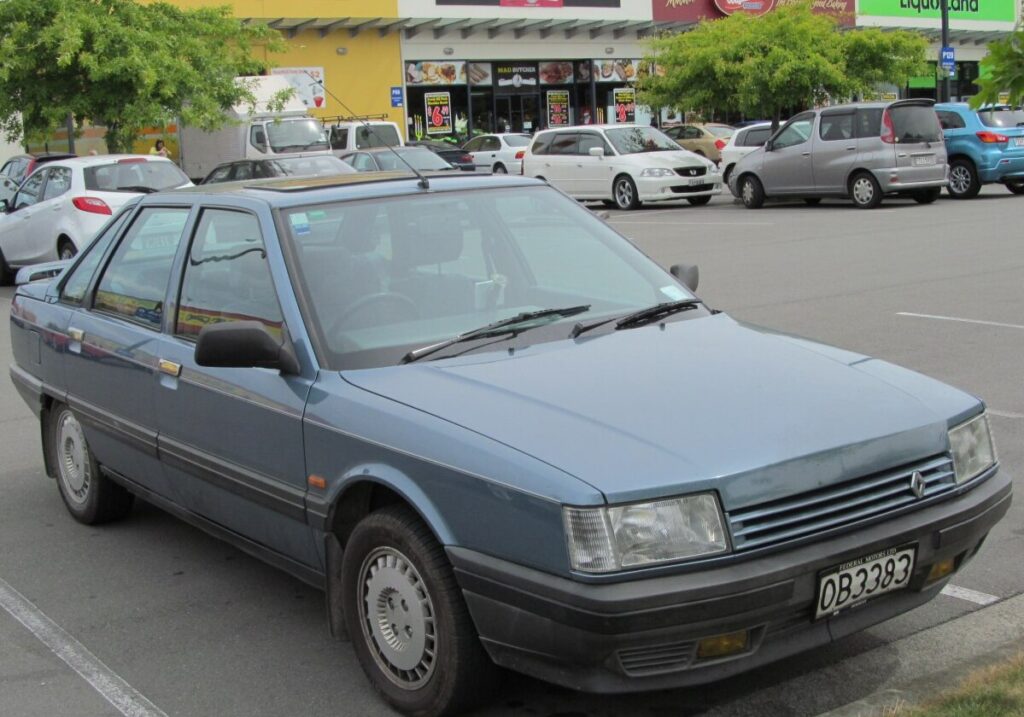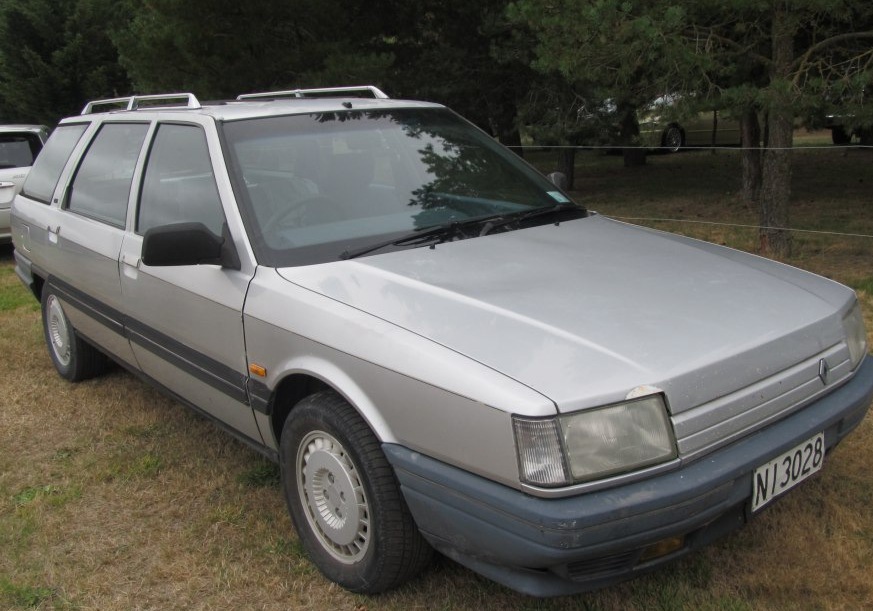
The Renault 21 Combi 2.0i 12V, produced between 1989 and 1991, represented a refined offering within the broader Renault 21 (K48) range. Positioned as a mid-range variant of the Combi – Renault’s designation for its station wagon – this model combined a relatively potent 2.0-liter engine with a five-speed manual transmission, offering a balance of practicality, performance, and comfort for European families. The K48 generation Renault 21, launched in 1986, was a significant update over the previous R18, offering improved aerodynamics, a more spacious interior, and a wider range of engine options. The Combi body style, introduced shortly after the saloon, catered to buyers needing increased cargo capacity without sacrificing the car’s overall refinement.
Technical Specifications
| Brand | Renault |
| Model | 21 |
| Generation | 21 Combi (K48) |
| Type (Engine) | 2.0 i 12V (140 Hp) |
| Start of production | 1989 |
| End of production | 1991 |
| Powertrain Architecture | Internal Combustion engine |
| Body type | Station wagon (estate) |
| Seats | 5 |
| Doors | 5 |
| Fuel consumption (urban) | 12.4 l/100 km (19 US mpg, 22.8 UK mpg) |
| Fuel consumption (extra urban) | 6.8 l/100 km (34.6 US mpg, 41.5 UK mpg) |
| Fuel consumption (combined) | 8.4 l/100 km (28 US mpg, 33.6 UK mpg) |
| Fuel Type | Petrol (Gasoline) |
| Acceleration 0 – 100 km/h | 9.6 sec |
| Acceleration 0 – 62 mph | 9.6 sec |
| Acceleration 0 – 60 mph | 9.1 sec |
| Maximum speed | 203 km/h (126.14 mph) |
| Weight-to-power ratio | 8.3 kg/Hp |
| Weight-to-torque ratio | 6.6 kg/Nm |
| Power | 140 Hp @ 6000 rpm |
| Power per litre | 70.2 Hp/l |
| Torque | 176 Nm @ 4300 rpm (129.81 lb.-ft. @ 4300 rpm) |
| Engine layout | Front, Longitudinal |
| Engine Model/Code | J7R |
| Engine displacement | 1995 cm3 (121.74 cu. in.) |
| Number of cylinders | 4 |
| Engine configuration | Inline |
| Cylinder Bore | 88 mm (3.46 in.) |
| Piston Stroke | 82 mm (3.23 in.) |
| Compression ratio | 9.3:1 |
| Number of valves per cylinder | 3 |
| Fuel injection system | Multi-port manifold injection |
| Engine aspiration | Naturally aspirated engine |
| Valvetrain | OHC |
| Engine oil capacity | 5.5 l (5.81 US qt | 4.84 UK qt) |
| Coolant capacity | 6.8 l (7.19 US qt | 5.98 UK qt) |
| Kerb Weight | 1160 kg (2557.36 lbs.) |
| Max. weight | 1775 kg (3913.21 lbs.) |
| Max load | 615 kg (1355.84 lbs.) |
| Trunk (boot) space – minimum | 674 l (23.8 cu. ft.) |
| Trunk (boot) space – maximum | 1694 l (59.82 cu. ft.) |
| Fuel tank capacity | 66 l (17.44 US gal | 14.52 UK gal) |
| Length | 4693 mm (184.76 in.) |
| Width | 1726 mm (67.95 in.) |
| Height | 1450 mm (57.09 in.) |
| Wheelbase | 2809 mm (110.59 in.) |
| Front track | 1454 mm (57.24 in.) |
| Rear track | 1408 mm (55.43 in.) |
| Drivetrain Architecture | Front wheel drive |
| Number of gears | 5 |
| Gearbox type | Manual transmission |
| Front suspension | Spring Strut |
| Rear suspension | Torsion |
| Front brakes | Ventilated discs |
| Rear brakes | Drum |
| Assisting systems | ABS (Anti-lock braking system) |
| Steering type | Steering rack and pinion |
| Power steering | Hydraulic Steering |
| Tires size | 185/55 R15 |
| Wheel rims size | 15 |
Powertrain & Engine Architecture
The heart of the Renault 21 Combi 2.0i 12V was the J7R engine, a 1995cc inline-four cylinder unit. This engine featured a single overhead camshaft (OHC) design operating three valves per cylinder (two intake, one exhaust). The 12-valve configuration, combined with multi-point fuel injection, allowed for a respectable 140 horsepower at 6000 rpm and 176 Nm (129.81 lb-ft) of torque at 4300 rpm. The J7R engine was known for its relatively smooth operation and decent mid-range power, making it suitable for both city driving and longer highway journeys. The five-speed manual transmission provided precise gear changes and allowed drivers to fully utilize the engine’s power band. Gear ratios were fairly conventional for the period, prioritizing acceleration in the lower gears and comfortable cruising at higher speeds.
Driving Characteristics
The 2.0i 12V Combi offered a noticeable step up in performance compared to the lower-displacement Renault 21 variants. While not a sports car, the 140 hp engine provided brisk acceleration, taking approximately 9.6 seconds to reach 62 mph (100 km/h). The manual transmission allowed for greater driver control and engagement, unlike the often-sluggish automatic options available on other 21 models. The Combi’s suspension, tuned for comfort, provided a reasonably compliant ride, although it could feel somewhat soft during spirited cornering. The front-wheel-drive layout offered predictable handling, but lacked the all-weather capability of a four-wheel-drive system. Compared to the more economical 1.7L versions, the 2.0i offered significantly more power, but at the expense of increased fuel consumption.
Equipment & Trim Levels
The Renault 21 Combi 2.0i 12V typically came equipped with a reasonable level of standard features. Interior appointments included cloth upholstery, a basic stereo system, and power steering. Higher trim levels, often denoted by suffixes like “Si” or “RT,” added features such as electric windows, central locking, and upgraded interior trim. Optional extras included a sunroof, alloy wheels, and more sophisticated audio systems. The dashboard layout was functional and straightforward, with clearly marked gauges and easy-to-use controls. The Combi’s spacious interior and large cargo area were key selling points, making it a practical choice for families and those needing to transport bulky items.
Chassis & Braking
The Renault 21 Combi utilized a relatively simple chassis design. Front suspension consisted of MacPherson strut setup, while the rear employed a torsion beam axle. This configuration prioritized ride comfort and cost-effectiveness over outright handling performance. Braking duties were handled by ventilated discs at the front and drum brakes at the rear. An Anti-lock Braking System (ABS) was often included as standard equipment, enhancing safety by preventing wheel lockup during hard braking. Steering was via a rack and pinion system with hydraulic power assistance, providing light and precise steering feel.
Market Reception & Comparison
The Renault 21 Combi 2.0i 12V was generally well-received by automotive critics as a practical and comfortable family car. It was praised for its spacious interior, decent performance, and relatively affordable price. However, some reviewers noted that the handling was not as sharp as some of its competitors, such as the Ford Sierra or Opel Vectra. Fuel economy was considered acceptable for a car of its size and performance, but not exceptional. Compared to the 1.7L and diesel variants, the 2.0i 12V offered a significant performance boost, making it a popular choice for those who frequently drove on motorways or carried heavy loads.
Legacy
The Renault 21 Combi 2.0i 12V, while not a particularly rare or collectible car today, remains a reasonably reliable and affordable classic. The J7R engine is generally considered to be durable, although regular maintenance is essential to prevent issues such as oil leaks and timing belt failure. Parts availability can be a challenge in some regions, but many components are still available from specialist suppliers. The Combi’s spacious interior and practical design continue to appeal to enthusiasts and those seeking a classic French estate car. In the used car market, well-maintained examples of the 2.0i 12V Combi can command a modest premium over the lower-specification models.