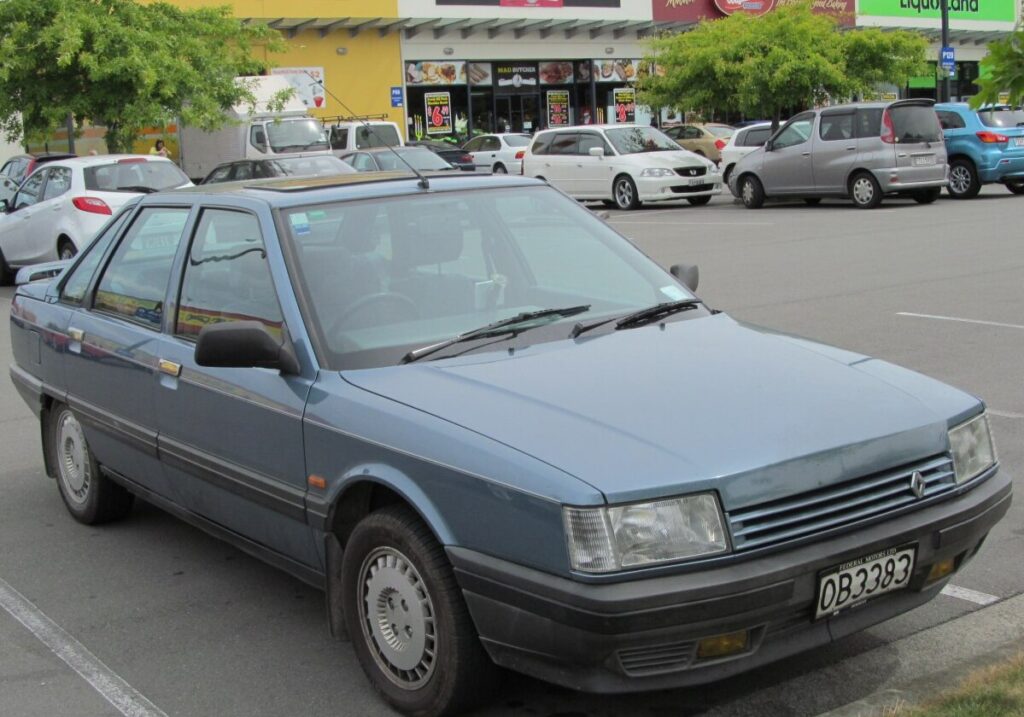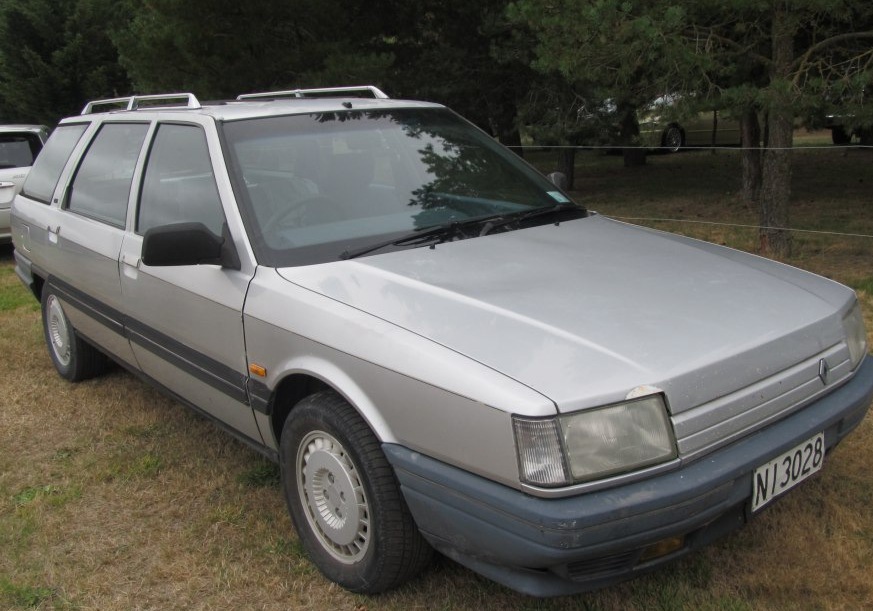
The Renault 21 Combi (K48) 2.0 i 12V 4×4, produced between 1988 and 1990, represented a niche offering within the broader Renault 21 lineup. The Combi, Renault’s designation for a station wagon or estate, aimed to provide practicality and space for families, while the 2.0-liter, 12-valve engine coupled with a four-wheel-drive system offered a level of performance and all-weather capability uncommon in this segment at the time. This variant sat towards the upper end of the 21 Combi range, positioned as a more premium and capable option compared to the base models. It was part of the second generation of the Renault 21, built on the 1HX0 platform, and aimed to compete with other European family wagons like the Ford Sierra Estate and Peugeot 505 Familiale.
Technical Specifications
| Brand | Renault |
| Model | 21 |
| Generation | 21 Combi (K48) |
| Type (Engine) | 2.0 i 12V (140 Hp) 4×4 |
| Start of production | 1988 |
| End of production | 1990 |
| Powertrain Architecture | Internal Combustion engine |
| Body type | Station wagon (estate) |
| Seats | 5 |
| Doors | 5 |
| Fuel consumption (urban) | 13.2 l/100 km (17.8 US mpg, 21.4 UK mpg, 7.6 km/l) |
| Fuel consumption (extra urban) | 7.3 l/100 km (32.2 US mpg, 38.7 UK mpg, 13.7 km/l) |
| Fuel consumption (combined) | 9.2 l/100 km (25.6 US mpg, 30.7 UK mpg, 10.9 km/l) |
| Fuel Type | Petrol (Gasoline) |
| Acceleration 0 – 100 km/h | 10.3 sec |
| Acceleration 0 – 62 mph | 10.3 sec |
| Acceleration 0 – 60 mph | 9.8 sec |
| Maximum speed | 198 km/h (123.03 mph) |
| Weight-to-power ratio | 9.2 kg/Hp |
| Weight-to-torque ratio | 7.3 kg/Nm |
| Power | 140 Hp @ 6000 rpm |
| Power per litre | 70.2 Hp/l |
| Torque | 176 Nm @ 4300 rpm (129.81 lb.-ft. @ 4300 rpm) |
| Engine layout | Front, Longitudinal |
| Engine Model/Code | J7R |
| Engine displacement | 1995 cm3 (121.74 cu. in.) |
| Number of cylinders | 4 |
| Engine configuration | Inline |
| Cylinder Bore | 88 mm (3.46 in.) |
| Piston Stroke | 82 mm (3.23 in.) |
| Compression ratio | 9.3:1 |
| Number of valves per cylinder | 3 |
| Fuel injection system | Multi-port manifold injection |
| Engine aspiration | Naturally aspirated engine |
| Valvetrain | OHC |
| Engine oil capacity | 5.5 l (5.81 US qt | 4.84 UK qt) |
| Coolant capacity | 6.8 l (7.19 US qt | 5.98 UK qt) |
| Kerb Weight | 1285 kg (2832.94 lbs.) |
| Max. weight | 1780 kg (3924.23 lbs.) |
| Max load | 495 kg (1091.29 lbs.) |
| Trunk (boot) space – minimum | 674 l (23.8 cu. ft.) |
| Trunk (boot) space – maximum | 1694 l (59.82 cu. ft.) |
| Fuel tank capacity | 62 l (16.38 US gal | 13.64 UK gal) |
| Length | 4693 mm (184.76 in.) |
| Width | 1726 mm (67.95 in.) |
| Height | 1450 mm (57.09 in.) |
| Wheelbase | 2809 mm (110.59 in.) |
| Front track | 1454 mm (57.24 in.) |
| Rear track | 1408 mm (55.43 in.) |
| Drive wheel | All wheel drive (4×4) |
| Front suspension | Spring Strut |
| Rear suspension | Torsion |
| Front brakes | Ventilated discs |
| Rear brakes | Drum |
| Assisting systems | ABS (Anti-lock braking system) |
| Steering type | Steering rack and pinion |
| Power steering | Hydraulic Steering |
| Tires size | 175/70 R13 |
| Wheel rims size | 13 |
Powertrain & Engine Architecture
The heart of the Renault 21 Combi 2.0 i 4×4 is the J7R engine, a 1995cc inline-four cylinder powerplant. This engine featured a 12-valve configuration (three valves per cylinder) and utilized multi-port fuel injection. The J7R was known for its relatively smooth operation and decent power output for its time. The engine’s longitudinal mounting allowed for a more efficient drivetrain layout for the four-wheel-drive system. The 4×4 system itself was a viscous coupling system, providing automatic engagement of the rear wheels when slip was detected at the front. The transmission paired with the J7R was a four-speed automatic, chosen for its ease of use and suitability for family transport. While not particularly sporty, this transmission offered smooth shifts and adequate performance for everyday driving.
Driving Characteristics
The 140 horsepower and 176 Nm (129.81 lb-ft) of torque delivered by the 2.0-liter engine, combined with the automatic transmission and all-wheel drive, resulted in a driving experience that prioritized stability and usability over outright performance. Acceleration to 60 mph took around 9.8 seconds, and top speed was approximately 123 mph. Compared to the manual transmission versions of the 2.0-liter, the automatic suffered a slight performance penalty due to the inherent losses in the torque converter. However, the 4×4 system provided significantly improved traction, particularly on slippery surfaces, making it a more confident vehicle in inclement weather. The automatic transmission’s gear ratios were geared towards comfortable cruising rather than rapid acceleration, making it a good long-distance companion.
Equipment & Trim Levels
The Renault 21 Combi 2.0 i 4×4 typically came with a reasonable level of standard equipment. This included power steering, ABS brakes, and central locking. Interior appointments generally featured cloth upholstery, although higher-spec versions could be equipped with velour. Optional extras included a sunroof, upgraded audio systems, and metallic paint finishes. The dashboard layout was typical of Renaults of the period, with a functional and straightforward design. The Combi’s spacious interior and large trunk (674-1694 liters) were key selling points, making it a practical choice for families.
Chassis & Braking
The Renault 21 Combi utilized a relatively simple suspension setup, with a spring strut arrangement at the front and a torsion beam at the rear. This setup provided a comfortable ride, although it wasn’t particularly sporty. The 2.0 i 4×4 models often featured slightly stiffer springs and dampers to cope with the added weight of the four-wheel-drive system. Braking was handled by ventilated discs at the front and drum brakes at the rear. The ABS system helped to maintain steering control during hard braking, enhancing safety.
Market Reception & Comparison
The Renault 21 Combi 2.0 i 4×4 was generally well-received by automotive critics, who praised its practicality, spaciousness, and all-weather capability. However, the automatic transmission was sometimes criticized for its lack of responsiveness. Compared to other trims in the 21 Combi lineup, such as the 1.7-liter and diesel versions, the 2.0 i 4×4 offered significantly more performance and a more refined driving experience. Fuel economy, however, was considerably lower than the smaller-engined models. Reliability was generally good, although the four-wheel-drive system could require occasional maintenance.
Legacy
Today, the Renault 21 Combi 2.0 i 4×4 is a relatively rare sight. While not a particularly collectible model, well-maintained examples are starting to attract interest from classic car enthusiasts. The J7R engine is known to be reasonably durable, although age and mileage can take their toll. The four-wheel-drive system requires regular servicing to ensure proper operation. The 21 Combi 2.0 i 4×4 represents a unique blend of practicality, performance, and all-weather capability from a bygone era of European automotive design.