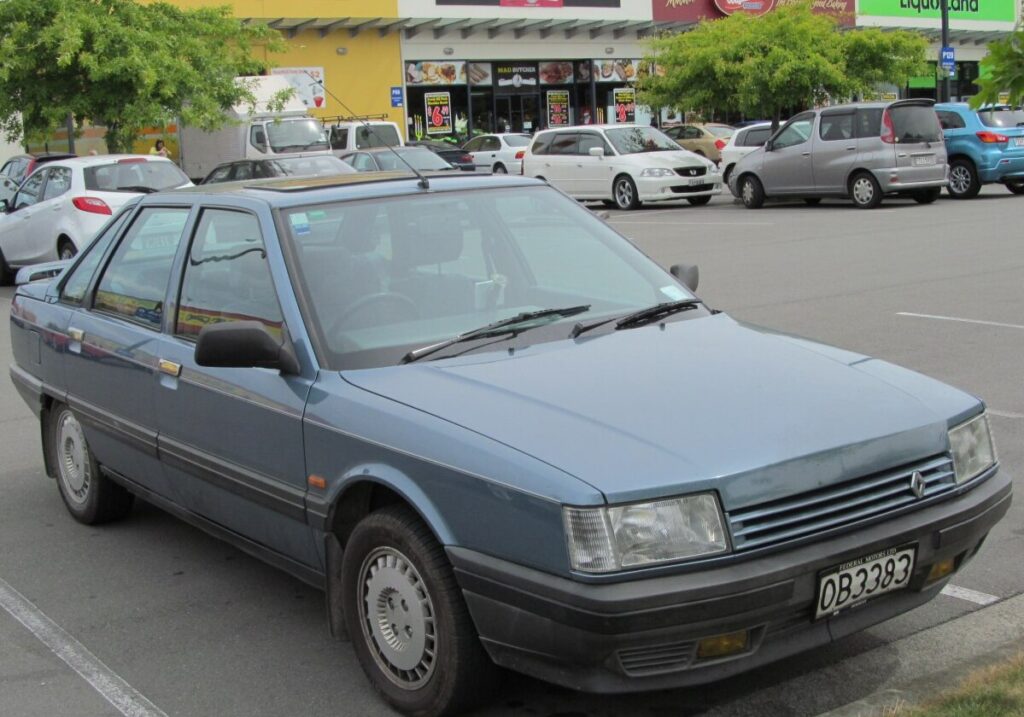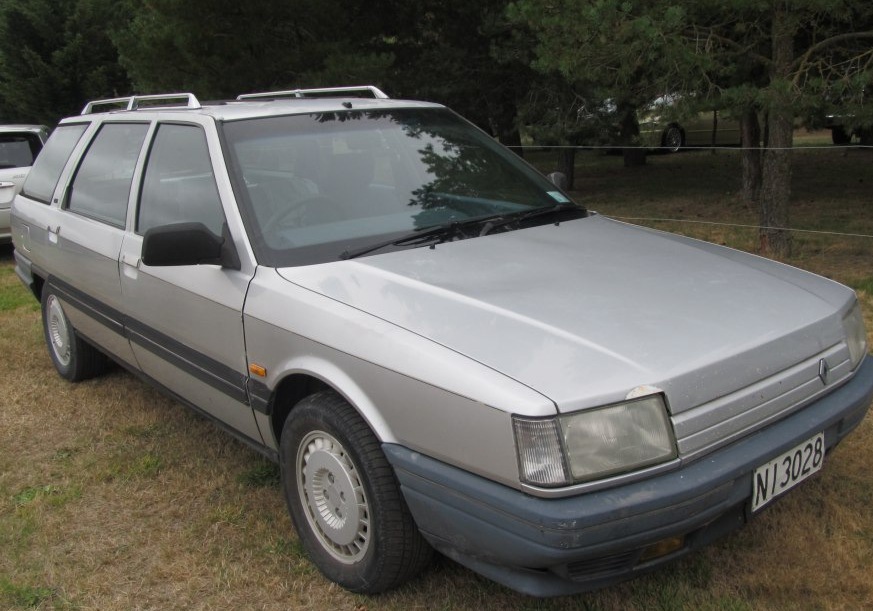
The Renault 21 Combi 2.1 TD, produced between 1989 and 1994, represented a practical and economical option within the broader Renault 21 range. Part of the K48 generation, the Combi (estate/station wagon) body style offered increased cargo capacity, making it a popular choice for families and those requiring versatile transportation. This particular variant, powered by the 2.1-liter turbocharged diesel engine producing 88 horsepower, occupied a middle ground in the lineup, prioritizing fuel efficiency and torque over outright performance. It served as a workhorse, appealing to buyers who valued practicality and lower running costs over sporty driving dynamics.
Technical Specifications
| Brand | Renault |
| Model | 21 |
| Generation | 21 Combi (K48) |
| Type (Engine) | 2.1 TD (88 Hp) |
| Start of production | 1989 |
| End of production | 1994 |
| Powertrain Architecture | Internal Combustion engine |
| Body type | Station wagon (estate) |
| Seats | 5 |
| Doors | 5 |
| Fuel consumption (urban) | 8.3 l/100 km (28.3 US mpg, 34 UK mpg, 12 km/l) |
| Fuel consumption (extra urban) | 5.3 l/100 km (44.4 US mpg, 53.3 UK mpg, 18.9 km/l) |
| Fuel consumption (combined) | 7.3 l/100 km (32.2 US mpg, 38.7 UK mpg, 13.7 km/l) |
| Fuel Type | Diesel |
| Acceleration 0 – 100 km/h | 12.5 sec |
| Acceleration 0 – 62 mph | 12.5 sec |
| Acceleration 0 – 60 mph | 11.9 sec |
| Maximum speed | 172 km/h (106.88 mph) |
| Weight-to-power ratio | 13.6 kg/Hp, 73.6 Hp/tonne |
| Weight-to-torque ratio | 6.5 kg/Nm, 154 Nm/tonne |
| Power | 88 Hp @ 4250 rpm |
| Power per litre | 42.6 Hp/l |
| Torque | 184 Nm @ 2000 rpm (135.71 lb.-ft. @ 2000 rpm) |
| Engine layout | Front, Transverse |
| Engine Model/Code | J8S |
| Engine displacement | 2068 cm3 (126.2 cu. in.) |
| Number of cylinders | 4 |
| Engine configuration | Inline |
| Cylinder Bore | 86 mm (3.39 in.) |
| Piston Stroke | 89 mm (3.5 in.) |
| Compression ratio | 21:1 |
| Number of valves per cylinder | 2 |
| Fuel injection system | Precombustion chamber injection |
| Engine aspiration | Turbocharger |
| Valvetrain | OHC |
| Engine oil capacity | 6.1 l (6.45 US qt | 5.37 UK qt) |
| Coolant capacity | 7.2 l (7.61 US qt | 6.34 UK qt) |
| Kerb Weight | 1195 kg (2634.52 lbs.) |
| Max. weight | 1760 kg (3880.14 lbs.) |
| Max load | 565 kg (1245.61 lbs.) |
| Trunk (boot) space – minimum | 674 l (23.8 cu. ft.) |
| Trunk (boot) space – maximum | 1694 l (59.82 cu. ft.) |
| Fuel tank capacity | 66 l (17.44 US gal | 14.52 UK gal) |
| Length | 4693 mm (184.76 in.) |
| Width | 1726 mm (67.95 in.) |
| Height | 1450 mm (57.09 in.) |
| Wheelbase | 2809 mm (110.59 in.) |
| Front track | 1454 mm (57.24 in.) |
| Rear track | 1408 mm (55.43 in.) |
| Drivetrain Architecture | Front wheel drive |
| Number of gears | 5 |
| Gearbox type | Manual transmission |
| Front suspension | Spring Strut |
| Rear suspension | Torsion |
| Front brakes | Ventilated discs |
| Rear brakes | Drum |
| Assisting systems | ABS (Anti-lock braking system) |
| Steering type | Steering rack and pinion |
| Power steering | Hydraulic |
| Tires size | 175/65 R14 |
| Wheel rims size | 14 |
Powertrain & Engine Architecture
The heart of the Renault 21 Combi 2.1 TD was the J8S engine, a 2.1-liter inline-four cylinder diesel. This engine utilized precombustion chamber injection, a system common in European diesels of the era. This system involved injecting fuel into a small pre-chamber within the cylinder head, where it partially combusted before igniting the main charge. This improved cold-starting performance and reduced engine noise compared to direct injection systems. A turbocharger was employed to boost power output, bringing it to 88 horsepower at 4250 rpm and 184 Nm (135.71 lb-ft) of torque at 2000 rpm. The engine featured an overhead camshaft (OHC) valvetrain with two valves per cylinder. The five-speed manual transmission was the standard offering, providing a balance between fuel economy and usability. The transmission’s gear ratios were geared towards maximizing torque delivery for everyday driving rather than achieving rapid acceleration.
Driving Characteristics
The 2.1 TD engine in the Renault 21 Combi delivered a characteristically diesel driving experience. While not particularly quick – 0-60 mph took around 11.9 seconds – it offered ample torque for relaxed cruising and effortless overtaking. The turbocharger provided a noticeable boost in power, but turbo lag was present, requiring drivers to downshift for immediate response. The manual transmission, while not sporty, was precise and easy to operate. Compared to the gasoline-powered Renault 21 variants, the 2.1 TD prioritized fuel economy and low-end grunt over high-revving performance. The Combi’s suspension was tuned for comfort, providing a reasonably smooth ride even when fully loaded. However, the rear drum brakes, standard on this trim level, offered less stopping power than the ventilated discs found on higher-spec models.
Equipment & Trim Levels
The Renault 21 Combi 2.1 TD typically came with a modest level of standard equipment. Interior features generally included cloth upholstery, a basic dashboard layout, and manual windows and door locks. Power steering was usually standard, but air conditioning and central locking were often optional extras. The Combi body style itself was the primary feature, offering a large and versatile cargo area. Optional extras could include upgraded audio systems, alloy wheels, and a sunroof. The trim level was generally positioned as a mid-range offering, appealing to buyers who wanted the practicality of the Combi body style with the fuel efficiency of a diesel engine without the expense of higher-spec features.
Chassis & Braking
The Renault 21 Combi 2.1 TD utilized a relatively simple chassis design. Front suspension consisted of MacPherson strut springs, while the rear employed a torsion beam setup. This configuration provided a good balance between ride comfort and handling. As mentioned previously, the front brakes were ventilated discs, offering adequate stopping power, while the rear brakes were drums. ABS (Anti-lock Braking System) was available, and became increasingly common towards the end of the production run, enhancing safety. The steering system was a rack and pinion setup with hydraulic power assistance, providing light and easy steering.
Market Reception & Comparison
The Renault 21 Combi 2.1 TD was generally well-received in European markets as a practical and economical family vehicle. Critics praised its fuel efficiency, spacious interior, and comfortable ride. However, the engine’s performance was often criticized as being somewhat lackluster, and the diesel engine’s inherent noise and vibration were also noted. Compared to the gasoline-powered Renault 21 variants, the 2.1 TD offered significantly better fuel economy but lacked the same level of refinement and performance. Against competitors like the Peugeot 505 Estate and Citroën BX Estate, the Renault 21 Combi 2.1 TD offered a competitive package in terms of price, fuel economy, and practicality.
Legacy
The Renault 21 Combi 2.1 TD, while not a particularly glamorous vehicle, proved to be a reliable and durable workhorse. The J8S diesel engine, while not known for its high performance, was generally robust and capable of covering high mileages with proper maintenance. Today, these vehicles are relatively rare, but those that remain are often sought after by enthusiasts and collectors who appreciate their simplicity and practicality. The 2.1 TD powertrain is generally considered to be relatively reliable, although age-related issues such as turbocharger wear and fuel injection system problems can occur. The Renault 21 Combi 2.1 TD represents a significant example of European family car design from the late 1980s and early 1990s, offering a blend of practicality, fuel efficiency, and affordability.