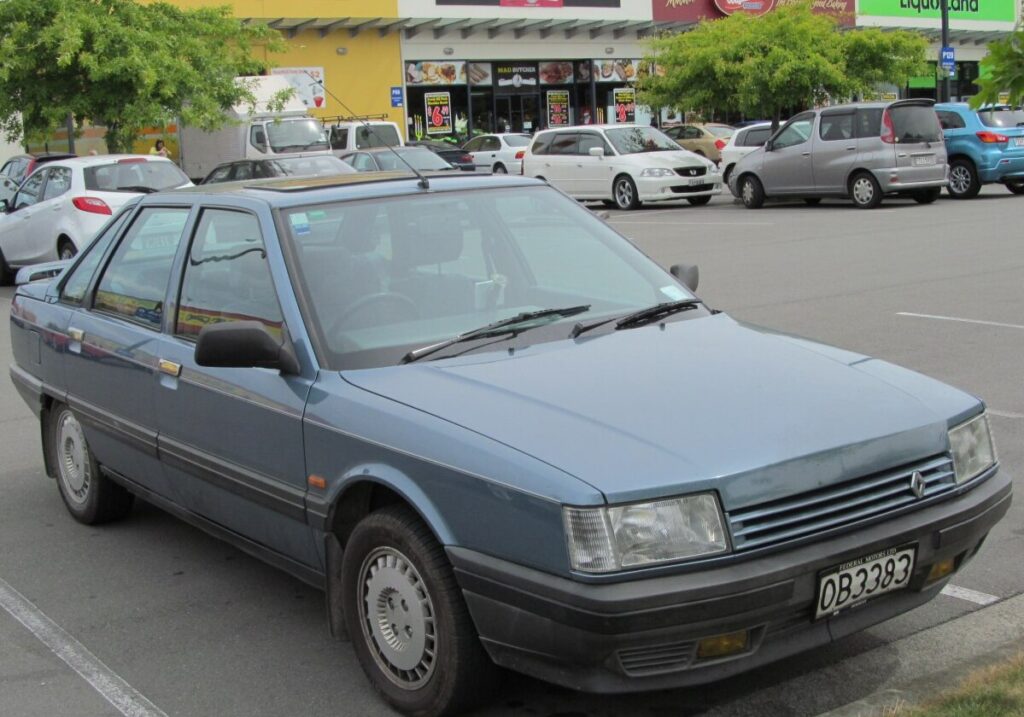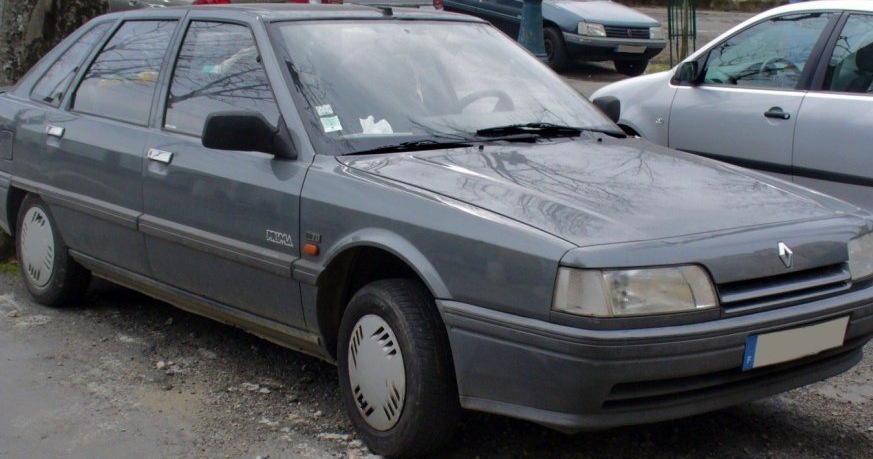
The Renault 21 Hatchback, specifically the 1.7 i variant producing 95 horsepower, was a mainstay of the French automaker’s lineup from 1989 to 1994. Positioned as an affordable and practical family car, it represented a significant step forward in design and technology for Renault. This model fell into the mid-range of the 21 lineup, offering a balance between economy and usability, slotting below the more powerful 2.0-liter and turbo variants, and above the base 1.4-liter engine. The 21, internally designated L48 for the hatchback body style, was built on the platform shared with the Peugeot 405, reflecting a period of increased collaboration within the French automotive industry.
Technical Specifications
| Brand | Renault |
| Model | 21 |
| Generation | 21 Hatchback (L48) |
| Type (Engine) | 1.7 i (95 Hp) |
| Start of production | 1989 |
| End of production | 1994 |
| Powertrain Architecture | Internal Combustion engine |
| Body type | Hatchback |
| Seats | 5 |
| Doors | 5 |
| Fuel consumption (urban) | 10.5 l/100 km (22.4 US mpg, 26.9 UK mpg, 9.5 km/l) |
| Fuel consumption (extra urban) | 5.9 l/100 km (39.9 US mpg, 47.9 UK mpg, 16.9 km/l) |
| Fuel consumption (combined) | 7.5 l/100 km (31.4 US mpg, 37.7 UK mpg, 13.3 km/l) |
| Fuel Type | Petrol (Gasoline) |
| Acceleration 0 – 100 km/h | 10.7 sec |
| Acceleration 0 – 62 mph | 10.7 sec |
| Acceleration 0 – 60 mph | 10.2 sec |
| Maximum speed | 185 km/h (114.95 mph) |
| Weight-to-power ratio | 10.9 kg/Hp, 91.8 Hp/tonne |
| Weight-to-torque ratio | 7.2 kg/Nm, 138.2 Nm/tonne |
| Power | 95 Hp @ 5200 rpm |
| Power per litre | 55.2 Hp/l |
| Torque | 143 Nm @ 3000 rpm (105.47 lb.-ft. @ 3000 rpm) |
| Engine layout | Front, Transverse |
| Engine Model/Code | F3N |
| Engine displacement | 1721 cm3 (105.02 cu. in.) |
| Number of cylinders | 4 |
| Engine configuration | Inline |
| Cylinder Bore | 81 mm (3.19 in.) |
| Piston Stroke | 83.5 mm (3.29 in.) |
| Compression ratio | 9.5:1 |
| Number of valves per cylinder | 2 |
| Fuel injection system | Multi-port manifold injection |
| Engine aspiration | Naturally aspirated engine |
| Valvetrain | OHC |
| Engine oil capacity | 5.3 l (5.6 US qt | 4.66 UK qt) |
| Coolant capacity | 6 l (6.34 US qt | 5.28 UK qt) |
| Kerb Weight | 1035 kg (2281.78 lbs.) |
| Max. weight | 1530 kg (3373.07 lbs.) |
| Max load | 495 kg (1091.29 lbs.) |
| Trunk (boot) space – minimum | 420 l (14.83 cu. ft.) |
| Trunk (boot) space – maximum | 1290 l (45.56 cu. ft.) |
| Fuel tank capacity | 66 l (17.44 US gal | 14.52 UK gal) |
| Length | 4460 mm (175.59 in.) |
| Width | 1730 mm (68.11 in.) |
| Height | 1415 mm (55.71 in.) |
| Wheelbase | 2660 mm (104.72 in.) |
| Front track | 1430 mm (56.3 in.) |
| Rear track | 1400 mm (55.12 in.) |
| Drivetrain Architecture | Front wheel drive |
| Number of gears | 5 gears, manual transmission |
| Front suspension | Spring Strut |
| Rear suspension | Torsion |
| Front brakes | Ventilated discs |
| Rear brakes | Drum |
| Assisting systems | ABS (Anti-lock braking system) |
| Steering type | Steering rack and pinion |
| Power steering | Hydraulic Steering |
| Tires size | 175/70 R13 |
| Wheel rims size | 13 |
Powertrain & Engine Architecture
The heart of the Renault 21 1.7 i was the F3N engine, a 1.7-liter inline-four cylinder gasoline engine. This engine featured a single overhead camshaft (OHC) design and utilized multi-port fuel injection, a relatively modern feature for the time, contributing to improved fuel efficiency and smoother power delivery. The F3N engine produced 95 horsepower at 5200 rpm and 143 Nm (105.47 lb-ft) of torque at 3000 rpm. The engine’s 9.5:1 compression ratio was a compromise between performance and the ability to run on the available fuel grades in European markets. The 1.7L engine was paired with a five-speed manual transmission, which was the most common configuration. While an automatic transmission was offered, it was less frequently selected due to its impact on fuel economy and performance.
Driving Characteristics
The 1.7 i variant of the Renault 21 offered a comfortable, if not particularly sporty, driving experience. Acceleration from 0 to 60 mph took around 10.2 seconds, and top speed was approximately 115 mph. The engine provided adequate power for everyday driving, but it wasn’t designed for rapid acceleration or high-speed cruising. The five-speed manual transmission allowed drivers to keep the engine in its optimal power band, while the automatic option, though convenient, resulted in noticeable performance degradation. The suspension, tuned for comfort, absorbed bumps and imperfections in the road well, making it a pleasant vehicle for long journeys. Steering was light and precise, aided by hydraulic power assistance.
Equipment & Trim Levels
The Renault 21 1.7 i typically came equipped with features considered standard for a family car of its era. These included power steering, central locking, and a basic stereo system. Higher trim levels, such as the “Si” or “RT” models, added features like electric windows, upgraded upholstery, alloy wheels, and a sunroof. Interior upholstery was typically cloth, with options for more luxurious velour or leather in the higher trims. The dashboard layout was functional and straightforward, with clearly labeled controls. Optional extras included air conditioning, a trip computer, and upgraded sound systems.
Chassis & Braking
The Renault 21 utilized a front-wheel-drive layout with a MacPherson strut suspension in the front and a torsion beam suspension in the rear. The front brakes were ventilated discs, providing good stopping power, while the rear brakes were drums, a cost-saving measure common in this class of vehicle. Anti-lock braking system (ABS) was available as an option, enhancing safety by preventing wheel lockup during hard braking. The chassis was designed to provide a balance between comfort and handling, prioritizing ride quality over sporty dynamics. The steering system employed a rack-and-pinion setup for precise control.
Market Reception & Comparison
The Renault 21 1.7 i was generally well-received by automotive critics as a practical and affordable family car. It was praised for its comfortable ride, spacious interior, and relatively fuel-efficient engine. However, it was often criticized for its lack of outright performance compared to some of its rivals, such as the Peugeot 405 or the Ford Sierra. Compared to the higher-powered 2.0-liter and turbo versions of the 21, the 1.7 i offered significantly better fuel economy but lacked the same level of driving excitement. The 1.7 i was a popular choice for buyers who prioritized practicality and affordability over performance.
Legacy
The Renault 21, and particularly the 1.7 i variant, has become a relatively sought-after classic car among enthusiasts. The F3N engine, while not known for being exceptionally durable, is generally reliable with proper maintenance. Parts availability can be a challenge, but many components are still available through specialist suppliers. Today, well-maintained examples of the Renault 21 1.7 i are appreciated for their retro charm and represent a nostalgic reminder of a bygone era of French automotive design. The car’s simple mechanicals make it relatively easy to maintain for those with some mechanical aptitude, contributing to its enduring appeal.