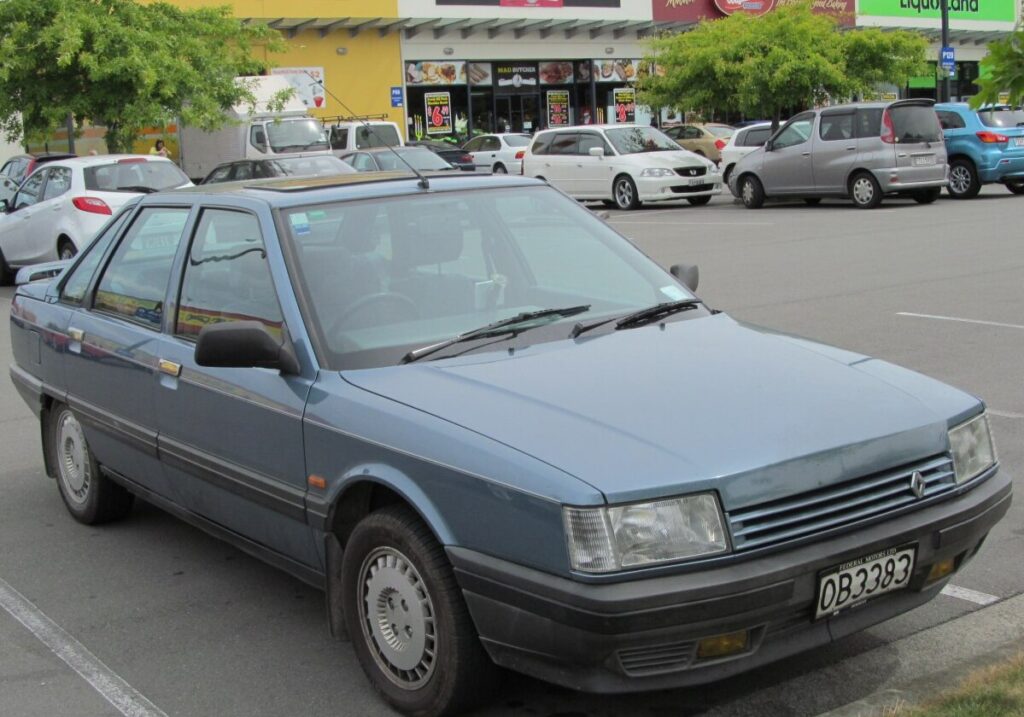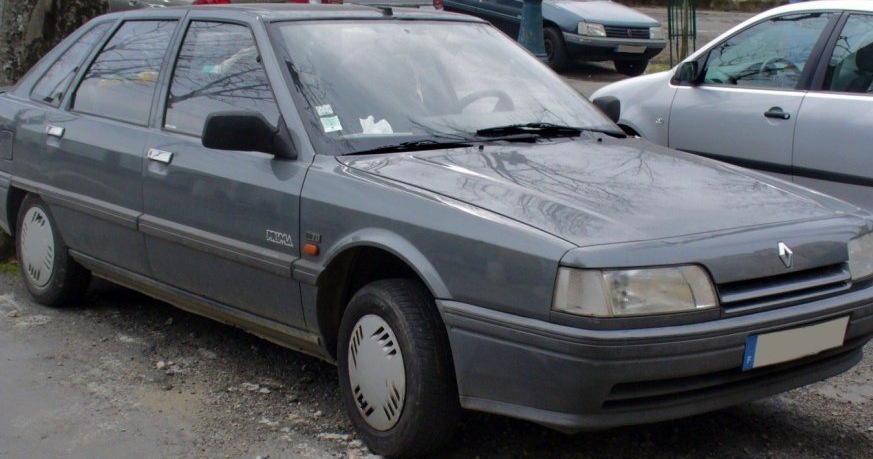
The Renault 21 Hatchback, specifically the 2.1 D variant producing 70 horsepower, was a mainstay of the Renault lineup from 1989 to 1994. Positioned as an economical and practical option within the broader Renault 21 range (which included gasoline engines and higher trim levels), this diesel model catered to buyers prioritizing fuel efficiency and durability. It was part of the L48 generation, representing a significant update to the original Renault 21, offering improved styling, interior comfort, and mechanical refinements. The 21 was a key model for Renault, particularly in Europe, competing with vehicles like the Peugeot 305 and Citroën BX.
Technical Specifications
| Brand | Renault |
| Model | 21 |
| Generation | 21 Hatchback (L48) |
| Type (Engine) | 2.1 D (70 Hp) |
| Start of production | 1989 |
| End of production | 1994 |
| Powertrain Architecture | Internal Combustion engine |
| Body type | Hatchback |
| Seats | 5 |
| Doors | 5 |
| Fuel consumption (urban) | 7.5 l/100 km (31.4 US mpg) |
| Fuel consumption (extra urban) | 4.7 l/100 km (50 US mpg) |
| Fuel consumption (combined) | 6.2 l/100 km (37.9 US mpg) |
| Fuel Type | Diesel |
| Acceleration 0 – 100 km/h | 15.1 sec |
| Acceleration 0 – 62 mph | 15.1 sec |
| Acceleration 0 – 60 mph | 14.3 sec |
| Maximum speed | 170 km/h (105.63 mph) |
| Weight-to-power ratio | 16.1 kg/Hp |
| Weight-to-torque ratio | 8.3 kg/Nm |
| Power | 70 Hp @ 4500 rpm |
| Torque | 136 Nm @ 2250 rpm (100.31 lb.-ft. @ 2250 rpm) |
| Engine layout | Front, Transverse |
| Engine Model/Code | J8S |
| Engine displacement | 2068 cm3 (126.2 cu. in.) |
| Number of cylinders | 4 |
| Engine configuration | Inline |
| Cylinder Bore | 86 mm (3.39 in.) |
| Piston Stroke | 89 mm (3.5 in.) |
| Compression ratio | 21.5:1 |
| Number of valves per cylinder | 2 |
| Fuel injection system | Precombustion chamber injection |
| Engine aspiration | Naturally aspirated |
| Valvetrain | OHC |
| Engine oil capacity | 6.1 l (6.45 US qt | 5.37 UK qt) |
| Coolant capacity | 7.1 l (7.5 US qt | 6.25 UK qt) |
| Kerb Weight | 1125 kg (2480.2 lbs.) |
| Max. weight | 1595 kg (3516.37 lbs.) |
| Max load | 470 kg (1036.17 lbs.) |
| Trunk (boot) space – minimum | 420 l (14.83 cu. ft.) |
| Trunk (boot) space – maximum | 1290 l (45.56 cu. ft.) |
| Fuel tank capacity | 66 l (17.44 US gal | 14.52 UK gal) |
| Length | 4460 mm (175.59 in.) |
| Width | 1730 mm (68.11 in.) |
| Height | 1415 mm (55.71 in.) |
| Wheelbase | 2660 mm (104.72 in.) |
| Front track | 1430 mm (56.3 in.) |
| Rear track | 1400 mm (55.12 in.) |
| Drivetrain Architecture | Front wheel drive |
| Number of gears | 5 |
| Gearbox type | Manual transmission |
| Front suspension | Spring Strut |
| Rear suspension | Torsion |
| Front brakes | Ventilated discs |
| Rear brakes | Drum |
| Assisting systems | ABS (Anti-lock braking system) |
| Steering type | Steering rack and pinion |
| Power steering | Hydraulic |
| Tires size | 175/65 R14 |
| Wheel rims size | 14 |
Powertrain & Engine Architecture
The heart of the Renault 21 2.1 D was the J8S engine, a 2.1-liter inline-four cylinder diesel. This engine utilized precombustion chamber injection, a common diesel technology of the era. This system involved injecting fuel into a small precombustion chamber connected to the main cylinder, promoting more complete combustion and reducing engine noise. The engine featured an overhead camshaft (OHC) valvetrain operating two valves per cylinder. The 70 horsepower output at 4500 rpm and 136 Nm (100.31 lb-ft) of torque at 2250 rpm were typical figures for a diesel engine of this displacement in the late 1980s and early 1990s. The engine’s robust construction and relatively simple design contributed to its reputation for reliability. The manual transmission was a five-speed unit, chosen for its efficiency and cost-effectiveness.
Driving Characteristics
The 2.1 D variant of the Renault 21 offered a decidedly unhurried driving experience. Acceleration was modest, with a 0-60 mph time of around 14.3 seconds. The focus was on fuel economy and low-speed torque rather than outright performance. The five-speed manual transmission allowed drivers to keep the engine in its optimal power band, but the limited horsepower meant overtaking required careful planning. Compared to the gasoline-powered Renault 21 variants, the diesel offered significantly less power but superior fuel efficiency. The gear ratios were optimized for maximizing fuel economy, resulting in a taller final drive. The diesel’s torque characteristics made it well-suited for carrying loads and navigating hilly terrain, although it lacked the responsiveness of the gasoline engines.
Equipment & Trim Levels
The 2.1 D trim level of the Renault 21 was generally considered the entry-level offering. Standard equipment typically included basic cloth upholstery, a simple dashboard layout, and manual windows and door locks. Power steering was often included, but air conditioning and central locking were usually optional extras. The interior was functional and durable, prioritizing practicality over luxury. Optional extras could include upgraded audio systems, alloy wheels, and a sunroof. The trim level was designed to appeal to budget-conscious buyers who valued reliability and fuel efficiency above all else.
Chassis & Braking
The Renault 21 2.1 D utilized a relatively conventional chassis setup. The front suspension employed MacPherson strut springs, while the rear suspension featured a torsion beam axle. This configuration provided a comfortable ride, although it wasn’t particularly sporty. The braking system consisted of ventilated discs on the front wheels and drum brakes on the rear. Anti-lock braking system (ABS) was available as an option, enhancing safety. The suspension was tuned for comfort and stability, prioritizing ride quality over handling precision. The relatively lightweight construction of the vehicle helped to offset the modest power output.
Market Reception & Comparison
The Renault 21 2.1 D was well-received in markets where diesel fuel was affordable and fuel economy was a primary concern. Critics praised its reliability and low running costs, but noted its lack of performance. Compared to the gasoline-powered Renault 21 variants, the diesel offered significantly better fuel economy but considerably less power. It was often seen as a sensible and practical choice for fleet operators and private buyers who covered high mileage. The 2.1 D competed with other diesel-powered hatchbacks of the era, such as the Peugeot 305 Diesel and Citroën BX Diesel, offering a similar blend of fuel efficiency and practicality.
Legacy
The Renault 21 2.1 D powertrain, while not known for its excitement, proved to be remarkably durable. Many examples remain on the road today, testament to the engine’s robust construction and relatively simple design. In the used car market, these vehicles are often sought after by enthusiasts looking for a classic European diesel with low running costs. Maintenance is generally straightforward, and parts availability remains reasonable. The 2.1 D represents a significant chapter in Renault’s history, showcasing the company’s commitment to providing affordable and practical transportation.