
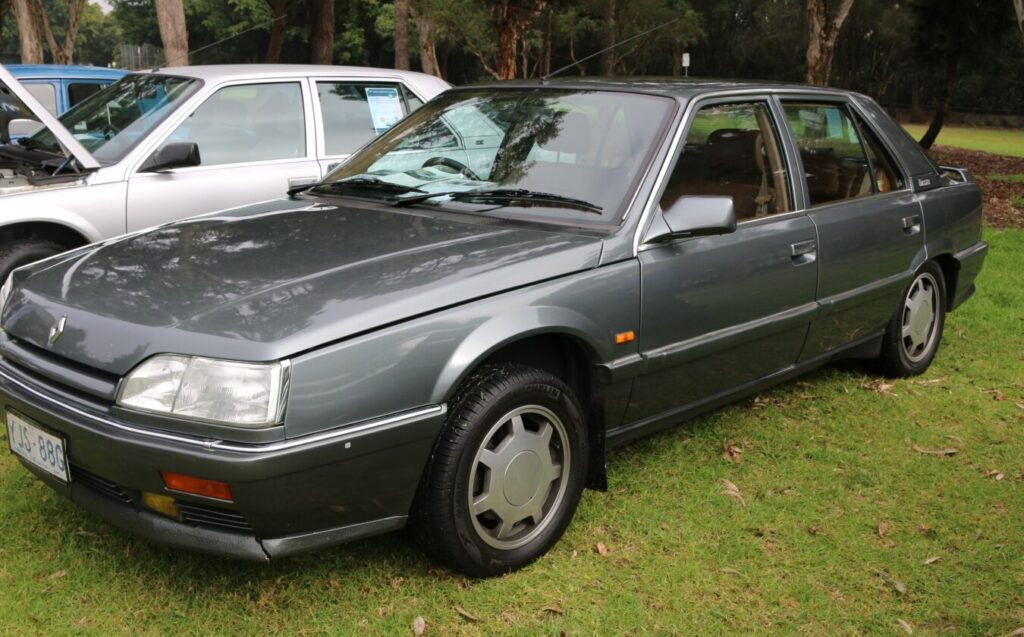
The Renault 25 (B29) 2.0, producing 103 horsepower, was a significant model within the Renault 25 range, manufactured between 1984 and 1992. Positioned as a mid-range offering, it aimed to provide a balance between performance and affordability within the larger lineup, which also included more powerful V6 variants and diesel options. The Renault 25 itself was Renault’s replacement for the Renault 20/30, and represented a move upmarket for the French manufacturer, competing with vehicles like the Ford Granada and Opel/Vauxhall Senator. The B29 chassis underpinned the entire Renault 25 range, offering a spacious interior and a focus on comfort. This 2.0-liter variant was particularly popular in European markets, offering a practical and relatively economical option for family transportation.
Technical Specifications
| Brand | Renault |
| Model | 25 |
| Generation | 25 (B29) |
| Type (Engine) | 2.0 (103 Hp) |
| Start of production | 1984 |
| End of production | 1992 |
| Powertrain Architecture | Internal Combustion engine |
| Body type | Hatchback |
| Seats | 5 |
| Doors | 5 |
| Fuel consumption (urban) | 12.1 l/100 km (19.4 US mpg) |
| Fuel consumption (extra urban) | 6.5 l/100 km (36.2 US mpg) |
| Fuel consumption (combined) | 8.1 l/100 km (29 US mpg) |
| Fuel Type | Petrol (Gasoline) |
| Acceleration 0 – 100 km/h | 11.6 sec |
| Acceleration 0 – 62 mph | 11.6 sec |
| Acceleration 0 – 60 mph | 11 sec |
| Maximum speed | 187 km/h (116.2 mph) |
| Weight-to-power ratio | 11.5 kg/Hp |
| Weight-to-torque ratio | 7.3 kg/Nm |
| Power | 103 Hp @ 5500 rpm |
| Torque | 162 Nm @ 3000 rpm (119.49 lb.-ft. @ 3000 rpm) |
| Engine layout | Front, Longitudinal |
| Engine Model/Code | J6R-823 |
| Engine displacement | 1995 cm3 (121.74 cu. in.) |
| Number of cylinders | 4 |
| Engine configuration | Inline |
| Cylinder Bore | 88 mm (3.46 in.) |
| Piston Stroke | 82 mm (3.23 in.) |
| Compression ratio | 9.2:1 |
| Number of valves per cylinder | 2 |
| Fuel injection system | Carburettor |
| Engine oil capacity | 5.3 l (5.6 US qt | 4.66 UK qt) |
| Coolant capacity | 7.3 l (7.71 US qt | 6.42 UK qt) |
| Kerb Weight | 1180 kg (2601.45 lbs.) |
| Max. weight | 1605 kg (3538.42 lbs.) |
| Max load | 425 kg (936.96 lbs.) |
| Trunk (boot) space – minimum | 440 l (15.54 cu. ft.) |
| Trunk (boot) space – maximum | 1240 l (43.79 cu. ft.) |
| Fuel tank capacity | 67 l (17.7 US gal | 14.74 UK gal) |
| Length | 4715 mm (185.63 in.) |
| Width | 1805 mm (71.06 in.) |
| Height | 1415 mm (55.71 in.) |
| Wheelbase | 2725 mm (107.28 in.) |
| Front track | 1495 mm (58.86 in.) |
| Rear track | 1475 mm (58.07 in.) |
| Drivetrain Architecture | Front wheel drive |
| Number of gears | 5 |
| Gearbox type | Manual transmission |
| Front suspension | Coil spring |
| Rear suspension | Coil spring |
| Front brakes | Ventilated discs |
| Rear brakes | Drum |
| Steering type | Steering rack and pinion |
| Power steering | Hydraulic |
| Tires size | 185/70 R14 |
| Wheel rims size | 14 |
Powertrain & Engine Architecture
The Renault 25 2.0 utilized the J6R-823 engine, a 1995cc inline-four cylinder petrol engine. This engine was a naturally aspirated design, featuring a cast iron block and an aluminum cylinder head. Crucially, this variant employed a carburetor fuel system, rather than fuel injection which was becoming more common during this period. The carburetor, while simpler and less expensive, resulted in slightly lower fuel efficiency and less precise fuel metering compared to injection systems. The engine produced 103 horsepower at 5500 rpm and 162 Nm (119.49 lb-ft) of torque at 3000 rpm. The engine featured a two-valve per cylinder configuration, operated by a single overhead camshaft. The five-speed manual transmission was the standard offering, providing a relatively conventional gear ratio spread designed for comfortable cruising and adequate acceleration. The longitudinal engine layout was a notable feature, contributing to the car’s balanced handling characteristics.
Driving Characteristics
The 2.0-liter Renault 25 with a manual transmission offered a reasonably engaging driving experience, though it wasn’t a performance-oriented vehicle. Acceleration to 60 mph took around 11 seconds, and top speed was approximately 116 mph. The carburetor meant throttle response wasn’t as immediate as fuel-injected counterparts, and the engine felt somewhat strained at higher revs. However, the engine delivered adequate torque for everyday driving, making it suitable for both city and highway use. The five-speed gearbox allowed for efficient cruising at highway speeds, and the relatively long gearing helped to keep fuel consumption reasonable. Compared to the V6 models, the 2.0-liter felt noticeably less powerful, but it offered a lighter front end and slightly more nimble handling. The suspension, tuned for comfort, provided a smooth ride, but body roll was present during cornering.
Equipment & Trim Levels
The 2.0-liter Renault 25 typically came with a fairly comprehensive level of standard equipment for its time. This included central locking, electric front windows, and a basic stereo system. Interior upholstery was typically cloth, available in a range of colors. Higher trim levels, often denoted by additional badging, offered options such as velour upholstery, a sunroof, and upgraded audio systems. Air conditioning was a popular optional extra. The dashboard layout was functional and straightforward, with clearly marked gauges and controls. The Renault 25 was known for its spacious interior, offering ample headroom and legroom for both front and rear passengers.
Chassis & Braking
The Renault 25 utilized a MacPherson strut front suspension and a coil-sprung rear axle. This setup prioritized ride comfort over outright handling precision. The front brakes were ventilated discs, providing adequate stopping power, while the rear brakes were drums. The steering was a rack and pinion system with hydraulic power assistance, offering light and easy steering. The 185/70 R14 tires provided a reasonable balance between grip and ride comfort. The car’s weight of around 1180 kg (2601 lbs) contributed to its stable handling characteristics, but also limited its acceleration performance.
Market Reception & Comparison
The Renault 25 2.0 received generally positive reviews, particularly for its spacious interior, comfortable ride, and relatively affordable price. Critics noted that the carburetor engine wasn’t as refined or fuel-efficient as more modern fuel-injected engines. Compared to the V6 models, the 2.0-liter offered a more economical option, but at the expense of performance. The 2.0-liter was often seen as a sensible choice for families and those who prioritized comfort and practicality over outright speed. Fuel economy was respectable for the time, averaging around 29 US mpg on the combined cycle.
Legacy
The Renault 25, while not a particularly iconic car, remains a fondly remembered model for many European drivers. The 2.0-liter engine, while not known for exceptional reliability, proved to be reasonably durable with proper maintenance. Today, the Renault 25 is becoming increasingly rare, and well-maintained examples are sought after by classic car enthusiasts. The carburetor can present maintenance challenges for modern mechanics unfamiliar with the technology, but parts availability is generally good. The car represents a significant chapter in Renault’s history, marking its move upmarket and its commitment to providing comfortable and spacious family transportation.
