
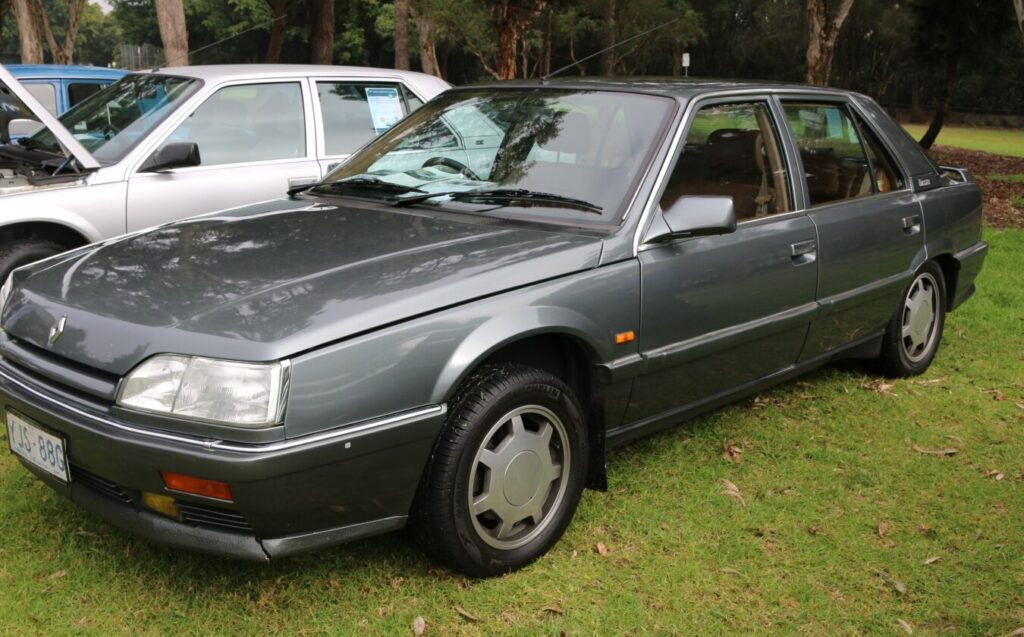
The Renault 25 (B29) 2.2, produced between 1985 and 1989, represented a mid-range offering within the broader Renault 25 lineup. Introduced as a successor to the Renault 20, the 25 aimed to provide a more spacious and comfortable experience, positioning itself as a large family car. The B29 designation refers to the second generation of the model, and the 2.2 variant, equipped with a 2.2-liter engine producing 103 horsepower, served as a popular choice for buyers seeking a balance between performance and economy. It occupied a space between the base-model engines and the more powerful, top-of-the-line versions.
The Renault 25 2.2 featured a naturally aspirated, inline-four cylinder engine. This engine, while not particularly groundbreaking in its technology, was known for its relative reliability. Fuel delivery was managed by a Bosch mechanical fuel injection system, a common setup for European cars of the era. The engine utilized a single overhead camshaft (SOHC) valvetrain, operating with two valves per cylinder. The engine block was constructed from cast iron, contributing to its durability, while the cylinder head was made of aluminum alloy. The 2.2-liter engine was paired with a three-speed automatic transmission, a relatively simple unit designed for smooth operation rather than outright performance. This transmission was a key characteristic of this particular variant, aimed at drivers prioritizing convenience over sporty driving dynamics.
Driving the Renault 25 2.2 Automatic provided a comfortable, if not exhilarating, experience. The 103 horsepower engine delivered adequate power for everyday driving, but acceleration was modest. The three-speed automatic transmission, while smooth, had relatively wide gear ratios, meaning the engine often operated at higher RPMs during highway cruising. Compared to the manual transmission versions or the higher-output 2.9-liter V6 models, the 2.2 Automatic felt noticeably slower. However, it offered a more relaxed driving experience, particularly in urban environments. The focus was on providing a comfortable ride and ease of use, rather than sporty handling or quick acceleration. The automatic transmission was a significant draw for buyers who preferred not to deal with a manual gearbox, especially in congested city traffic.
The 2.2 variant of the Renault 25 typically came equipped with a reasonable level of standard features for its time. Interior upholstery was generally cloth, with options for velour available. The dashboard featured analog gauges, including a speedometer, tachometer, and fuel level indicator. Power steering was standard, enhancing maneuverability. Air conditioning was often included, though it could be an optional extra depending on the specific trim level. Other available options included electric windows, a sunroof, and upgraded audio systems. The interior design prioritized comfort and functionality, with a focus on providing a spacious and pleasant environment for both driver and passengers.
The Renault 25 B29 utilized a relatively conventional chassis and braking system. The front suspension consisted of MacPherson struts, while the rear suspension employed a torsion beam setup. This configuration provided a comfortable ride, though it wasn’t particularly sporty. Braking was handled by disc brakes on the front wheels and drum brakes on the rear wheels. Power-assisted steering was standard. The suspension was tuned for comfort, absorbing bumps and irregularities in the road surface effectively. The braking system, while adequate for normal driving conditions, lacked the stopping power of more modern systems.
Contemporary reviews of the Renault 25 2.2 Automatic generally praised its comfortable ride and spacious interior. However, critics often noted its lack of performance compared to other models in the range. Fuel economy was considered average for the time, and reliability was generally good, though the Bosch fuel injection system could occasionally require maintenance. Compared to the more powerful V6 versions, the 2.2 Automatic offered a more affordable entry point into the Renault 25 lineup, appealing to buyers who prioritized practicality and comfort over outright performance. The automatic transmission was seen as a positive feature by many, simplifying the driving experience.
| Brand | Renault |
| Model | 25 |
| Generation | 25 (B29) |
| Type (Engine) | 2.2 (B29) (103 Hp) |
| Start of production | 1985 |
| End of production | 1989 |
| Powertrain Architecture | Internal Combustion engine |
| Body type | Hatchback |
| Seats | 5 |
| Doors | 5 |
| Fuel Type | Petrol (Gasoline) |
| Power | 103 Hp |
| Engine aspiration | Naturally aspirated engine |
| Transmission | 3-speed Automatic |
Today, the Renault 25 2.2 Automatic is becoming increasingly rare. While not highly sought after by collectors, well-maintained examples are gaining interest among enthusiasts of classic European cars. The engine and transmission, while relatively simple, have proven to be reasonably durable over time. However, finding parts can be challenging, and maintenance may require specialized knowledge. The car’s legacy lies in its representation of a comfortable and spacious family car from the 1980s, offering a glimpse into a bygone era of automotive design and engineering. Its relatively affordable price point and ease of use made it a popular choice for many families during its production run, and it continues to hold a nostalgic appeal for those who remember it fondly.
