
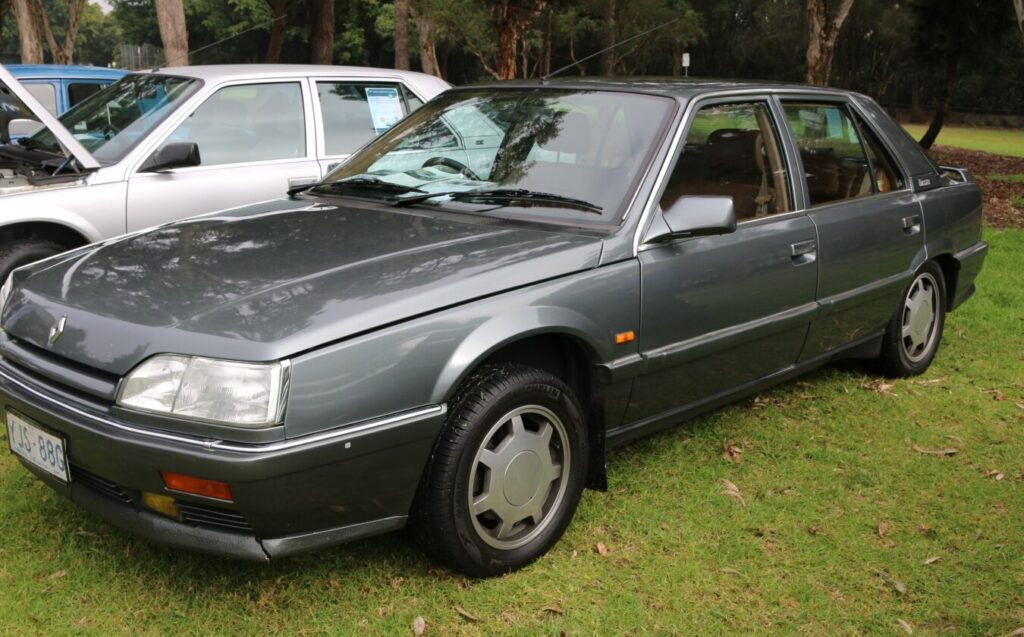
The Renault 25 (B29) 2.2 (B29E), producing 124 horsepower, was a significant variant within the B29 generation of the Renault 25, produced between 1984 and 1989. Positioned as a mid-range offering, it bridged the gap between the base models with smaller engines and the more luxurious, higher-performance versions. The Renault 25, launched as a replacement for the Renault 20, was a large family car intended to compete with vehicles like the Ford Granada and Opel/Vauxhall Commodore. The B29 chassis represented Renault’s attempt to create a modern, spacious, and comfortable vehicle with a focus on advanced features for its time.
The powertrain of the 2.2 (B29E) centers around the J7T engine, a 2.2-liter, naturally aspirated inline-four cylinder gasoline engine. This engine utilized a Bosch L-Jetronic fuel injection system, a sophisticated system for the era, providing improved fuel efficiency and smoother operation compared to carbureted engines. The engine featured a single overhead camshaft (SOHC) valvetrain with two valves per cylinder. While not a particularly high-revving engine, it was designed for strong low-end and mid-range torque. The transmission paired with the 2.2-liter engine was typically a four-speed automatic, although a five-speed manual transmission was also available as an option, though less common. The automatic transmission was geared towards comfortable cruising rather than sporty acceleration.
Driving the 2.2-liter Renault 25 offered a comfortable, if not particularly exhilarating, experience. The 124 hp output translated to adequate performance for highway cruising and everyday driving. Acceleration was respectable, but noticeably slower than the more powerful versions of the Renault 25, such as those equipped with the PRV V6 engine. The automatic transmission, while smooth, contributed to a slight reduction in responsiveness. Gear ratios were optimized for fuel economy and relaxed driving, prioritizing comfort over outright speed. Compared to the base 1.8-liter models, the 2.2 offered a substantial improvement in power and refinement, making it a more suitable choice for long journeys or carrying a full load of passengers.
The 2.2 (B29E) trim level typically included features such as power steering, central locking, and electric windows. Interior upholstery was generally cloth, with options for velour or leather available at extra cost. The dashboard featured a comprehensive instrument cluster with gauges for speed, engine temperature, fuel level, and a clock. Optional extras included a sunroof, air conditioning, and upgraded audio systems. The Renault 25 was known for its spacious interior, offering ample legroom and headroom for both front and rear passengers. The hatchback body style provided a large and practical cargo area, further enhancing its appeal as a family vehicle.
The chassis of the Renault 25 featured independent suspension all around, utilizing MacPherson struts at the front and a semi-trailing arm setup at the rear. This configuration provided a comfortable ride quality, absorbing bumps and imperfections in the road effectively. Braking was initially accomplished with disc brakes at the front and drum brakes at the rear, although later models often featured disc brakes all around. Stabilizer bars were fitted to both the front and rear axles to reduce body roll during cornering. The steering was power-assisted, making it relatively easy to maneuver, particularly at low speeds.
Contemporary reviews of the Renault 25 2.2 generally praised its comfortable ride, spacious interior, and relatively refined engine. However, some critics noted that the styling was somewhat conservative and that the performance, while adequate, was not particularly exciting. Fuel economy was considered reasonable for a vehicle of its size and class. Compared to the V6 models, the 2.2 offered a better balance between performance and fuel efficiency, making it a more practical choice for many buyers. Reliability was generally good, although some owners reported issues with the L-Jetronic fuel injection system and the automatic transmission.
| Brand | Renault |
| Model | 25 |
| Generation | 25 (B29) |
| Type (Engine) | 2.2 (B29E) (124 Hp) |
| Start of production | 1984 |
| End of production | 1989 |
| Powertrain Architecture | Internal Combustion engine |
| Body type | Hatchback |
| Seats | 5 |
| Doors | 5 |
| Fuel Type | Petrol (Gasoline) |
| Power | 124 Hp |
| Engine Model/Code | J7T |
| Engine aspiration | Naturally aspirated engine |
| Engine oil capacity | 5.3 l (5.6 US qt | 4.66 UK qt) |
| Coolant capacity | 7.3 l (7.71 US qt | 6.42 UK qt) |
| Fuel tank capacity | 72 l (19.02 US gal | 15.84 UK gal) |
Today, the Renault 25 2.2 (B29E) is a relatively rare sight on the roads. Its long-term reliability has been generally good, although finding parts can be challenging due to its age. The J7T engine is known to be durable if properly maintained. The automatic transmission, however, can be prone to issues if not serviced regularly. In the used car market, these vehicles are typically sought after by classic car enthusiasts and collectors who appreciate their unique styling and comfortable driving experience. The 2.2-liter variant represents a sweet spot in the Renault 25 lineup, offering a good balance of performance, fuel efficiency, and affordability.
