
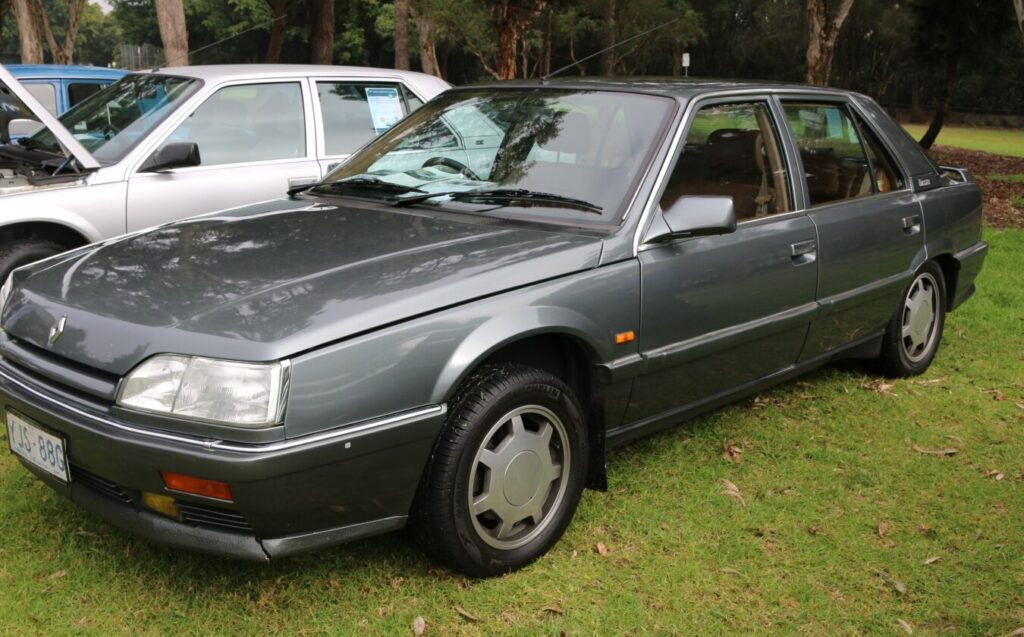
The Renault 25 (B29) 2.2 i, producing 110 horsepower, was a significant variant within the Renault 25 range, manufactured between 1986 and 1992. Positioned as a mid-range offering, it bridged the gap between the base models and the more powerful V6 versions. The Renault 25, launched in 1984, was Renault’s flagship executive car, intended to replace the Renault 30 and compete with vehicles like the Peugeot 604 and Citroën CX. The B29 designation refers to the second generation of the 25, which received styling updates and mechanical refinements over the original.
The 2.2 i variant was powered by the Renault J7T-706 engine, a 2.2-liter (2165 cc) inline-four cylinder gasoline engine. This engine utilized a single-point fuel injection system, a relatively common technology for the time, delivering fuel to the intake manifold rather than directly into the cylinders. The engine featured a 9.2:1 compression ratio and two valves per cylinder. The J7T engine was known for its relative simplicity and durability, though it wasn’t a particularly high-performance unit. The engine’s longitudinal front-engine layout was typical for rear-wheel-drive vehicles, though the Renault 25 was front-wheel drive. It produced 110 hp at 5000 rpm and 174 Nm (128.34 lb-ft) of torque at 3500 rpm. The engine required 5 liters (5.28 US quarts) of oil and 8 liters (8.45 US quarts) of coolant.
In driving terms, the 2.2 i offered a comfortable and refined experience, prioritizing smoothness over outright speed. Acceleration from 0 to 100 km/h (0-62 mph) took approximately 11.6 seconds, and it achieved a top speed of 187 km/h (116.2 mph). While not sporty, the engine provided adequate power for highway cruising and everyday driving. Compared to the more powerful V6 models, the 2.2 i felt noticeably less responsive, particularly during overtaking maneuvers. However, it offered better fuel economy than the V6, and its simpler engine design generally translated to lower maintenance costs. The five-speed manual transmission was standard, providing reasonable control over the engine’s power band.
The 2.2 i trim level typically included features such as cloth upholstery, central locking, electric windows, and a basic stereo system. Optional extras included a sunroof, upgraded audio systems, and metallic paint. Interior appointments were generally functional and comfortable, reflecting the car’s executive positioning. The dashboard layout was typical of the era, with analog gauges and a straightforward control layout. The Renault 25 was a five-seater hatchback, offering a generous 440 liters (15.54 cu ft) of trunk space, expandable to 1240 liters (43.79 cu ft) with the rear seats folded down.
The Renault 25 2.2 i utilized a coil spring suspension system at both the front and rear, providing a comfortable ride quality. Front brakes were ventilated discs, while the rear brakes were drums. The car was equipped with an anti-lock braking system (ABS), a relatively advanced feature for the time, enhancing safety. Steering was via a hydraulic power steering rack and pinion system, offering light and precise control. The vehicle rode on 185/70 R14 tires mounted on 5.5J x 14 inch wheel rims.
Contemporary reviews of the Renault 25 2.2 i generally praised its comfortable ride, spacious interior, and relatively fuel-efficient engine. However, some critics noted its lack of sporting pretensions and the somewhat dated design of the interior. Fuel economy was rated at 8.1 l/100 km (29 US mpg) combined, which was competitive for a car of its size and class. Compared to the V6 models, the 2.2 i offered a more affordable entry point into the Renault 25 range, appealing to buyers who prioritized comfort and economy over performance. Reliability was generally considered good, although the single-point fuel injection system could occasionally require maintenance.
| Brand | Renault |
| Model | 25 |
| Generation | 25 (B29) |
| Type (Engine) | 2.2 i (110 Hp) |
| Start of production | 1986 |
| End of production | 1992 |
| Powertrain Architecture | Internal Combustion engine |
| Body type | Hatchback |
| Seats | 5 |
| Doors | 5 |
| Fuel consumption (urban) | 12.1 l/100 km (19.4 US mpg) |
| Fuel consumption (extra urban) | 6.5 l/100 km (36.2 US mpg) |
| Fuel consumption (combined) | 8.1 l/100 km (29 US mpg) |
| Fuel Type | Petrol (Gasoline) |
| Acceleration 0 – 100 km/h | 11.6 sec |
| Acceleration 0 – 62 mph | 11.6 sec |
| Maximum speed | 187 km/h (116.2 mph) |
| Kerb Weight | 1220 kg (2689.64 lbs) |
| Max. weight | 1705 kg (3758.88 lbs) |
| Engine displacement | 2165 cm3 (132.12 cu. in.) |
| Power | 110 Hp @ 5000 rpm |
| Torque | 174 Nm @ 3500 rpm (128.34 lb.-ft. @ 3500 rpm) |
| Engine Code | J7T-706 |
| Number of cylinders | 4 |
| Fuel injection system | Single-point injection |
| Gears/Transmission | 5 gears, manual transmission |
Today, the Renault 25 2.2 i is a relatively rare sight on the roads. The J7T engine is generally considered reliable, but age and maintenance history are crucial factors. Parts availability can be challenging, as the car is no longer in production. However, for enthusiasts seeking a comfortable and distinctive classic French car, the 2.2 i variant offers a compelling combination of affordability, practicality, and style. Its simpler engine and transmission compared to the V6 models may make it a more appealing option for those looking for a classic Renault 25 to restore and maintain.
