
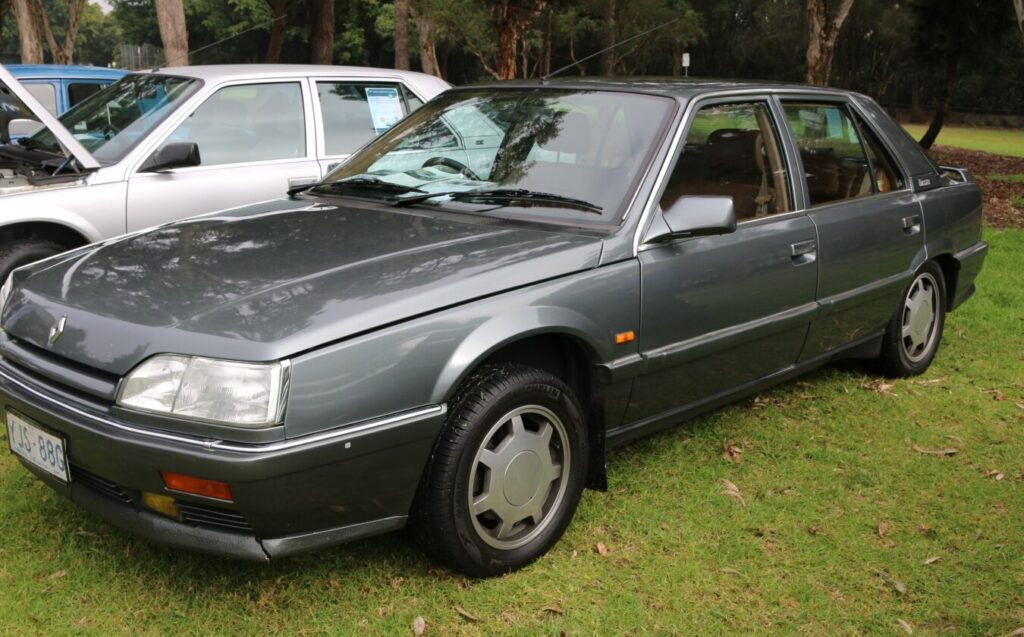
The Renault 25 (B29) 2.2 i Automatic, produced between 1986 and 1992, represented a mid-range offering within the broader Renault 25 lineup. Positioned above the base models with smaller engines and manual transmissions, and below the more powerful V6 variants, the 2.2 i Automatic aimed to provide a balance of comfort, performance, and affordability for buyers seeking a spacious and well-equipped family hatchback. The Renault 25 itself was a significant vehicle for Renault, intended to replace the aging Renault 20/30 series and compete with larger, more modern European sedans and hatchbacks. It was built on the platform code B29, and represented a move upmarket for the brand.
The 2.2 i Automatic: A Mid-Range Offering
The 2.2-liter, 110 horsepower variant with an automatic transmission was a popular choice for those prioritizing ease of driving and a more relaxed experience. While not the sportiest version of the Renault 25, it offered sufficient power for comfortable cruising and everyday use. It appealed to families and individuals who valued convenience and a smoother driving experience over outright performance. The automatic transmission, while not known for its speed, was a key selling point for this trim level, particularly in markets where manual transmissions were less common.
Powertrain & Engine Architecture
The heart of the Renault 25 2.2 i Automatic is the J7T-707 engine, a 2.2-liter (2165 cc) inline-four cylinder gasoline engine. This engine featured a single-point fuel injection system, a relatively common technology for the time, but less sophisticated than multi-point injection systems found in some competitors. The engine produced 110 horsepower (82 kW) at 5000 rpm and 174 Nm (128.34 lb-ft) of torque at 3500 rpm. The compression ratio was set at 9.2:1. The engine’s bore and stroke measured 88 mm x 89 mm respectively. It utilized a two-valve per cylinder configuration, contributing to its relatively simple and robust design.
The engine was longitudinally mounted in the front of the vehicle, driving the front wheels. The automatic transmission was a three-speed unit, designed to provide smooth, if not particularly rapid, gear changes. This transmission was chosen for its simplicity and reliability, rather than for performance. The gear ratios were optimized for comfortable cruising and reasonable acceleration, but it lacked the responsiveness of a manual transmission or a more modern automatic.
Driving Characteristics
The Renault 25 2.2 i Automatic offered a comfortable and refined driving experience, prioritizing smoothness over sporty handling. Acceleration from 0 to 100 km/h (0-62 mph) took approximately 12.4 seconds, and 0-60 mph was achieved in around 11.8 seconds. The top speed was rated at 183 km/h (113.71 mph). The three-speed automatic transmission meant that the engine often felt strained during hard acceleration, and downshifts were not particularly quick. However, for everyday driving, the powertrain provided adequate performance. The relatively high kerb weight of 1220 kg (2689.64 lbs) contributed to the somewhat leisurely acceleration times.
The steering was hydraulic, providing light and easy maneuverability, but lacked significant feedback. The suspension, consisting of coil springs all around, offered a comfortable ride, absorbing bumps and imperfections in the road surface effectively. However, the soft suspension setup also resulted in noticeable body roll during cornering.
Equipment & Trim Levels
The 2.2 i Automatic trim level typically included features such as power steering, central locking, electric windows, and a basic audio system. Interior upholstery was generally cloth, with options for upgraded materials available. The dashboard layout was functional and straightforward, with clearly labeled controls. Optional extras included a sunroof, upgraded audio systems, and air conditioning. The Renault 25 was known for its spacious interior, offering ample headroom and legroom for both front and rear passengers. The hatchback body style provided a large and practical cargo area, with a minimum capacity of 440 liters (15.54 cu ft) expanding to 1240 liters (43.79 cu ft) with the rear seats folded down.
Chassis & Braking
The Renault 25 2.2 i Automatic featured a front-wheel-drive layout with a coil spring suspension system at both the front and rear. The front brakes were ventilated discs, providing adequate stopping power, while the rear brakes were drums. An Anti-lock Braking System (ABS) was available as an option, enhancing safety by preventing wheel lockup during hard braking. The front track measured 1495 mm (58.86 in), and the rear track was 1475 mm (58.07 in). The tires were typically 185/70 R14, mounted on 5.5J x 14 inch wheel rims.
Market Reception & Comparison
The Renault 25 2.2 i Automatic was generally well-received by critics as a comfortable and practical family car. However, it was often criticized for its relatively slow acceleration and lack of sporty handling. Compared to the higher-performance V6 models, the 2.2 i Automatic offered significantly less power and excitement. However, it was more fuel-efficient, achieving a combined fuel consumption of 8.3 l/100 km (28.3 US mpg, 34 UK mpg, 12 km/l). The 2.2 i Automatic also offered better fuel economy than the diesel variants. In terms of reliability, the 2.2-liter engine was generally considered to be robust and dependable, although the automatic transmission could be prone to issues if not properly maintained. Competitors included the Ford Sierra, Opel/Vauxhall Cavalier, and Peugeot 505.
Technical Specifications
| Brand | Renault |
| Model | 25 |
| Generation | 25 (B29) |
| Type (Engine) | 2.2 i (110 Hp) Automatic |
| Start of production | 1986 |
| End of production | 1992 |
| Fuel consumption (urban) | 12.6 l/100 km (18.7 US mpg, 22.4 UK mpg, 7.9 km/l) |
| Fuel consumption (extra urban) | 6.8 l/100 km (34.6 US mpg, 41.5 UK mpg, 14.7 km/l) |
| Fuel consumption (combined) | 8.3 l/100 km (28.3 US mpg, 34 UK mpg, 12 km/l) |
| Fuel Type | Petrol (Gasoline) |
| Acceleration 0 – 100 km/h | 12.4 sec |
| Acceleration 0 – 62 mph | 12.4 sec |
| Acceleration 0 – 60 mph | 11.8 sec |
| Maximum speed | 183 km/h (113.71 mph) |
| Power | 110 Hp @ 5000 rpm |
| Torque | 174 Nm @ 3500 rpm (128.34 lb.-ft. @ 3500 rpm) |
| Engine layout | Front, Longitudinal |
| Engine Model/Code | J7T-707 |
| Engine displacement | 2165 cm3 (132.12 cu. in.) |
| Number of cylinders | 4 |
| Engine configuration | Inline |
| Cylinder Bore | 88 mm (3.46 in.) |
| Piston Stroke | 89 mm (3.5 in.) |
| Compression ratio | 9.2:1 |
| Number of valves per cylinder | 2 |
| Fuel injection system | Single-point injection |
| Engine oil capacity | 5 l (5.28 US qt | 4.4 UK qt) |
| Coolant capacity | 8 l (8.45 US qt | 7.04 UK qt) |
| Kerb Weight | 1220 kg (2689.64 lbs.) |
| Max. weight | 1705 kg (3758.88 lbs.) |
| Max load | 485 kg (1069.24 lbs.) |
| Trunk (boot) space – minimum | 440 l (15.54 cu. ft.) |
| Trunk (boot) space – maximum | 1240 l (43.79 cu. ft.) |
| Fuel tank capacity | 72 l (19.02 US gal | 15.84 UK gal) |
| Length | 4715 mm (185.63 in.) |
| Width | 1805 mm (71.06 in.) |
| Height | 1415 mm (55.71 in.) |
| Wheelbase | 2725 mm (107.28 in.) |
| Drive wheel | Front wheel drive |
| Number of gears and type of gearbox | 3 gears, automatic transmission |
Legacy
The Renault 25 2.2 i Automatic, while not a particularly rare or collectible model, remains a reasonably common sight on European roads today. The J7T-707 engine is known for its durability, and many examples are still running with high mileage. However, finding well-maintained examples can be challenging, as age and neglect have taken their toll on many vehicles. The automatic transmission, while generally reliable, can require expensive repairs if it fails. In the used car market, the 2.2 i Automatic typically commands lower prices than the V6 models, reflecting its lower performance and less desirable specification. Despite its shortcomings, the Renault 25 2.2 i Automatic remains a fondly remembered family car from the 1980s and early 1990s, offering a comfortable and spacious driving experience.
